

TreeTake Network
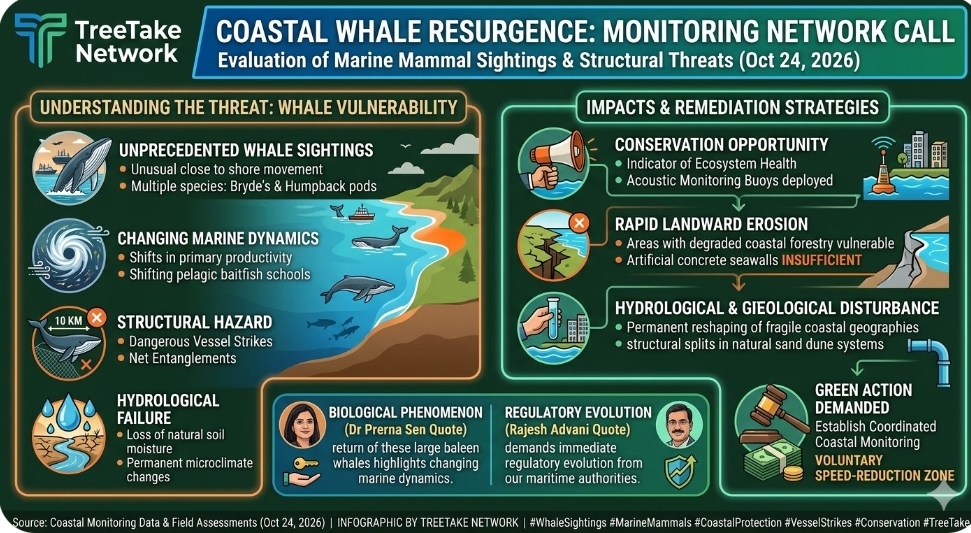
Marine researchers and cetacean biologists have documented an unprecedented surge in whale sightings along the nearshore waters, marking a significant behavioral shift in regional migratory routes. The localized increase in marine mammal activity has prompted conservation groups to issue an immediate appeal for the establishment of a specialized coastal monitoring and protection network to prevent dangerous vessel strikes and net entanglements.
Field observation logs indicate that multiple species, including bryde’s whales and humpback pods, have been moving unusually close to commercial shipping lanes and artisanal fishing zones. Marine ecologists attribute this unexpected nearshore movement to shifts in primary productivity and shifting pelagic baitfish schools, which have drawn the massive mammals into shallow waters. The proximity of these large cetaceans to heavy maritime traffic presents an immediate structural hazard, as underwater noise pollution disrupts their acoustic navigation and increases the risk of catastrophic collisions with large transport vessels.
Detailing the ecological significance of the recent marine observations, senior cetacean researcher Dr Prerna Sen stated during a coastal briefing:
"The documented return of these large baleen whales to nearshore zones is a biological phenomenon that highlights changing marine dynamics. However, these shallow waters are also highly industrialized corridors with intense fishing and cargo movement. Without a coordinated, real-time alert system to warn commercial vessels, we are placing these recovering populations at extreme risk of fatal ship strikes."
Local conservation groups are collaborating with coastal communities to deploy acoustic monitoring buoys designed to track whale vocalizations in real time. The initiative aims to establish a voluntary speed-reduction zone for commercial vessels when whales are detected within a ten-kilometer radius of the main ports.
Emphasising the broader necessity of implementing rigid maritime safety protocols, marine policy expert Rajesh Advani noted:
"The presence of these apex marine mammals so close to our beaches serves as an invaluable indicator of ecosystem health. This is a critical moment that demands immediate regulatory evolution from our maritime authorities. We must quickly transition toward a legally binding, multi-stakeholder monitoring network that actively integrates radar tracking, drone surveillance, and community reporting to ensure safe passage."
Editor's Note
The unexpected resurgence of whale sightings near highly populated coastal zones presents both an extraordinary conservation opportunity and a complex regulatory challenge. The way forward requires the immediate formalization of a dedicated coastal marine mammal watch network that links scientific researchers, port authorities, and local fishers through a unified communication framework. Long-term marine safety requires enforcing mandatory speed limits for commercial cargo ships in active migration corridors and introducing whale-safe tracking tools to ensure industrial maritime growth does not compromise the recovery of vulnerable oceanic species.



Leave a comment