

TreeTake Network
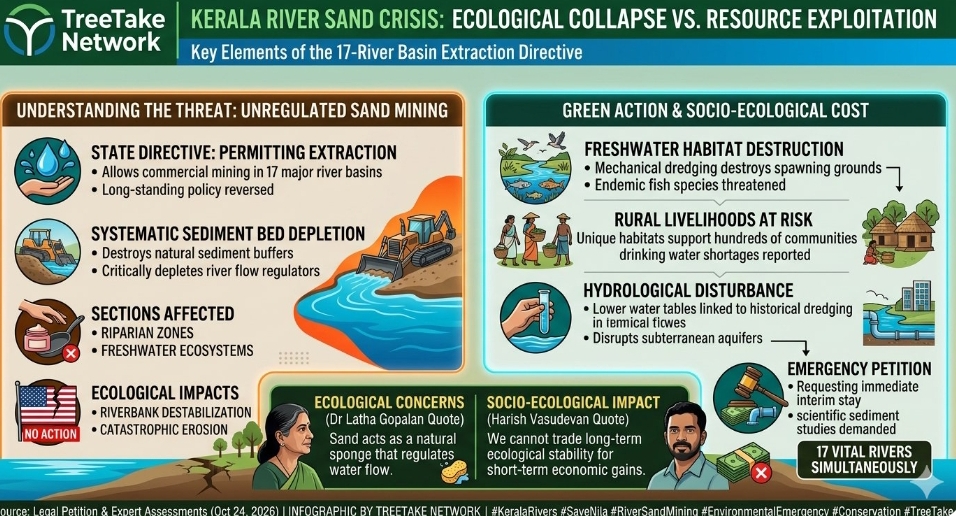
A coalition of local environmental protection groups and river protection councils has submitted an emergency petition to the High Court, challenging a controversial directive that permits commercial sand mining operations across 17 major river basins in Kerala. The green advocacy groups argue that the unexpected regulatory shift will lead to irreversible degradation of freshwater ecosystems and accelerate severe riverbank destabilisation ahead of the seasonal rainfall cycles.
The legal challenge focuses on the sudden reversal of a long-standing environmental protection policy that restricted heavy sand dredging to preserve riparian zones. Ecologists warn that allowing systematic extraction at this scale will critically deplete the natural sediment beds required to regulate river flow and maintain the height of local water tables. The petition details how mechanical sand dredging destroys spawning grounds for endemic fish species, disrupts subterranean aquifers, and leaves vulnerable riverside communities highly susceptible to severe flooding during heavy monsoons.
Expressing deep concern over the immediate impacts on local ecology, senior environmental scientist Dr Latha Gopalan at the Centre for Riverine Studies remarked:
"Permitting commercial extraction across 17 vital river systems simultaneously is a recipe for ecological collapse. Sand acts as a natural sponge that regulates water flow and maintains the structural integrity of the riverbanks. If we systematically strip these riverbeds, we will see catastrophic bank erosion and the permanent destruction of unique freshwater habitats that support hundreds of rural livelihoods."
The green collective has requested an immediate interim stay on all mining permits until comprehensive, scientific sediment-replenishment studies are conducted independently for each targeted river basin. The petition highlights that several communities are already experiencing localised drinking water shortages due to lower water tables directly linked to unauthorised historical dredging.
Emphasising the broader socio-ecological consequences of the directive, water resource advocate Harish Vasudevan stated:
"The rivers are already under immense stress from pollution and climate-induced flow variations. This administrative directive completely ignores decades of conservation science and legal precedents established to protect public natural resources. We cannot trade long-term ecological stability and water security for short-term economic gains from commercial mining."
Editor's Note
The sudden policy shift permitting widespread river sand extraction highlights a dangerous regulatory trend that prioritises resource exploitation over long-term ecological health. The way forward requires an absolute suspension of the mining directive to allow for independent, transparent ecological impact evaluations. Policymakers must shift from destructive riverbed mining to sustainable, alternative building materials like manufactured sand, while establishing legally binding frameworks that prioritise river rejuvenation and protect riparian communities from manufactured flood risks.



Leave a comment