

TreeTake Network
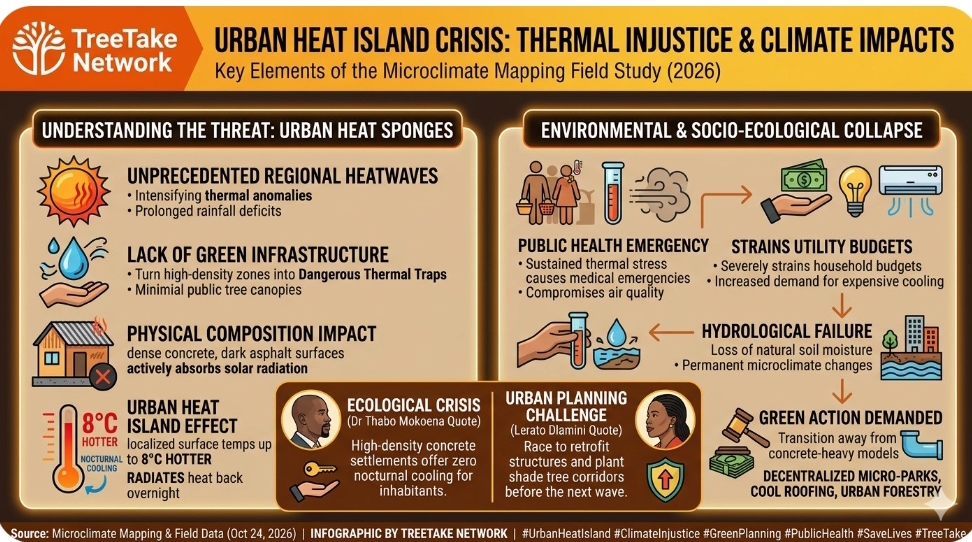
A comprehensive thermal mapping project and urban microclimate field study have exposed a profound environmental injustice, revealing that unprecedented regional heatwaves are disproportionately impacting low-income communities. The analytical data demonstrate how a severe lack of green infrastructure and public tree canopies has turned high-density residential zones into dangerous thermal traps, leaving millions of vulnerable citizens exposed to extreme localised temperatures.
The field data indicates that the physical composition of lower-income suburbs—characterised by dense concrete, dark asphalt surfaces, corrugated iron roofs, and minimal public parks—actively absorbs solar radiation throughout the day and radiates it back into the environment overnight. This systemic imbalance creates a localised urban heat island effect, keeping surface temperatures up to 8 degrees Celsius hotter than affluent, well-vegetated neighbourhoods just a few kilometres away. Public health researchers warn that this sustained thermal stress causes immediate heat-related medical emergencies, compromises air quality, and severely strains local household utility budgets.
The microclimate mapping and presentation occurred in South Africa, with a specific focus on metropolitan areas like Johannesburg and Pretoria. Detailing the severity of the expanding thermal crisis, urban climatologist Dr Thabo Mokoena stated during a presentation of the microclimate mapping:
"The compounding intersection of rising global temperatures and a complete absence of green infrastructure has triggered a localised public health emergency. We are observing high-density concrete settlements that function as heat sponges, offering zero nocturnal cooling for the inhabitants. Without an immediate, structural intervention to deploy urban forestry networks, the human toll of these annual heat waves will escalate dramatically."
The document explains how the loss of natural soil moisture and vegetation shields has permanently altered the microclimate of these informal and formal low-income settlements. Furthermore, specialised thermal infrared remote sensing analysis shows that the surface energy balance in these areas features extremely high sensible heat fluxes, confirming that the natural environment is no longer capable of regulating localised temperature spikes.
Emphasising the structural challenges of rendering immediate relief to the affected residential sectors, urban planning expert Lerato Dlamini remarked:
"The field data confirms our worst fears regarding the historical neglect of green planning in vulnerable working-class neighbourhoods. This is no longer just a weather variation; it is a systematic, widespread environmental disparity that actively threatens human survival. We are racing against time to advocate for immediate retrofitting of public structures with reflective roofing materials and to plant rapid-growth shade tree corridors before the next thermal wave hits."
Editor's Note
The escalating environmental crisis in urban centres demonstrates the catastrophic intersection of climate change and structural urban inequality. The way forward requires immediate mobilisation of municipal climate funds to deploy decentralised micro-parks, cool-roofing technologies, and extensive community-led urban forestry initiatives. Long-term stabilisation requires metropolitan municipal policies to shift from concrete-heavy development models to climate-resilient urban layouts, localised water-retaining green spaces, and strong legal mandates that ensure green infrastructure is equitably distributed across all socioeconomic sectors.



Leave a comment