

TreeTake Network
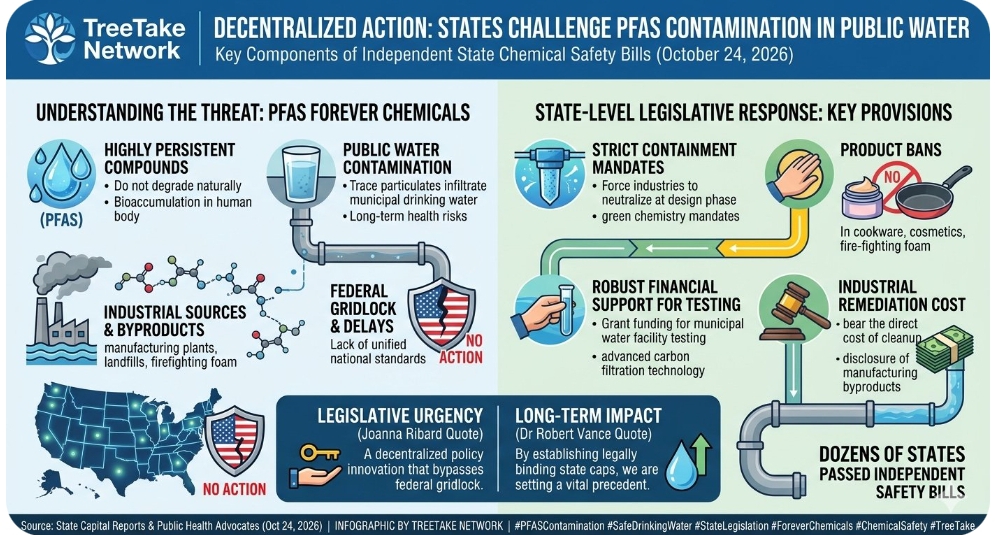
Dozens of state governments across the United States have mobilised to pass independent, legally binding chemical safety measures targeting the immediate remediation of per- and polyfluoroalkyl substances, commonly known as PFAS. The legislative surge comes driven by tightening local compliance deadlines and newly proposed toxic substance reporting amendments. Individual state capitals have initiated aggressive policy frameworks to curb the distribution of these highly persistent "forever chemicals" due to prolonged regulatory delays at the federal level.
The state-level legislation establishes strict containment mandates, bans the use of PFAS compounds in consumer cookware and cosmetics, and allocates robust financial support for municipal water facility testing. Public health advocates have warned that industrial synthetic compounds have already infiltrated the drinking water systems of millions of citizens, leading to bioaccumulation and long-term health risks. The new laws force industrial entities to disclose all manufacturing byproducts and bear the direct cost of local environmental cleanup.
Explaining the legislative urgency, senior policy analyst Joanna Ribard at the Safe Water Coalition remarked:
"With states stepping in directly, we are witnessing a rapid, decentralised policy innovation that bypasses federal gridlock. These bills legally force the cleanup of toxic chemical chains from municipal drinking systems before public exposure amplifies. We can no longer treat public health as a secondary concern while corporate polluters delay necessary equipment upgrades."
The new regulatory framework also introduces strict penalties for chemical manufacturers that fail to comply with testing protocols. Water management authorities are being equipped with advanced carbon filtration technology to actively filter out trace particulates of the synthetic polymers from municipal reservoirs.
Highlighting the long-term impact on water infrastructure, environmental toxicologist Dr Robert Vance stated:
"The absolute persistence of these synthetic carbon-fluorine bonds means they do not degrade naturally in the environment. By establishing legally binding state caps, we are setting a vital precedent that forces industries to synthesise safer alternatives. This isn't just about cleaning up the pollution that exists today; it is about permanently stopping the flow of dangerous industrial chemicals into our shared water tables."
Editor's Note
The fragmentation of chemical regulations across multiple states underscores a growing public impatience with centralised environmental oversight. To protect public health effectively, unified national standards must eventually be codified to ensure uniform water treatment upgrades, universal product testing, and absolute accountability for industrial chemical manufacturers. The ideal path forward requires transitioning from reactive litigation to proactive green chemistry mandates, ensuring that hazardous synthetic materials are neutralised at the design phase rather than filtered out of public drinking infrastructure after contamination occurs.



Leave a comment