

TreeTake Network
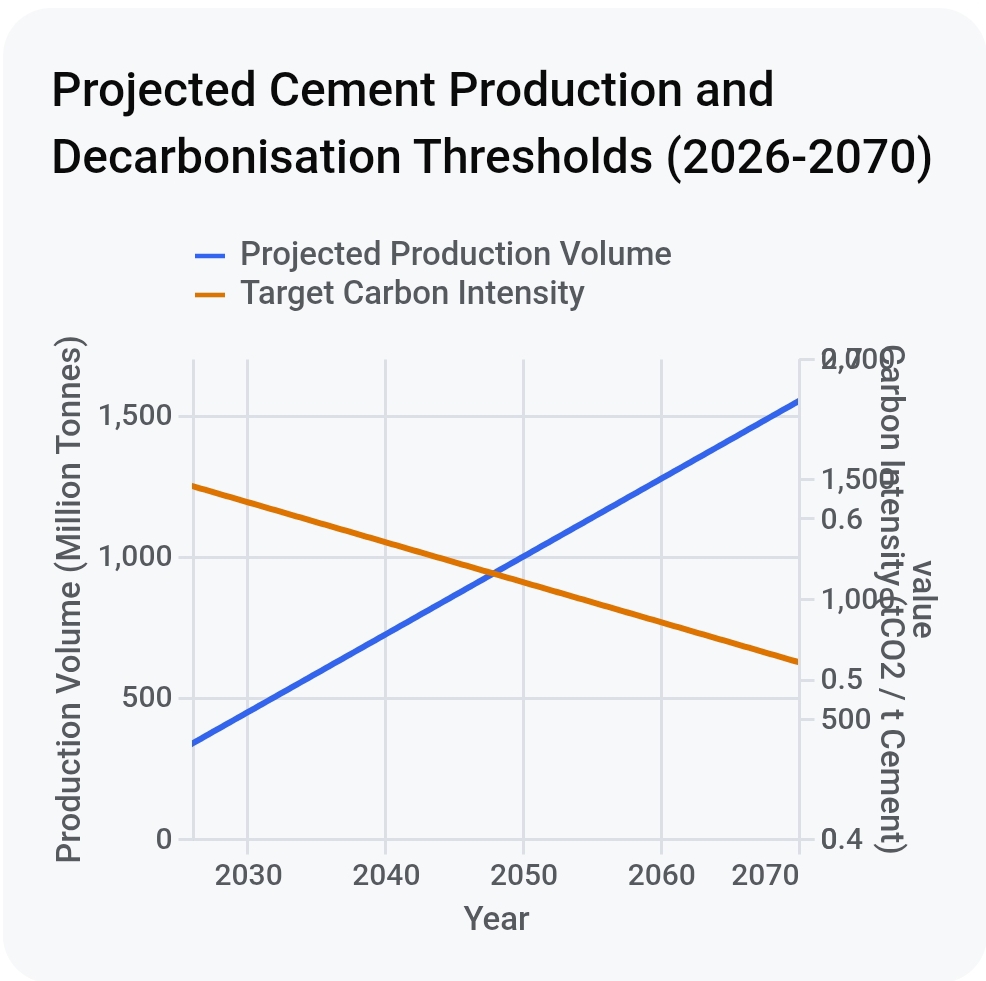
A comprehensive industrial assessment has revealed that India’s massive infrastructure and construction boom is creating an unsustainable carbon footprint that directly threatens the nation's long-term climate commitments. The research indicates that India’s cement manufacturing sector currently generates an average emissions intensity of 0.62 tonnes of carbon dioxide per single tonne of cement produced. Under the newly proposed industrial decarbonisation roadmap backed by the Energy and Resources Institute (TERI), analysts project that national cement production will explode from its current baseline of 334 million tonnes to an overwhelming 1,546 million tonnes by the year 2070 to support urban expansion.
Climate scientists and energy policy analysts warn that this projected fivefold increase in production volumes will completely derail India's formal pledge to achieve net-zero emissions by 2070. Dr Vibha Dhawan, Director General of TERI, emphasized the scale of the challenge during the report launch. "India's infrastructure ambitions are non-negotiable, but our current cement manufacturing framework stands as a formidable roadblock to our climate pledges. Without an immediate socio-technical shift towards green concrete alternatives, achieving net-zero by 2070 becomes a mathematical impossibility," Dhawan warned. Experts emphasize that the sector cannot rely solely on incremental energy efficiency improvements; instead, it requires a radical transition towards alternative green binding materials, the widespread commercial adoption of carbon capture and storage technologies, and a complete shift to renewable energy sources for kiln operations.
Editor's Note: The cement sector's carbon dilemma underscores the profound structural friction between essential national development and global climate responsibilities. The way forward hinges on the immediate implementation of stricter green building mandates, financial subsidies for low-carbon blended cement variants, and heavy public-private investment into experimental carbon-capturing concrete technologies. Balancing infrastructure growth with net-zero targets is no longer an optional policy preference, but a mathematical necessity for India’s ecological survival.



Leave a comment