

TreeTake Network
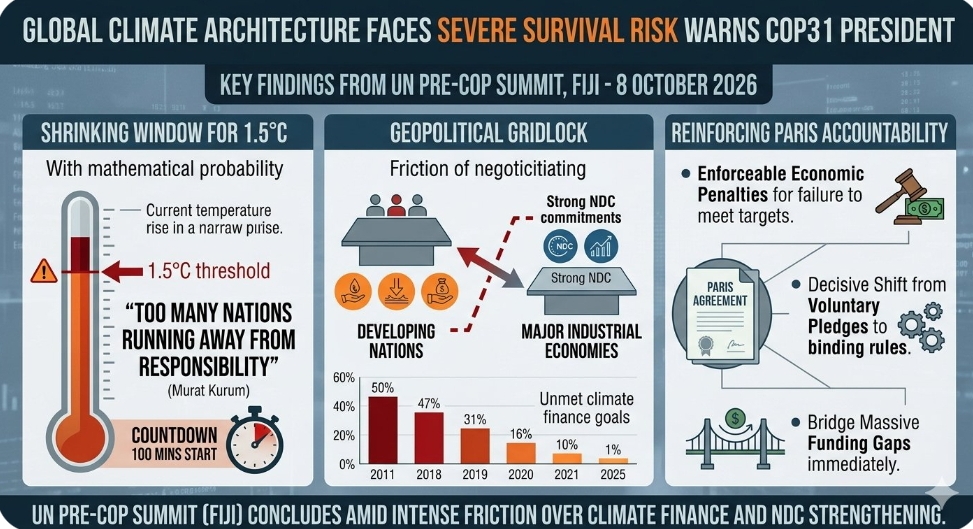
The international framework to combat global warming is under severe threat due to geopolitical stagnation and national reluctance to curb fossil fuel emissions. On the concluding day of the UN pre-COP climate summit in Fiji on 8 October 2026, the incoming COP31 President issued a stark warning to the international community.
Murat Kurum, Turkey’s Environment and Climate Change Minister, who is slated to preside over the critical COP31 summit, stated that keeping the global temperature rise within safe parameters is no longer an idealistic environmental goal, but an absolute matter of human survival.
Governments Avoiding Legal Accountability
The pre-COP high-level talks, designed to harmonise national targets ahead of the main negotiations, concluded amidst intense friction between developing nations and major industrial economies.
Minister Kurum openly criticised the growing frustration regarding the slow pace of climate finance allocation and the failure of major emitters to strengthen their Nationally Determined Contributions (NDCs).
"We are witnessing a dangerous trend where nations are running away from their shared responsibility," Kurum declared during his final address to the delegates. "The science has never been clearer, yet the political will is faltering. Postponing aggressive emission cuts is a luxury that vulnerable nations simply do not possess."
The Shrinking Window for One Point Five
The summit discussions focused heavily on the dwindling mathematical probability of limiting global warming to 1.5 degrees Celsius above pre-industrial levels.
Delegates from small island developing states expressed profound dismay at the lack of concrete financial commitments from wealthy nations to fund loss and damage mechanisms.
"The targets set for the next decade will decide the habitability of entire geographic regions," noted climate diplomacy expert Ana Falcon. "The gridlock we have observed here in Fiji suggests that countries are still prioritising short-term domestic economic security over long-term planetary stability."
Editor's Note
The tense conclusion of the pre-COP summit in Fiji exposes the profound frailty of voluntary climate agreements. The way forward requires a decisive shift away from non-binding pledges toward a system of enforceable economic penalties for nations that fail to meet emission reduction targets. As the world approaches COP31, international diplomacy must legalise strict accountability mechanisms; otherwise, the Paris Agreement framework will dissolve into irrelevance, leaving vulnerable populations to face the unmitigated consequences of global heating.



Leave a comment