

TreeTake Network
A slow-moving atmospheric crisis is locking its grip around the Indian subcontinent. Fresh meteorological metrics have triggered emergency assessments within federal agricultural and water resource divisions, exposing deep vulnerabilities in the nation's climate resilience. The traditional seasonal relief offered by the monsoon cycle has been structurally undermined by an intense, anomalous warming phase in the equatorial Pacific Ocean. As regional climate baselines continue to face intense pressure, the immediate season points toward an extended period of severe moisture stress, threatening to turn local seasonal shortfalls into a sweeping, nationwide crisis of water and food security.
The Atmospheric Matrix: Tracking the Current Anomaly
The scientific severity of this atmospheric pattern has been confirmed by definitive oceanographic modelling. Fresh data released by the International Research Institute for Climate and Society (IRI) points to a sharp, high-intensity climate anomaly. Predictive tracking reveals that while this specific warming phase is temporary and projected to dissipate by early next year, its immediate velocity remains severe. Advanced climate models indicate this warming phase has consolidated into a very strong event. This thermal shift disrupts the critical pressure differentials that drive the Indian Ocean branch of the monsoon, creating a high probability of failed, erratic, or highly compressed rainfall windows across crucial agricultural bands.
Ground Zero: The Deferral of Relief and Regional Collapse
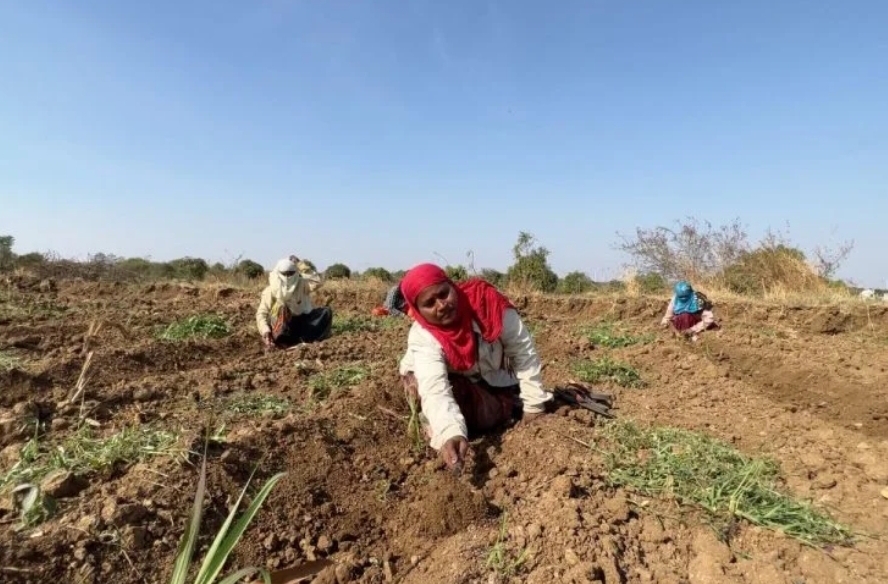
The real-world consequences of this atmospheric chokehold are transitioning from speculative data points into systemic regional distress. The immediate casualty of this cycle is the western and central agricultural belt, where the absolute failure of late-season showers has prevented the replenishment of critical surface reservoirs and deep aquifers.
The scale of this initial collapse is starkly visible in the state of Maharashtra. Following a severely depleted monsoon season and compounding crop losses, the state administration has taken the dramatic step of officially declaring a state of drought across 265 of its 358 talukas. This sweeping administrative declaration covers nearly 74 per cent of the state’s regional administrative units. In these hit areas, the lack of soil moisture has triggered widespread failure of key cash and food crops like soybean, maize, and cotton, leaving the rural economy exposed to immediate financial shocks and prompting emergency migrations out of parched districts.
The Hydro-Political Friction: Karnataka’s Parallel Crisis and Inter-State Standoffs
This hydrological disaster takes on a highly complex dimension when contrasted with neighboring Karnataka, where an identical, parallel agricultural drought has ignited a volatile inter-state water management crisis. The Karnataka government has officially declared 177 out of its 240 talukas as drought-affected following an acute 31 per cent overall rainfall deficit. The crisis is concentrated around the highly sensitive Malnad region—the critical catchment area feeding the Cauvery river system—which recorded an unprecedented 34 per cent moisture deficit.
This extreme lack of inflow has created a bizarre, combative contrast in trans-boundary water governance. Driven by local agricultural desolation, the Cauvery Water Management Authority directed Karnataka to release a mandatory 4,000 cusecs of water per day to down-riparian Tamil Nadu to save its standing crops. Karnataka, facing an immediate drinking water shortage across more than half of its subdivisions and seeing its reservoir storage collapse well below historical decadal baselines, has formally moved to challenge the directive. State administrators argue that complying with external water mandates under a intense climate footprint forces their own farmers into bankruptcy and threatens urban drinking grids. This geographic deadlock demonstrates how a single oceanic thermal anomaly can rapidly destabilise regional resource treaties, shifting water sharing from a cooperative legal framework into an existential resource struggle.
The Downstream Risk: Storage Depletion and Agricultural Forecasting
The crisis is not contained within individual regional boundaries. The multi-year persistence of this moisture deficit means the agricultural sector faces a continuous, multi-season compounding threat. The focus of concern has shifted to the upcoming winter cultivation cycles, which rely entirely on residual soil moisture and targeted canal irrigation.
A comprehensive review of India’s major river basin reservoirs reveals a troubling trend. With the Pacific anomaly projected to peak, central monitoring indicates that collective water storage levels in the nation's key reservoirs are falling well below their ten-year historical averages. This systemic depletion means that even if emergency groundwater extraction is modernised, the lack of structural recharge will trigger a severe drop in the water table. The agricultural ministry is already preparing emergency advisories, warning that if storage levels drop another 15 per cent, states will be forced to restrict water allocations for water-intensive winter crops like wheat and sugarcane to prioritise drinking supplies for urban centres.
Perspectives from the Field
- Meteorological Assessment: Dr Mrutyunjay Mohapatra, Director General of the India Meteorological Department (IMD), has closely monitored the baseline shifts. Dr Mohapatra observed, "The durability of this specific Pacific warming trend violates standard historical degradation cycles. We are observing a rare stabilisation where the atmospheric feedback loops over the Indian Ocean refuse to break. This prevents the normal establishment of low-pressure development systems, rendering traditional seasonal forecasts highly unstable and expanding dry spells well beyond historical margins."
- Agrometeorological Analysis: Dr Nabansu Chattopadhyay, former head of the Agromet Advisory Service Division, highlighted the systemic failure of structural protections. Dr Chattopadhyay noted, "Activating a Trigger-1 declaration across 265 talukas confirms that the agricultural soil profile has completely lost its moisture equilibrium. Releasing generic water relief is no longer effective when a consecutive, multi-season dry window is locked in through the winter. If we do not immediately mandate a structural shift to non-intensive crops like sorghum and pearl millet, we are setting the rural economy up for a prolonged systemic collapse."
- Grassroots Ground Reality: Emphasising the massive toll on farming livelihoods, Dr Ajit Navale, prominent leader of the All India Kisan Sabha (AIKS), stated, "Government resolutions and structural drought codes mean very little to a farmer whose topsoil has completely turned to dust. The current relief frameworks based on national disaster limits are completely inadequate because our communities have now suffered devastating losses across consecutive cultivation seasons. Without direct, emergency cash compensation and a complete debt waiver to offset this prolonged climate failure, the economic distress in these districts will become completely irreversible."
The Way Forward
Data indicates that reactive relief packages are insufficient against ongoing climate shifts. Mitigating moisture scarcity requires centralised strategies, including restricting groundwater extraction in arid zones, prioritising rainwater harvesting, and realigning support prices to discourage water-intensive crops in vulnerable regions.



Leave a comment