

TreeTake Network
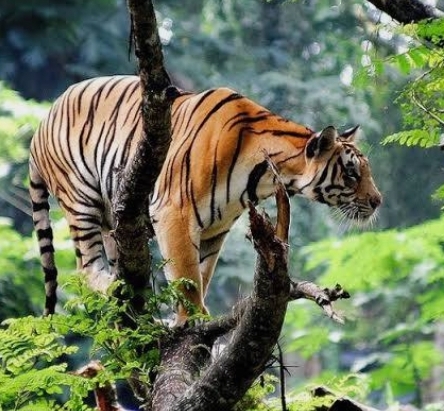
For generations, the Royal Bengal Tiger (Panthera tigris tigris) has stood as a symbol of wild power and evolutionary perfection, inspiring global communities with its unmatched strength and predatory intelligence. In an era where international wildlife diplomacy frequently chases headline-grabbing victories, a rare act of scientific restraint has taken place. The central government of India has officially postponed its highly publicised, ambitious programme to reintroduce the species into the tropical rainforests of Cambodia. While political frameworks and bilateral agreements had cleared the way for big cats to step onto Cambodian soil, top conservation officials and field biologists intervened. They cited a critical lack of natural prey and insufficient territorial enforcement as a recipe for biological failure, choosing long-term ecological viability over immediate diplomatic optics.
The Official Decision and the Adjusted Timeline
The formal decision to delay the transfer was finalised following a rigorous, multi-departmental scientific review by the Wildlife Institute of India and the National Tiger Conservation Authority. With the scientific validation concluded, the official decision to shift the target timeline from 2025 to 2028 was made public on September 15, 2026. This mandatory baseline pause establishes a binding buffer period, ensuring that no animals will leave Indian reserves until specific, pre-determined ecological milestones are verified on the ground in Southeast Asia.
The Landscape of Local Extinction
Cambodia was historically a stronghold for the Indochinese tiger, with hundreds roaming its rugged mountain ranges and dense cover through the late twentieth century. However, an aggressive, unmitigated wave of commercial poaching, systemic habitat destruction, and the widespread deployment of wire snares completely decimated the population. The last confirmed wild tiger in Cambodia was captured by a camera trap in 2007, and by 2016, the species was formally declared locally extinct. Seeking to correct this ecological loss, the Cambodian government partnered with India, signing a formal Memorandum of Understanding to secure an initial founder population of six wild Indian tigers—comprising two males and four females—slated for release into southwestern Cambodia.
The Postponement: Why the Translocation Was Definitively Delayed
The multi-year timeline adjustment followed a strict field audit conducted within Kravanh National Park and the surrounding Cardamom Rainforest Landscape—the massive, 900,000-hectare zone designated to receive the translocated cats. Independent wildlife reviews and comprehensive spatial audits exposed a critical bottleneck: the landscape lacks the foundational prey density required to sustain large obligate carnivores.
A landmark baseline study assessing the Cardamom ecosystem revealed a high probability that releasing an apex predator into the current landscape would trigger an immediate crisis. Researchers estimated a less than 25 per cent probability that the designated forest could successfully support a viable, breeding population of 25 adult tigers. While a 90-hectare specialised enclosure has already been constructed inside the Tatai Wildlife Sanctuary to receive the big cats, leading carnivore biologists argued that releasing predators from a secure enclosure into a depleted forest would inevitably force the animals to wander out of protected boundaries into human settlements, leading to livestock predation and fatal retaliatory conflict.
Addressing the Prey Deficit and the Snaring Epidemic
Tigers do not exist in isolation; their survival is mathematically tethered to large wild ungulates such as gaur, banteng, sambar deer, and wild boar. Decades of unmonitored snaring have created "empty forest syndrome" across large swathes of Cambodia, where the canopy remains intact but the forest floor is largely devoid of mammalian life.
The revised 2028 timeline forces a shift in conservation strategy, dictating that habitat restoration must completely precede predator introduction. Over the next few years, field authorities must achieve two monumental milestones:
- Intensified Anti-Poaching Operations: Mobilising massive, continuous ground patrols to systematically dismantle the thousands of active wire snares that riddle the forest floor, ensuring the landscape is safe from industrial poaching networks.
- Aggressive Prey Rebuilding Programmes: Establishing extensive captive-breeding centres and managed sanctuaries within Cambodia to rapidly boost populations of deer and wild bovids, creating a robust, self-sustaining food chain before any apex predator sets foot in the region.
The Ripple Effect: Stricter Rules for Future Global Requests
This policy shift has sent shockwaves through the Ministry of Environment, Forest and Climate Change, fundamentally altering how India evaluates similar international translocation requests currently under review. Historically viewed by diplomatic circles as powerful tools for soft power, wildlife transfers are now subjected to an uncompromising scientific checklist. The Ministry has internalised the lessons from early challenges in the domestic cheetah introduction project and the current Cambodian delay to establish a rigid legal precedent.
Consequently, pending bilateral proposals—including requests from several African and Central Asian nations seeking Indian wildlife to repopulate their historical ranges—have been placed on immediate technical hold. The Ministry has quietly notified applicant nations that India will no longer approve wildlife exports based on political goodwill or superficial habitat assessments. Moving forward, any foreign government requesting Indian apex predators or endangered megafauna must submit transparent, long-term spatial data proving advanced prey density, secure boundary fencing, zero-snaring enforcement protocols, and indigenous community-coexistence plans. This institutional pivot effectively transforms India from an open biological donor into a highly protective, data-driven custodian of global biodiversity.
Perspectives from the Field
- Expert Scientific Assessment: Dr K. Ullas Karanth, renowned carnivore biologist and Founder Director of the Centre for Wildlife Studies, has been an outspoken authority on the critical vulnerabilities of this plan. Dr Karanth stated, "A tiger reintroduction does not begin with a tiger. It begins with prey, habitat, protection, and people. Releasing tigers into forests without a highly dense, self-sustaining prey base is ecologically reckless and highly unlikely to succeed. The decision to step back and re-evaluate is a victory for scientific consensus."
- Administrative Oversight: Commenting on the rigorous criteria required from the Indian side, Amit Mallick, a senior conservation official tracking the cross-border evaluation framework, noted, "India holds a massive responsibility as the primary custodian of the world's wild tigers, and we cannot treat translocations as experimental trial-and-error exercises. The official postponement confirmed in September 2026 provides Cambodia with a necessary, structured window to focus entirely on zero-snaring enforcement and intensive prey restoration before any animals leave our reserves."
The Way Forward
The postponement of the India-Cambodia tiger project sets a profound global precedent for trans-continental wildlife movements. By showing that animal welfare and ecological metrics take absolute precedence over international timelines, India has redefined responsible conservation leadership, reminding the international community that restoring an ecosystem requires rebuilding its foundations from the ground up.



Leave a comment