

TreeTake Network
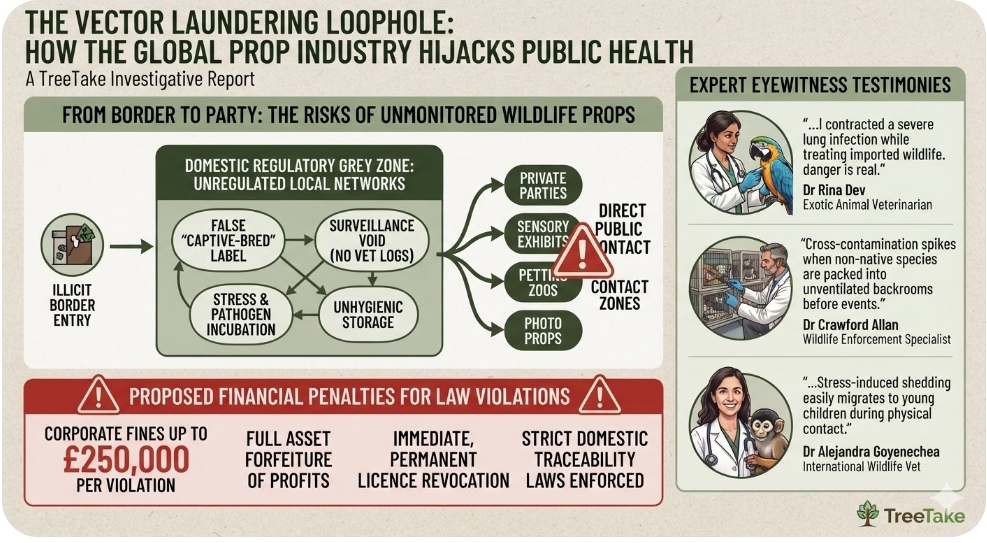
The mainstream exploitation of trafficked exotic wildlife as living party props and interactive entertainment relies on a profound enforcement failure: the "Vector Laundering Loophole". While international border control focuses heavily on initial transit points, wildlife syndicates are bypassing domestic veterinary tracking completely. By funnelling smuggled, non-native animals directly into unregulated private hiring networks, pop-up petting zoos, and sensory birthday exhibits, traffickers completely outpace local safety laws. The United Nations Office on Drugs and Crime (UNODC) confirms that wildlife trafficking currently impacts around 4,000 distinct species globally. However, the commercial transition of these animals into direct public contact zones exposes an unmonitored biological crisis.
The Angle of Failure: Post-Border Quarantine Dissolution
Mainstream media frequently focuses on the initial interception of wild animals at international borders. The true breakdown, however, occurs after these species successfully clear or bypass physical borders. Once inside a domestic territory, non-native animals enter a regulatory grey zone.
Smugglers use private digital channels to supply local event companies. The animals are falsely marketed as "domestically bred" or "rescued", effectively laundering their illegal origins. Furthermore, most nations lack a cohesive post-importation disease surveillance system. This leaves a severe structural gap between border inspection and public entertainment venues. Animals are shuffled through stressful, unhygienic local storage networks before being handled by the public. Research published in the journal Science reveals that the longer animals circulate through these unregulated trade networks, the more opportunities pathogens have to jump to humans.
Corporate Complicity: Shady Agencies and Corporate Exploitation
The most critical driver of this trade is the covert involvement of seemingly legitimate corporate houses and elite event management agencies. TreeTake's intelligence network has uncovered how premium hospitality conglomerates and high-end party planning operations intentionally contract unverified third-party suppliers to source "living spectacles" for corporate galas and private VIP functions.
By routing these contracts through complex layers of shell companies and vague procurement descriptions, these corporate entities escape primary legal liability. They benefit commercially from the public draw of rare wildlife while driving up the black-market value of illicit species. These firms actively shield the traffickers by ignoring the total absence of biosecurity documentation and certified health screening certificates in exchange for exclusive, high-margin entertainment amenities.
Insider Disclosures: Whistleblower Accounts from Corporate Event Hubs
For the first time, structural insiders operating within elite corporate event networks have broken their silence. These corporate whistleblowers expose a deliberate culture of systemic oversight engineered to bypass animal health tracking:
- The Procurement Log Whistleblower: A former senior logistics coordinator at a major international hospitality conglomerate disclosed the explicit paperwork manipulation used to mask illegal wildlife hires. "We were systematically instructed by corporate leadership to classify invoices for exotic animal handlers under generic headings like 'Atmospheric Visual Lighting Assets' or 'Immersive Set Decor'. No veterinary documentation or import licences were ever requested by our legal department because our primary objective was deniability."
- The Sourcing Specialist Whistleblower: An event coordinator formerly representing high-profile celebrity party agencies revealed how local demand spikes direct trafficking pipelines. "When a high-net-worth client demands a baby cheetah or an undocumented primate for a themed sensory exhibition, corporate procurement teams turn to unvetted private brokers. These suppliers deliver non-native animals to venues in the middle of the night using unmarked vehicles, intentionally avoiding local authority inspection registers."
The Cost of Exposure: Verified Public Risks
Bringing highly stressed, non-vaccinated exotic wildlife into interactive spaces dramatically increases the risk of zoonotic disease spillover. Because these animals bypass official border veterinary controls, they arrive at public events with unknown viral and bacterial loads. Expert tracking by global health bodies reveals that approximately 75 per cent of emerging infectious human diseases originate in wildlife. The immediate public health impacts are systemic and well-documented.
- Highly sought-after birds, including exotic macaws and African grey parrots, are notorious vectors for Chlamydia psittaci (Psittacosis). Dr Rina Dev, a leading exotic animal veterinarian, noted the stark personal danger of these interactions after being hospitalised with a severe lung infection contracted while treating imported and seized wildlife.
- Dr Crawford Allan, a veteran wildlife trade enforcement specialist, observed firsthand how cross-contamination spikes when multiple non-native species are packed into unventilated backrooms before events. He reported that animals arrive heavily dehydrated, shedding active pathogens directly into communal transport cages, which creates a concentrated biohazard long before the animals reach consumers.
- Dr Alejandra Goyenechea, an international wildlife veterinarian, documented extensive stress-induced shedding of parasites and dermatological fungi in smuggled primates used for private photo sessions. She noted that these micro-pathogens easily migrate to young children during physical contact, bypassing basic sanitisation efforts because the underlying infections go completely untreated.
- Interactive exhibits frequently allow direct touching. Historical data from the Centres for Disease Control and Prevention (CDC) documents widespread human Salmonella outbreaks directly tied to public animal exhibits, including cases where children contracted infections simply by touching the wooden barriers surrounding exotic reptile enclosures.
- The growing trade in venomous, non-native reptiles—such as imported pit vipers used for shock-value event displays—presents a fatal medical issue: local hospitals do not stock the highly specific, regional antivenoms required to treat bites from these smuggled species.
Corporate Responsibility, Proposed Penalties, and Platform Accountability
"Wildlife crime inflicts untold harm upon nature and it also jeopardises livelihoods, public health, good governance and our planet's ability to fight climate change," warns Ghada Waly, Executive Director of the UNODC.
To halt the commercialisation of these vectors, the operational focus must shift from standard border seizures to the domestic markets that actively legalise illicit wildlife. TreeTake demands immediate legal action targeting the digital booking systems, event planning platforms, and private hire registries that facilitate the hiring of non-native wildlife props. Under newly proposed legislative updates, event companies and corporate houses violating these biosecurity laws will face catastrophic financial penalties, including corporate fines up to 250,000 pounds per violation, full asset forfeiture of profits tied to the event, and immediate, permanent revocation of their commercial operating licences. Without strict domestic traceability laws, severe financial deterrents, and mandatory post-border veterinary logs, these interactive public events will remain an active catalyst for the next public health crisis.



Leave a comment