

Trans-Border Deluge: Over 70 Lives Claimed as Unprecedented Storms Devastate India-Nepal River Basins
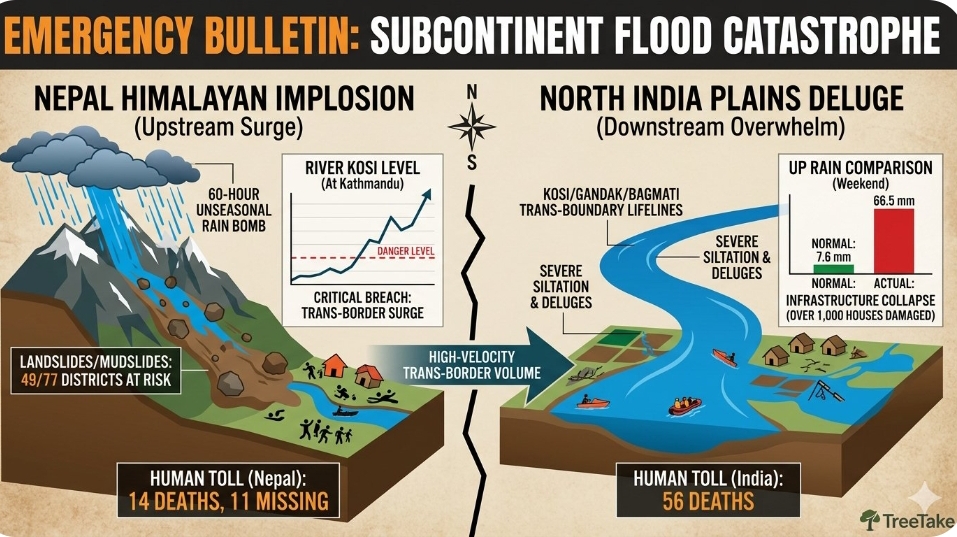
A catastrophic hydrological crisis has unfolded across the subcontinent as a violent, low-pressure system over the Bay of Bengal triggered 60 hours of relentless, unseasonal downpours. The intense weather cell dumped an average of 66.5 millimetres of rain over the weekend—vastly exceeding the historical seasonal baseline of just 7.6 millimetres for this specific window. The resulting flash floods and massive mudslides have overwhelmed emergency response infrastructure across northern India and neighbouring Nepal, leaving a trail of severe structural destruction and pointing to a dangerous acceleration in regional extreme weather patterns.
TreeTake Network
Reports from our correspondents tracking field conditions across the border corridors indicate a complete breakdown of natural drainage systems. Torrential runoff from the upper Himalayan catchments has rushed down into the plain settlements, causing major rivers to swell instantly past their danger markers. Local volunteer rescue teams report that entire villages along the low-lying river fringes have been submerged, with thousands of families displaced as muddy water completely cuts off critical highway connectivity and rural electrical grids.
The Human Toll and Structural Ruin
The scale of the breaking disaster has been precisely documented by regional disaster management offices. Official casualty updates confirm that the collective death toll across both nations has climbed to over 70. In northern India, the State Relief Commissioner’s Office confirmed that 56 people have lost their lives due to drowning, lightning strikes, and wall collapses. The extreme moisture load has caused the structural failure of over 1,000 rural houses, forcing district authorities to establish emergency relief camps.
Simultaneously, across the border, Nepal’s National Disaster Risk Reduction and Management Authority reported 14 confirmed deaths and 11 individuals missing as rivers breached containment walls. The extreme precipitation also triggered a massive avalanche that struck an active agricultural base camp on Himlung Himal in the northern Manang district, isolating high-altitude teams.
Administrative Directives and the Ground Response
State machinery has shifted into an absolute crisis configuration to manage the human displacement. Administrative bodies have deployed specialised search teams to handle deep water ingress across isolated rural grids.
"Ensuring the safety of the life and property of every person is the responsibility of the administration," stated Relief Commissioner Hrishikesh Bhaskar Yashod in an official directive issued to all border teams. "District Magistrates must remain directly in the field, inspect the developing situation, and maintain continuous communication with the public. We urge all residents in low-lying zones to move to designated safe shelters and follow official weather advisories carefully."
Trans-Boundary Threats and Failed Defences
The crisis has exposed the severe vulnerability of shared river basin management frameworks. Nepal's hydrological monitoring stations have placed 49 out of the nation’s 77 districts under active flash flood and high-level landslide alerts. Major trans-boundary lifelines—including the Kosi, Gandak, and Bagmati rivers—are flowing well above their maximum danger thresholds, sending a massive, high-velocity volume of silt-laden water crashing downstream into the plains of Bihar and Uttar Pradesh.
"We are dealing with a severe structural mismatch between trans-border early warning telemetry and real-time community evacuation protocols," states Dr Madhavan Rajeevan, former Secretary to the Ministry of Earth Sciences. "The sheer volume of water entering the plain channels from the upper catchments leaves downstream communities with a dangerously small window of response. Until we establish a fully unified, automated water-release protocol between India and Nepal that factors in climate-induced cloudburst volumes, these shared river basins will continue to face sudden, unmanageable seasonal catastrophes."
Emergency Crisis Response Infrastructure
For citizens stranded within the active deluge zones or seeking immediate evacuation deployment, the following official emergency control helplines have been activated:
- National Disaster Helpline (India): 1070 (Direct toll-free link to the apex State Emergency Operations Centre for rapid rescue deployment)
- Lucknow Municipal Waterlogging & Tree-Fall Desk: 1533 (Localised capital command centre for immediate pump deployment and clearing operations)
- Indian Embassy Emergency Helplines (Kathmandu): +977 985 131 6807 and +977 970 910 7500 (Designated call and WhatsApp access channels for Indian nationals stranded across Nepal)
- Nepal National Emergency Operational Control: 100 (Nepal Police) or 1114 (Armed Police Force disaster response line)
Editor's Note
This sudden trans-border disaster serves as a grim warning that climate-induced extreme weather is outstripping existing municipal defence infrastructure. The multi-state loss of life underscores the reality that environmental emergencies do not recognise national boundaries. Managing the rising volatility of the Himalayan watersheds requires building robust, cross-border early warning grids and strictly prohibiting vulnerable human settlements from expanding directly into active, high-risk floodplains.



Leave a comment