

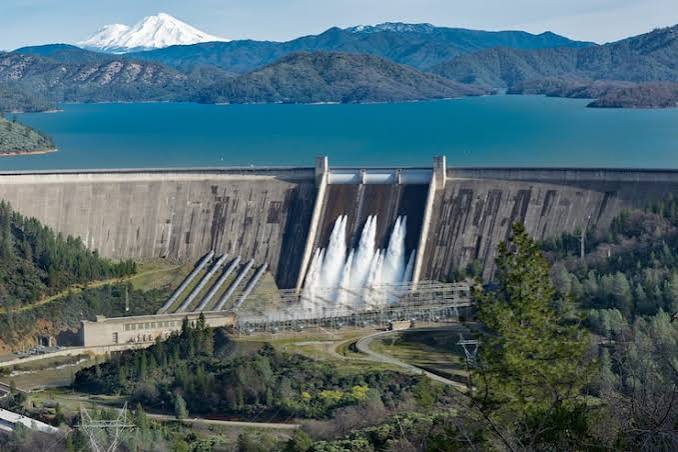
The structural integrity of subcontinental energy infrastructure faces a rigorous engineering assessment from the scientific community. A comprehensive national safety audit conducted by a specialised research group attached to the Indian Institute of Technology Madras has uncovered deep anomalies in the seismic design codes applied to thousands of large reservoirs across the country. The findings disrupt long-standing engineering templates, confirming that existing risk models systematically under-calculate the peak ground acceleration forces that high-intensity earthquakes along the Himalayan fold thrust zones can generate. TreeTake presents a detailed operational report on this technical intervention, detailing the specific structural vulnerabilities exposed at the Tehri and Bhakra installations, the data gaps inside the National Dam Safety Authority registers, and the urgent pathways needed to execute subsurface seismic retrofitting loops.
TreeTake Network
A major structural assessment of subcontinental hydraulic infrastructure has exposed severe planning deficits that could compromise the safety grid of prominent high-altitude energy installations. A comprehensive national engineering audit compiled by senior structural dynamicists at the Indian Institute of Technology Madras has rejected multiple historic design records, confirming a systemic underestimation of earthquake resistance parameters across major public sector utilities. The engineering sweep reveals that standard national seismic zoning charts fail to track the real-world kinetic pressures generated along primary mountain boundary faults, leaving massive concrete and earth-fill structures vulnerable to unexpected ground acceleration spikes.
The Structural Scope and Design Rejections
The operational parameters tracking infrastructure durability underwent an unyielding, data-driven recalibration as structural engineers finalised their technical review of the National Dam Safety Authority’s master registry. The extensive spatial audit focused on processing historical and active telemetry logs for 6,545 large dams systematically catalogued across the country. The field findings verified that the foundational engineering calculations utilised during the initial layout phases of multiple high-capacity installations relied on outdated seismic zone maps that heavily flattened the potential intensity of tectonic displacement along active fault lines.
The core of the technical crisis turns on the extreme miscalculation of Peak Ground Acceleration (PGA) metrics across highly sensitive mountain jurisdictions. IIT-Madras investigators developed advanced computational simulation modules that demonstrate that if an earthquake measuring above 7.5 on the Richter scale occurs along the Main Central Thrust of the Himalayas, the actual dynamic loads placed on dam foundations will stand significantly higher than the maximum limits factored into the original construction blueprints. The audit has outright rejected attempts by regional irrigation boards to pass off cosmetic surface patches as comprehensive safety compliance, proving that the lack of active subsurface telemetry loops leaves older installations completely blind to cumulative micro-fracture accumulation induced by tectonic stress.
The Extreme Pressures on Tehri and Bhakra Infrastructure Networks
The structural vulnerability is heavily concentrated across the high-capacity energy reservoirs that supply power and irrigation matrices to the northern subcontinental plains. The audit focused its primary structural simulations on the Tehri Dam project—a 260.5-metre high rock and earth-fill structure blocking the high-velocity headwaters of the Bhagirathi River—and the Bhakra Dam installation, a massive concrete gravity structure managing the Sutlej basin. Both installations are situated within zones traditionally mapped as high-risk seismic belts, yet their engineering safety factors were locked in prior to modern advances in trans-border seismological tracking.
The engineering charts indicate that the massive weight of the water packages stored inside these giant reservoirs can itself alter localised stress distribution along nearby rock layers, a phenomenon scientifically recorded as Reservoir-Induced Seismicity (RIS). The IIT-Madras models confirm that the concrete galleried structures and internal inspection tunnels at these installations face accelerated ageing cycles due to continuous hydrostatic pressure variations. Should a major seismic wave propagate through the saturated rock layers beneath the structures, the resulting horizontal shearing forces could outpace the resistance thresholds of older concrete aggregates, initiating irreversible structural alignment shifts that would completely compromise downstream flood protection systems.
Institutional Resistance and Data Concealment Frameworks
The enforcement bottleneck is heavily aggravated by a structural conflict between independent research institutions and the state-run dam management committees that oversee commercial energy dispatches. Under existing statutory safety guidelines, utility operators are required to provide open public access to structural vibration records and internal seepage telemetry logs to allow independent academic verification. However, facility managers routinely deploy bureaucratic exemptions to block information, asserting that sharing baseline engineering data or structural layout parameters would compromise national infrastructure security grids.
This administrative insulation has faced firm resistance from conservation planners and civil engineering groups who point out that treating safety logs like classified state secrets prevents the implementation of urgent, real-world retrofitting programmes. The special project task force attached to the IIT-Madras audit clarified that continuously concealing operational stress indices makes it impossible for external experts to assess the true rate of concrete degradation. They maintain that the public administration is systematically prioritising the uninterrupted commercial output of hydro-electric units over long-term public safety, leaving millions of residents in the downstream plain sectors exposed to catastrophic failure risks because the state bureaus fail to balance commercial power demands with unyielding, data-verified structural transparency.
Strategic Paths to Civil Infrastructure Security
Dismantling the systemic design vulnerabilities gridlocking subcontinental dam safety requires a total transformation of risk calculation and engineering accountability. The primary lesson to learn from this extensive seismological audit is that static, historical building codes cannot substitute for real-time tracking of active tectonic zones. State infrastructure frameworks must legally mandate that all large dams operating within the subcontinental mountain arcs undergo immediate, automated structural health monitoring transformations.
First, the National Dam Safety Authority must legally mandate the permanent installation of high-resolution, subsurface fibre-optic strain sensors and automated strong-motion accelerometers across all dam galleries, transferring all internal telemetry inputs to a centralised, unalterable digital ledger linked directly to an independent National Seismological Safety Portal. Second, the Ministry of Power must statutorily ban the approval of new high-altitude hydro-electric expansions until a multi-season, independent geospatial audit confirms that existing downstream barriers are physically capable of surviving a worst-case double fault rupture sequence. Finally, the central government must introduce a unified, fast-track fiscal ledger that links project operational extensions directly to the execution of verified, subsurface concrete retrofitting loops and high-pressure chemical grouting routines, thereby engineering absolute long-term accountability into the foundational tier of subcontinental development.



Leave a comment