

TreeTake Network
The environmental sustainability of high-altitude pilgrimage corridors across the Central Himalayas faces a severe ecological crisis, according to official datasets released by local civic authorities. Comprehensive solid waste metrics obtained under the Right to Information Act confirm that the volume of plastic packaging, camping debris, and non-biodegradable consumer trash abandoned within the vulnerable Kedarnath shrine basin has exploded exponentially, far exceeding the total waste quantities produced in any single year over the preceding three years. This rapid waste accumulation highlights how expanding high-density religious tourism completely overwhelms the region's existing waste management infrastructure.
The Landfill Strain and Surge Metrics
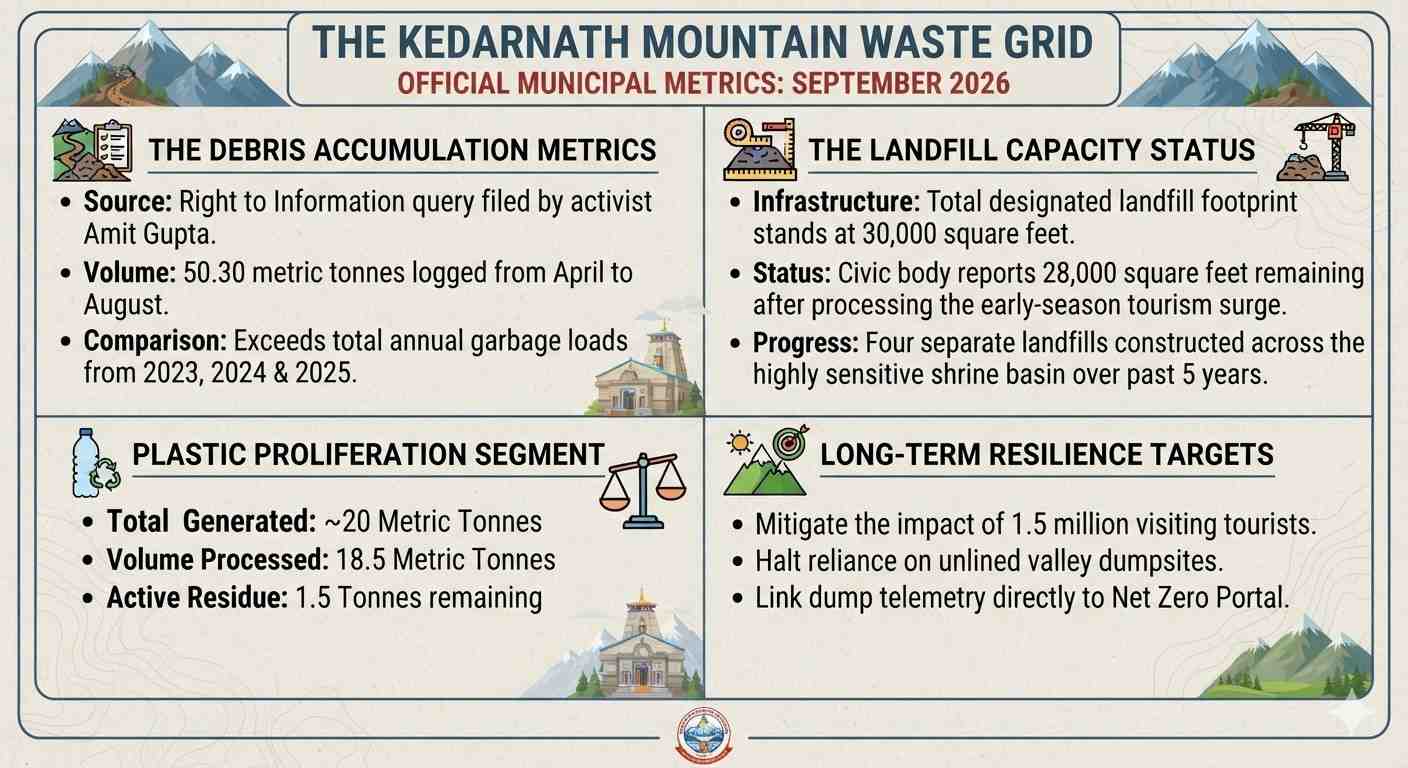
Official records maintained by the Kedarnath Nagar Panchayat reveal that the Himalayan shrine generated 50.30 metric tonnes of waste between April and August, marking a critical volume increase that stands at more than 2.5 times the garbage load of the entire previous season. The internal data logs confirm that monthly totals peaked during the height of the summer travel influx in May, registering a single-month surge of 16.3 metric tonnes.
When mapped against historical records, the figures expose a massive acceleration in landscape degradation. The local municipality registered 32.58 tonnes of total waste in 2023, which dropped slightly to 26.10 tonnes in 2024, and reached a low of 21.40 tonnes in 2025. Despite the construction of four separate landfills across the highly sensitive shrine basin over the past five years to cope with expanding tourism footprints, civic infrastructure remains severely strained, with the primary dumping site reporting only 28,000 square feet remaining out of its total 30,000-square-foot operational capacity.
The Plastic Proliferation and Environmental Testimony
Discarded plastic polymers drove a vast majority of the high-altitude land degradation, totalling approximately 20 metric tonnes generated across the alpine paths. Local recycling units processed 18.5 metric tonnes of the material, leaving an active residue of 1.5 metric tonnes of unmanaged loose plastics scattered across the sub-alpine meadow soils.
The underlying metrics, officially obtained through statutory queries filed by right to information activist Amit Gupta, highlight the immediate threat posed by an unmitigated influx of roughly 1.5 million pilgrims this year. Commenting on the municipal telemetry data, Amit Gupta stated that the reliance on landfills amid rising waste levels raises significant concerns regarding the Himalayan environment, particularly given the large number of pilgrims and tourists visiting this highly sensitive region annually. Environmental advocates tracking the data note that this extreme volume effectively turns a highly fragile high-alpine ecosystem into an unmanaged dumping ground, placing severe structural pressure on public health grids and downstream river systems.



Leave a comment