

TreeTake Network
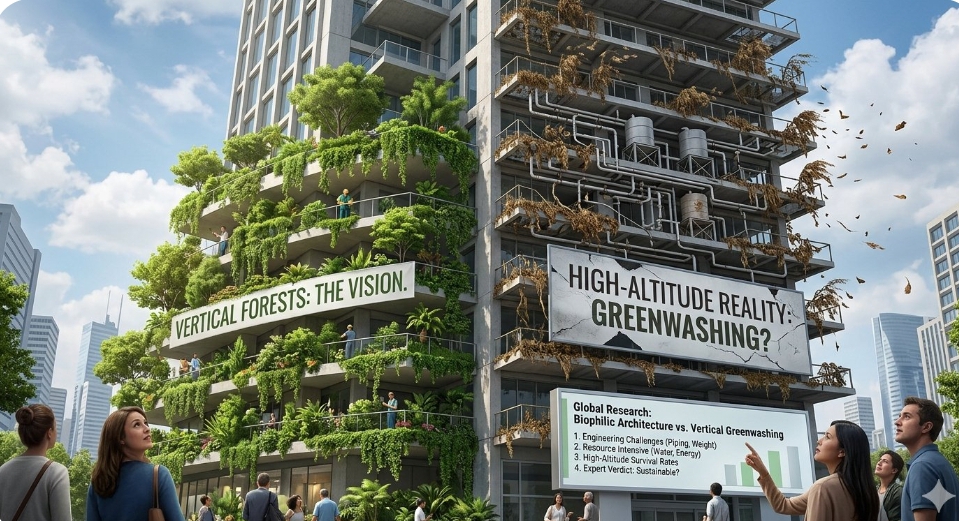
Every day, millions of people double-tap breathtaking images of luxury high-rises covered in lush green trees, cascading vines, and vibrant shrubs on social media. Billed as vertical forests or biophilic architecture, these structures are aggressively marketed as the ultimate eco-friendly solution to urban pollution and climate change. Prominent projects like Milan's Bosco Verticale or the Easyhome Huanggang Vertical Forest complex have turned this aesthetic into a global real estate trend. However, structural engineers and urban ecologists are increasingly sounding the alarm, revealing that glueing massive woodland ecosystems to the sides of forty-story concrete towers is a logistical nightmare that frequently results in a slow, expensive death for the vegetation involved.
Global Research and Expert Data on Vertical Greenwashing
To understand the scale of this problem, one must look at the hard biological and meteorological limits of high-altitude habitats. Urban conservationists like Dr Sandra Albro have repeatedly warned that these eco-luxury skyscrapers function more like ecological traps than genuine sanctuaries. Isolating trees on high-rise balconies completely cuts them off from natural, communal soil networks. In a real forest, trees rely on vast underground networks of mycorrhizal fungi that are absolutely critical for their immunity, nutrient sharing, and long-term survival. Without this natural ecosystem, a skyscraper tree is essentially on life support. Furthermore, data from the Council on Tall Buildings and Urban Habitat highlights a major meteorological obstacle: high-altitude winds above 100 meters can move up to three times faster than ground-level breezes. This relentless, aggressive wind velocity causes rapid soil desiccation and physical uprooting, routinely killing non-indigenous tree species placed on luxury balconies.
The Engineering Contravention of Balcony Ecosystems
The engineering choices required to keep these floating ecosystems alive run directly counter to genuine environmental sustainability. Trees are biologically evolved to grow deep, widespread root systems in communal soil, sharing nutrients and structural support through vast underground networks. Forcing a mature tree to survive inside an isolated, shallow concrete planter on a high-altitude balcony strips it of its natural defence mechanisms. To prevent the plants from dying of thirst, these buildings must rely on hyper-engineered, fully automated irrigation networks that pump millions of litres of piped water upward against gravity every single day. This constant mechanical reliance creates an intense operational energy footprint that frequently cancels out the carbon-sequestration benefits of the plants themselves, turning an eco-luxury project into a resource-heavy burden.
High-Altitude Climate Hostility and Resource Crutches
Beyond the resource drain, the hostile climate at high altitudes creates a deadly environment for non-indigenous flora. Wind speeds increase dramatically as you ascend a skyscraper, and intense, dry gusts hit balcony vegetation, causing rapid moisture loss and severe physical stress. Urban forestry data shows that up to thirty per cent of trees planted on upper-level balconies die within the first few years due to wind damage and soil desiccation, requiring expensive, hazardous crane operations to replace them. Furthermore, the massive weight of wet soil and fully grown trees requires structural engineers to reinforce the entire building with tens of thousands of additional tons of carbon-heavy concrete and steel. When a building requires a massive increase in raw industrial materials just to support the weight of its aesthetic greenery, the entire project crosses the line from genuine conservation into deceptive corporate marketing.
Shifting Focus to Ground-Level Ecological Reality
True biophilic design is not about creating a superficial, Instagram-friendly spectacle of nature trapped in a concrete cage. It requires integrating horizontal green corridors at ground level, expanding urban wetlands, and planting native trees directly into the earth where they can naturally support biodiversity and cool our warming cities. Luxury developers must move past the trend of vertical greenwashing and stop using fragile living ecosystems as marketing wallpaper for expensive real estate. Real sustainability is grounded in biological reality and horizontal conservation, not high-altitude illusions that compromise our planet's resources.



Leave a comment