

Tree Take Network
A stark warning from the World Food Programme (WFP) has sent ripples through global agricultural sectors, indicating that an intensifying El Niño climate pattern could push 49 million more people into acute food insecurity by late next year. While the forecast carries grave global implications, its shadow falls heavily on India. For an agrarian economy deeply reliant on predictable weather cycles, this escalating ecological shift signals an immediate threat to rural livelihoods, crop yields, and inflation.
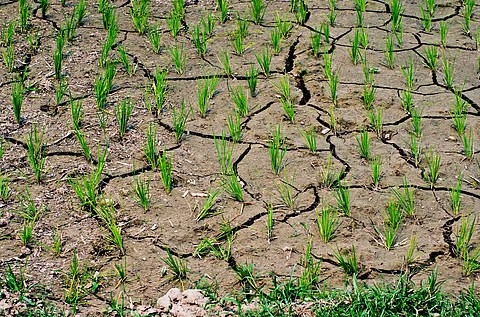
The phenomenon, marked by the unusual warming of surface waters in the Pacific Ocean, routinely disrupts the Indian Summer Monsoon. Instead of delivering life-giving rains uniformly across the subcontinent, a strong El Niño historically fractures rainfall distribution. The consequences are already manifesting in prolonged dry spells, delayed sowing seasons, and record-shattering summer heatwaves across northern agricultural belts like Uttar Pradesh.
For India's farming communities, the stakes could not be higher. A deficit in monsoon rainfall triggers a cascading crisis. Ground water tables deplete rapidly, reservoirs run low, and rain-fed crops like paddy, pulses, and oilseeds face widespread failure. When local harvests suffer, food prices spike in urban markets, disproportionately penalising low-income families who spend the bulk of their earnings on daily sustenance.
Furthermore, recent climate studies indicate that the risks are shifting. Traditional drought cycles are transforming into rapid "flash droughts." These sudden, severe moisture deficits catch farmers off-guard, leaving no time for mitigation and devastating crops mid-cycle. This modern manifestation of climate volatility proves that standard, reactive disaster management is no longer sufficient to safeguard the nation's food bowl.
Tackling this looming crisis demands an immediate pivot toward grassroots resilience and sustainable farming practices. Agriculture must adapt by embracing drought-resilient, climate-smart crop varieties and scaling up micro-irrigation techniques like drip and sprinkler systems. On a community level, revitalising traditional water harvesting structures, such as local ponds and check dams, is vital to capturing every drop of erratic rainfall.
Ultimately, the WFP’s global warning must serve as a localized call to action. Protecting India's food security from the whims of a changing climate requires a unified effort from policymakers, scientists, and grassroots communities. By investing heavily in water conservation and ecological agriculture today, the nation can build a resilient shield against the turbulent weather of tomorrow.



Leave a comment