

TreeTake Network
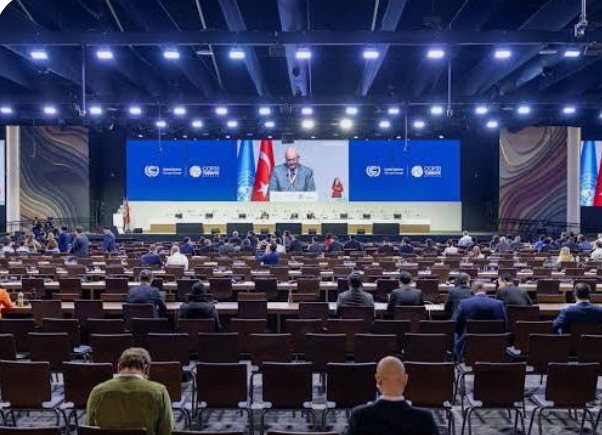
The Ministerial High-Level Segment opened at the Plenary Akdeniz inside the Antalya Expo Centre on November 18, 2026, plunging nearly 200 nations into severe political deadlocks over the legal interpretation of climate finance treaty obligations. Co-hosted under an unprecedented partnership between Türkiye and Australia, the United Nations COP31 summit reached a critical impasse during the formal launch of the Second Global Stocktake. Developing nations fiercely accused wealthier, industrialised economies of attempting to systematically undermine the foundational, legally binding text of the Paris Agreement by diluting clear public finance directives into an unmonitored system of voluntary private capital contributions.
The core of the diplomatic conflict centres on Article nine of the Paris Agreement treaty framework. Under Article nine, developed countries bear a strict, non-negotiable legal obligation to provide predictable public financial resources to assist vulnerable developing nations with climate mitigation and adaptation strategies. However, inside the negotiating rooms in Antalya, wealthier states have aggressively pushed to shift the focus toward voluntary contributions from a broader group of countries. Developing country observers warn that this text manipulation is a bad-faith attempt by historical polluters to escape their legal responsibilities, effectively forcing climate-vulnerable populations to fend for themselves against escalating global environmental disasters.
Simon Stiell, Executive Secretary of the United Nations Framework Convention on Climate Change, delivered a sharp warning during the high-level plenary launch. "The Second Global Stocktake is not a bureaucratic exercise; it is about the air we breathe, the work we do, and the survival of the places we love. We cannot allow the foundational legal parameters of international climate treaties to be rewritten or watered down during intense political stalemates. The absolute reality is that voluntary promises and private market mechanisms cannot substitute for the predictable, transparent public funding that wealthy nations legally committed to deliver under the Paris Agreement framework."
Geopolitical friction over market-based mechanisms and loopholes
The geopolitical divisions are further compounded by a heavily contested 18-page overarching draft agreement circulated by the COP31 presidency, which attempts to balance targets for global electrification with highly controversial language surrounding carbon dioxide removal technologies. Climate justice advocates and vulnerable small-island states have attacked these clauses, categorising carbon removal mechanisms as a corporate loophole designed to prolong the lifespan of the fossil fuel industry. Furthermore, tensions escalated at the pledging plenary as civil society groups condemned wealthier nations for offering mere fragments of funding to the global Adaptation Fund, leaving a massive deficit in the capital required to build long-term infrastructural resilience across the Global South.
Sophie De Coninck, Director of the Means of Implementation Division at the United Nations Climate Change Secretariat, clarified the immense structural stakes of the ongoing treaty disputes. "The basic disagreement over legal obligations versus voluntary contributions remains completely unresolved and is stalling crucial progress across every technical negotiation room. For developing nations, maintaining a clear distinction between these two provisions is not a minor procedural argument, but a vital matter of international law rooted in historical responsibility. We are rapidly approaching the absolute deadline of this conference, and without a binding political compromise that secures robust public finance, turning existing emissions targets into concrete reality will be entirely impossible."
Treaty compliance and global financial architecture
The ongoing ministerial disputes emphasise the urgent need to restructure the global climate finance architecture to ensure strict compliance with international law. Developing blocs are demanding the formalisation of an automated enforcement mechanism that penalises developed signatory states that fail to meet their minimum public funding pledges. As negotiations enter their final, decisive stretch before Friday's absolute deadline, delegates are working around the clock inside the imperial assembly rooms to draft a compromise framework that preserves the legal integrity of public finance while establishing scalable pathways to mobilise international investments.
Chris Bowen, Australia’s Minister for Climate Change and Energy and lead negotiator at the talks, acknowledged the structural realities facing global trade and energy exports. "Every single country in the world is fundamentally part of this transition process, whether they are historical fossil fuel exporters or importers, and we are all trapped in this economic shift together. The logic that all nations must radically reduce emissions means that global demand for legacy fossil fuels will contract sharply, directly impacting international trade frameworks. Australia is actively reorganising its domestic economy for that inevitable transition, but the overarching political decision must reflect realistic, cooperative mechanisms that all parties can legally support."
Sovereign equity and the battle over historical accountability
The G77 coalition and China have unified their diplomatic fronts, asserting that any attempt to expand the contributor base beyond the traditionally defined developed nations breaches the principle of common but differentiated responsibilities. Representatives from least developed countries note that while they contribute less than one per cent to global greenhouse gas concentrations, they bear the brunt of climate-induced agricultural collapses and rising sea levels. The gridlock has stalled adjacent technical tracks, including discussions on international carbon market rules and technology transfer metrics, as vulnerable nations refuse to sign off on emissions counting protocols until wealthy nations present concrete funding baselines.
Tasneem Essop, Executive Director of Climate Action Network International, condemned the stalling tactics of industrialised delegations during an evening press briefing in Antalya. "We are seeing an absolute betrayal of climate justice on the floor of this summit as wealthy nations engage in semantic games to shield corporate polluters from liability. You cannot fight a planetary fire by renegotiating the price of the water or telling the victims to take out private commercial loans to rebuild their scorched communities. True equity demands that historical emitters honour their treaty promises immediately, delivering trillions in public grants rather than traps of high-interest debt that compound the suffering of the Global South."
Editor's Note
The deep financial divisions paralysing the COP31 summit in Antalya expose the fundamental weakness of relying on voluntary corporate pledges to resolve a global planetary survival crisis. Governments can no longer treat international climate treaties as optional guidance frameworks, as allowing wealthy nations to bypass their legal financial obligations entirely destroys the trust required for global cooperation. The only viable path forward requires the strict enforcement of the Paris Agreement treaty guidelines, forcing developed economies to deliver independent public finance targets that are completely insulated from private sector volatility. Transitioning toward a legally binding, high-penalty global climate governance framework is no longer a diplomatic choice but an absolute necessity to prevent total planetary climate collapse.



Leave a comment