

TreeTake Network
The National Institute of Urban Affairs concluded its two-day regional forum in Dehradun on November 18, 2026, securing a landmark agreement among 11 mountain states to implement rigid carrying capacity guidelines, bio-shed initiatives, and climate-resilient water infrastructure. The historic summit, titled the Parvat Manthan Conclave, brought together environment ministers, urban planners, and climate scientists to address the acute ecological vulnerabilities threatening the fragile Hindu Kush Himalayan region. Operating under a unified regional strategy, the participating state governments formalised a comprehensive cross-border policy framework designed to arrest unregulated infrastructure development, protect drying natural mountain springs, and modernise municipal waste processing systems across high-altitude urban centres.
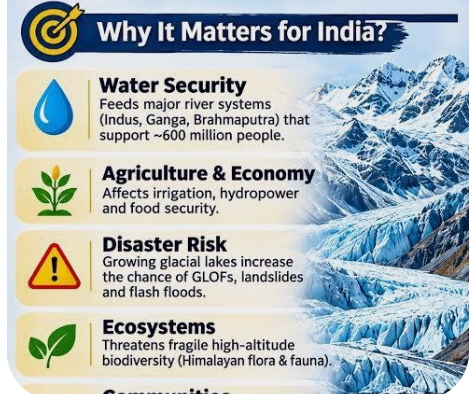
The structural evaluation conducted during the conclave highlighted how rapid, unmonitored urbanisation and shifting precipitation patterns are permanently destabilising the hydrological balance of major mountain catchment areas. As global temperatures continue to rise, glacial retreat and erratic monsoonal downpours are causing widespread slope instability, unprecedented flash floods, and the systemic contamination of natural downstream reservoirs. Delegates at the conclave warned that without an immediate transition toward eco-sensitive building codes and science-backed urban planning, the primary water sources supplying over 240 million mountain residents and down-river populations could face irreversible collapse before the turn of the decade.
Prof Kanchan Kumar Bhutiani, a prominent hydrologist and senior academic advisor at the conclave, emphasised the immediate need for a coordinated, landscape-level approach to preserve mountain ecosystems. "The critical challenge across our Himalayan states is that urban planning models have been blindly copied from plains terrain, ignoring the unique geological and ecological parameters of fragile mountain slopes. We are witnessing severe groundwater depletion and structural terrain failures because we have systematically concretised our natural groundwater recharge zones. This newly finalised framework must be utilised to mandate strict carrying-capacity assessments for every major mountain town, ensuring that future civic infrastructure development is tightly bound to verified ecological thresholds rather than commercial pressures."
The technical modelling presented during the sessions details how inadequate sewage networks and unscientific solid waste disposal practices are poisoning high-altitude rivers and mountain streams. The data reveals that less than 15 per cent of municipal waste generated in Himalayan urban clusters undergoes proper secondary or tertiary processing, with the remainder frequently dumped directly into ecologically sensitive valleys or unmonitored landfills. To combat this escalating pollution loop, the 11 mountain states pledged to deploy decentralised, climate-resilient sanitation systems that rely on natural bio-filtration and phytoremediation technologies capable of operating effectively in freezing sub-zero temperatures.
Dr Debolina Kundu, Director of the National Institute of Urban Affairs, clarified the strategic and administrative imperatives driving the regional pact. "Our data demonstrates that isolated state-level interventions are completely ineffective when dealing with interconnected mountain river basins and trans-boundary ecological crises. The Parvat Manthan framework establishes a mandatory, data-driven coordination model that forces adjacent mountain states to share real-time water quality metrics, co-finance watershed restoration programmes, and strictly penalise industrial polluters. We must immediately move away from reactive crisis management and instead institutionalise proactive, climate-adaptive governance models that treat the entire Himalayan region as a singular, indivisible ecological entity."
Regional structural coordination and conservation priorities
The framework outlines 10 immediate strategic actions required by the signatory states to prevent total hydrological collapse across the mountain belt. These include the immediate legal protection of all traditional mountain water springs, the implementation of heavy financial penalties for municipal bodies failing to process solid waste, and the rapid deployment of community-led spring-shed management circles. The regional collective is urging a massive modernisation of state disaster management networks to deploy automated early-warning arrays along glacial lakes, alongside a complete ban on non-biodegradable commercial construction materials in high-hazard seismic zones by the year 2028.
Sri Surendra Kumar, Principal Secretary of Forest and Climate Change, stressed the urgency of updating legacy infrastructure development guidelines. "The traditional methods used by regional municipal bodies to plan water distribution and sewage networks are entirely obsolete because they completely fail to account for the catastrophic impacts of climate-induced extreme weather. In the real world, cloudbursts, massive landslides, and sudden flash floods are regularly obliterating state utility assets and contaminating municipal supply lines simultaneously. This newly signed inter-state framework marks a radical shift toward climate-resilient engineering standards, which is absolutely vital if we hope to secure long-term water safety and stabilise vulnerable mountain populations."
Editor's Note
The comprehensive resolutions passed at the Parvat Manthan Conclave represent a vital and long-overdue institutional realisation that the survival of India's mountain ecosystems depends entirely on cross-border administrative unity. Governments can no longer treat mountain urban planning as a local commercial interest, as the destruction of Himalayan watersheds directly threatens the water and food security of the entire subcontinent. The only viable path forward requires the establishment of a dedicated, legally empowered Himalayan Ecological Governance Board to strictly enforce carrying-capacity limits, mandate absolute transparency in environmental impact assessments, and channel substantial national climate-adaptation funds directly into local conservation networks. Transitioning toward eco-sensitive development practices and holding state and corporate actors strictly accountable for environmental degradation is a matter of absolute regional survival.



Leave a comment