

Selfless Souls
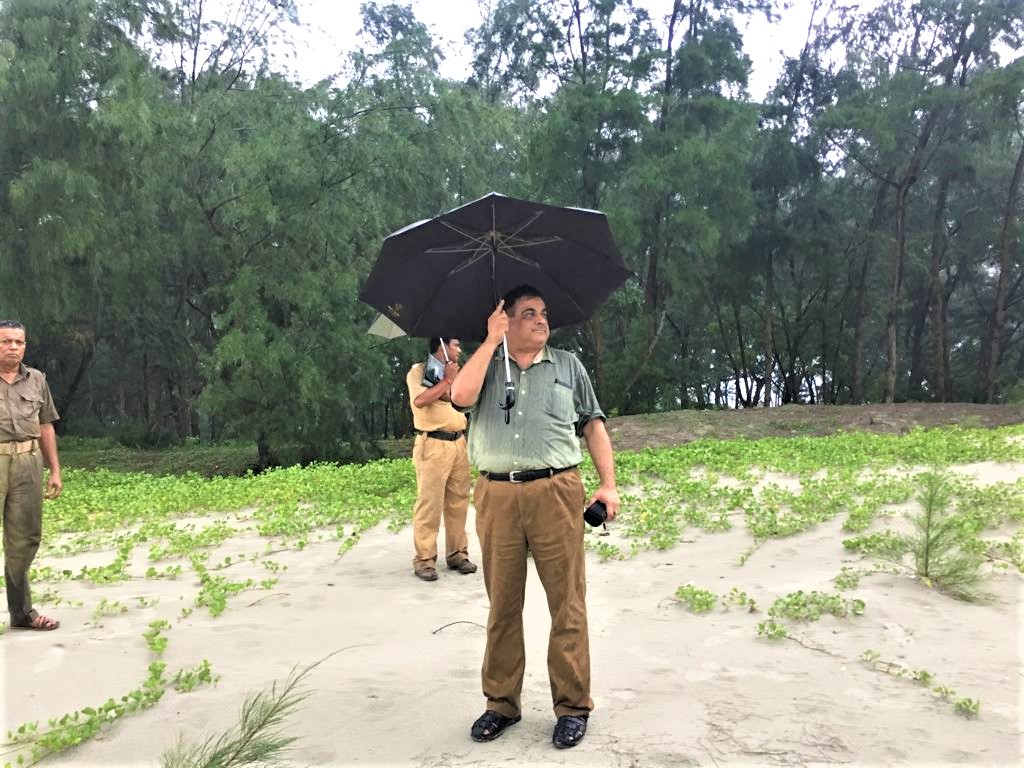
Dr Ravinder Pall Saini, I.F.S. (retd.) PhD. (Forest Entomology), MBA (HRM), Member, Board of Management, Forest Research University, Dehradun, joined the forest service in 1987 and was allotted the West Bengal cadre. Starting in the humid jungles of Bengal, his 34-year-career was a mix of adventure and duty. He also served as APCCF and director of the Sunderbans Biosphere Reserve. A strong advocate of tiger conservation, he contributed to India’s Project Tiger, which saw populations rebound from near-extinction to nearly 3,000 by 2018. As Principal Chief Conservator of Forests (PCCF) and Managing Director of the West Bengal Forest Development Corporation in Kolkata, he oversaw vast plantations and eco-tourism initiatives. The veteran ex-forester, for whom the wild is home, still champions the green cause…
Q: During your tenure as PCCF, you managed intense human-tiger conflicts in areas like the Sundarbans. From a policy perspective, how do we successfully shift communities from ‘fighting the forest’ to a model of genuine coexistence?
To successfully shift communities from ‘fighting the forest’ to a model of genuine coexistence, the following strategies can be implemented: Community engagement: Involve local communities in conservation efforts and decision-making processes to foster a sense of ownership and responsibility for their environment. Education and awareness: Provide education and awareness programmes to inform communities about the importance of coexistence and the impact of human-wildlife interactions on both species. Conflict mitigation: Implement conflict mitigation strategies, such as the use of non-lethal tools like the Animal Intrusion Detection and Repellent System (ANIDERS), to reduce human-tiger encounters. Cooperation: Foster cooperation between local authorities, conservation organisations and community members to address human-wildlife interactions effectively. Technology integration: Integrate modern technologies, such as AI and early warning systems, to enhance the effectiveness of conflict mitigation efforts.
Q: You have a doctoral degree in forest entomology. How do forest insects and microfauna play a vital role in keeping forest ecosystems resilient against accelerating climate change?
Forest ecosystems are complex, dynamic networks of interactions among plants, animals, fungi and microorganisms. Among these, forest insects (e.g., beetles, ants, caterpillars) and microfauna (e.g., nematodes, mites, microarthropods, and protozoa) perform critical ecological functions that underpin ecosystem resilience, defined as the ability of an ecosystem to absorb disturbances and maintain function. Insects and micro-fauna contribute to decomposition by breaking down leaf litter, dead wood and organic detritus. The continuous cycling of nutrients buffers the ecosystem against nutrient depletion caused by disturbance, maintaining soil fertility. Soil-dwelling microfauna such as nematodes and earthworm-feeding arthropods aerate the soil, enhancing water infiltration and root penetration. Many insects (beetles, bees, ants, and flies) act as pollinators, maintaining plant reproductive success. Predatory insects and micro-fauna regulate populations of herbivores and pathogens. This biological control contributes to ecosystem stability by preventing cascading herbivore-induced defoliation. Insects constitute a major part of the food chain, acting as prey for birds, amphibians and mammals. Microfauna mediates complex microbial interactions, ensuring microbial diversity, which is crucial for nutrient processing. Changes in insect or microfauna communities often signal shifts in forest health, allowing early interventions before ecosystem function is severely compromised.
Q: You have been a strong proponent of Joint Forest Management and eco-tourism. What is the biggest hurdle in convincing local edge communities to protect their natural habitats?
Convincing local communities to actively participate in Joint Forest Management (JFM) and associated eco-tourism initiatives faces several intertwined social, institutional and economic challenges: 1. Ambiguity and delay in rights and benefits: Communities often lack clarity on usufruct rights or shares in forest produce. Delay in distributing benefits from timber or non-timber forest products (NTFPs) creates mistrust between villagers and forest authorities. Unequal access, especially for marginalised groups and women, can undermine collective participation.2. Bureaucratic dominance and weak local institutions: Local committees, such as JFMCs, are frequently subordinate to forest department officials, limiting genuine decision-making power. Weak Gram Panchayats or village institutions reduce accountability, conflict resolution and efficiency in day-to-day forest management. Excessive top-down control discourages local ownership of conservation activities. 3. Lack of technical and organisational capacity: Villagers often lack scientific know-how for sustainable forestry practices and eco-tourism operations. Inadequate training or skills in financial management, marketing and forest monitoring discourages participation. 4. Internal social dynamics and elite capture: Dominant caste or wealth groups sometimes monopolise benefits, excluding the most dependent households. Conflicts within communities over profit-sharing or labour contribution can reduce collective action. Ecotourism often requires equitable benefit distribution, which can be a source of tension if not managed transparently. 5. Immediate livelihood pressures vs. long-term goals: Local populations may prioritise short-term survival needs (fuel wood, grazing, and agriculture) over long-term forest sustainability. Eco-tourism benefits are often delayed or intangible, making villagers less motivated to cooperate. 6. External pressures on forests: Illegal logging, encroachment, and overgrazing undermine local efforts, reducing the perceived payoff of participation. Climate change impacts like forest fires and erratic rainfall heighten uncertainty, lowering incentives for proactive engagement. 7. Perceived risks of eco-tourism: Communities may fear cultural disruption, loss of privacy, and environmental degradation due to increased tourist influx. Lack of clear frameworks for profit-sharing, infrastructure investment, and tourism management magnifies hesitancy.
Q: Based on your hands-on experience spearheading mangrove restoration, what are the absolute non-negotiables for a successful, long-term coastal conservation strategy?
The absolute non-negotiables for a successful, long-term coastal conservation strategy based on hands-on experience in mangrove restoration include: Holistic approach: Addressing ecological, social and financial factors to ensure the restoration project is sustainable and equitable. Community involvement: Engaging local communities in the restoration process to build trust and ownership. Monitoring and data: Utilising strong baseline data for site-specific planning and sustained long-term monitoring to track outcomes. Inclusive ecological restoration: Moving away from mass monoculture planting towards inclusive ecological restoration approaches that involve local communities. Collaboration: Building strong partnerships and collaboration among stakeholders to ensure effective and scalable mangrove action.
Q: Having witnessed the inner workings of Indian forestry over several decades, what is the single greatest shift in how India approaches forest conservation today compared to when you started?
The single greatest transformation in India’s forest conservation strategy is the movement from a top-down, state-controlled, timber-centric model to a rights-based, community-led and ecologically resilient framework. This shift is exemplified in the enactment of the Forest Rights Act (FRA) 2006 and the recent updates to the Green India Mission (GIM). FRA 2006 recognises 13 types of rights for forest-dependent communities, enabling governance, conservation, and sustainable use. Gram Sabhas can now draft and implement Community Forest Resource (CFR) plans, integrating traditional knowledge and local ecological understanding. The Green India Mission's objective is to protect, restore and enhance India’s forest and tree cover in order to mitigate and adapt to climate change, aiming to create a sizable carbon sink and restore degraded ecosystems.
Q: As a board member at the Forest Research University, what core piece of advice do you have for young researchers who want to step out of academia and make a tangible impact on ground-level forestry?
Forest Research Institute encourages young researchers to integrate rigorous academic learning, field experience, societal engagement and innovation, while cultivating professional and leadership capabilities. The core advice for emerging researchers is: Engage in rigorous research and academic learning, pursue postgraduate and doctoral programmes (M.Sc. and PhD) in specialised forestry disciplines, such as forest management, environment management, wood science, cellulose and paper technology and related areas and focus on acquiring a multidisciplinary understanding, integrating natural sciences, social sciences and policy aspects to tackle complex forest management challenges. They should gain hands-on experience and field exposure and utilise FRI’s experimental areas, arboreta, nurseries and research laboratories, leveraging field trials and lab-based studies to complement theoretical knowledge. They should actively participate in short-term training programmes, workshops and seminars, especially those focusing on sustainable forestry, biodiversity conservation, and climate-responsive forest management. Above all, they should collaborate with peers, faculty, and external institutions to gain exposure to interdisciplinary projects, strengthen leadership and management skills through summer internships, professional courses and participation in student-led societies or clubs.



Leave a comment