

H.N. SINGH
( Lions International Faculty, Member SPHEEHA, HAM Radio Licensee, Trekker & Mountaineer, An admirer of mountains, nature, heritage and timeless explorer)
Behind the Beauty of the Riverfront Lies the Sad Condition of the River!
What is the use of a beautiful riverfront if the river itself does not survive? Some direct questions to the administration, society, and elected representatives of both the ruling party and the opposition.
The Bathua River of Rudrapur in Deoria district is today fighting for its very existence. Earlier, the river originated near Kotia and Jungle Bhusoul and joined the Rapti River near Madanpur. Today, its natural source is reportedly blocked, and the flow of dirty water has put its existence at risk. The wastewater from Rudrapur town also flows into this river.
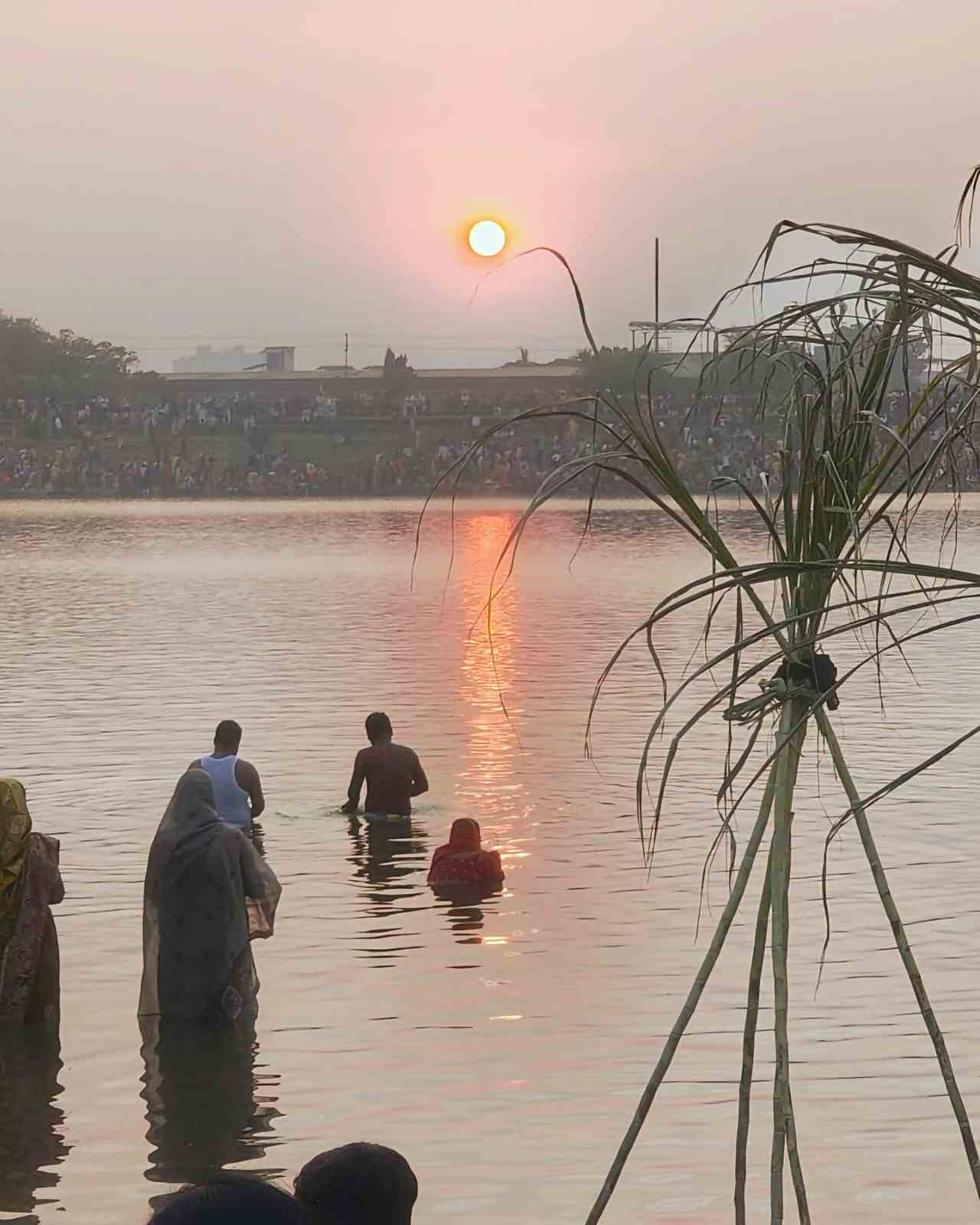
It is ironic that the riverfront built along the same Bathua River receives a lot of attention and publicity. During Chhath Puja, newspapers publish beautiful pictures of the riverfront. Thousands of devotees visit the ghats to offer prayers to the setting and rising Sun. Chhath is an important festival of our faith, culture and traditions.
However, other newspaper reports present a different picture. During Chhath Puja, political publicity camps were set up at the riverfront. Political parties competed to attract the attention of devotees. Loud DJs and loudspeakers created a lot of noise. One newspaper report also highlighted the difficulties faced by women and devotees because of the high volume of sound.
A festival that should be celebrated with peace, devotion and purity was affected by political publicity and unnecessary noise.
But the biggest question is: What is the condition of the river on whose banks all these activities are taking place?
Is decorating the ghats, installing lights and building a riverfront the only meaning of development? Is clean water flowing in the river not important? Is it not the responsibility of the administration to provide clean water and hygienic ghats to devotees?
Today, there are reports that the natural source of the Bathua River has been blocked. Wastewater from Rudrapur town is also entering the river. It is a matter of serious concern to think about the quality of water in which mothers and sisters observing the Chhath fast are performing their religious rituals.
Some direct questions to the administration and elected representatives
Questions to the Local Administration
- Who blocked the natural source of the Bathua River near Kotia and Jungle Bhusoul, and under what circumstances?
- What arrangements have been made to stop the wastewater of Rudrapur town from entering the river?
- When was the water quality of the river last tested?
- Why was no proper river-revival plan prepared along with the money spent on developing the riverfront?
Questions to the Ruling Party Representatives
During your tenure, the riverfront has received a lot of publicity. But what concrete steps have you taken to make the Bathua River clean and bring it back to life?
Does development mean only construction and publicity?
Questions to Opposition Leaders
Is your responsibility limited to criticising the government?
How many times have you raised your voice about the poor condition of the Bathua River, its blocked natural source and the flow of dirty water into it?
Have you ever taken this issue to the Legislative Assembly or brought it to the attention of the administration?
Questions to Citizens and Social Organisations
We often talk about environmental protection, but why are we silently watching a river die before our eyes?
Can local citizens, social organisations, environmental activists and young people not come together to save this river?
There is still time to save the Bathua River
The following steps should be taken immediately:
- First, a technical investigation should be conducted at the old source of the river near Kotia and Jungle Bhusoul.
- If the natural water channel has been blocked, experts should examine whether it can be reopened scientifically.
- A proper sewage treatment system should be established to prevent dirty water from entering the river.
- The old course of the river should be identified, and all encroachments and obstructions should be investigated.
- A public committee should be formed, including the administration, elected representatives, environmental experts, social workers and local citizens.
Finally, one important question...
Our political leaders can install powerful loudspeakers at the riverfront to publicise themselves. But can any of them listen to the pain of the Bathua River?
Whether they belong to the ruling party or the opposition, all political parties must break their silence on this issue. This is not a matter of politics; it is a matter of the future of coming generations.
Before building a beautiful riverfront, we need a living river. Only when the river survives will the ghats survive, our faith and traditions survive, and the environment remain protected.
The Bathua River does not belong to any particular political party, leader or government. It is our natural heritage.
Let us come together and demand immediate and concrete action to save the Bathua River.
A question of priorities: Big river-linking projects versus small rivers
On one hand, the country is discussing ambitious plans to connect rivers. There are proposals for a long chain of canals, in four stages, to carry water from the Brahmaputra River basin to the Godavari River. The proposed route from Assam to Andhra Pradesh is said to be approximately 2,500 kilometres long.
The objective is to transfer surplus water from one river basin to other regions.
But the question is: When we are planning projects to connect rivers thousands of kilometres apart, why are we unable to save a river in our own Deoria district?
The Bathua River is only about 20 kilometres long.
Do small rivers have no importance in the priorities of the government and administration?
Along with big projects, it is equally important to protect local rivers, their natural sources, their water flow and their very existence.
The real sign of development is not the shining beauty of a riverfront, but clean water flowing in the Bathua River.



Leave a comment