

TreeTake Network
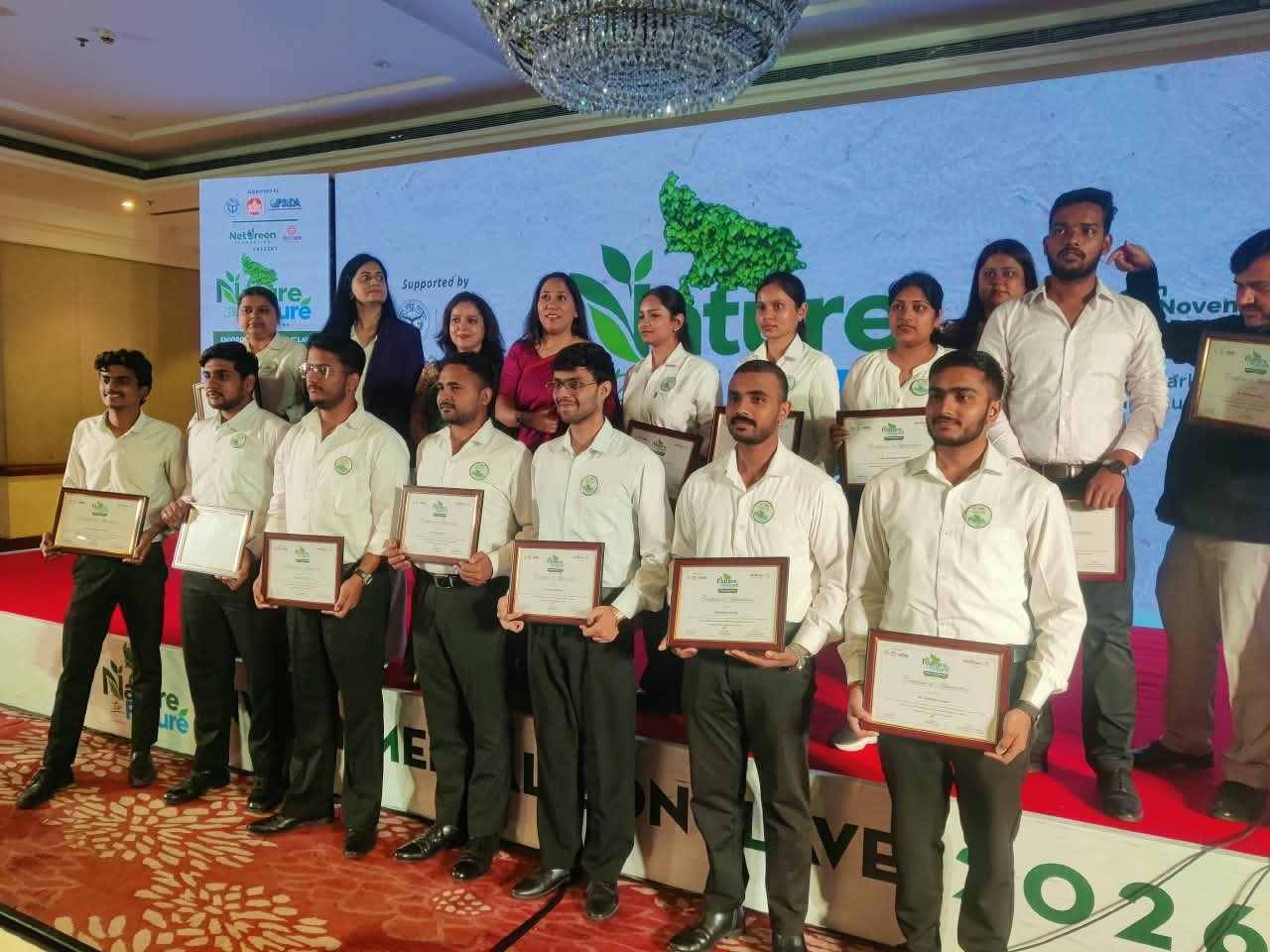
A major national and international environmental summit unfolded in Lucknow on 18 November 2026, as the Net Green Foundation—in collaboration with the Government of Uttar Pradesh and the Uttar Pradesh State Industrial Development Authority (UPSIDA)—launched the Nature to Future – Uttar Pradesh Environmental Conclave 2026. Hosted at Fortune Park BBD, strategically positioned near Dainik Jagran Chauraha on Rana Pratap Marg, the high-profile assembly gathered leading ecological pioneers, climate scientists, public representatives, urban development specialists, academicians, and social activists. The single-day summit focused on accelerating localised climate adaptation strategies, implementing green technology protocols, and achieving a sustainable balance between development and nature.
The core agenda of the conclave targeted the compounding environmental stresses facing expanding regional urban belts, including severe air pollution, fragmented waste management, water security, and the rapid degradation of local biodiversity reserves. Delegates participated in technical and policy panels designed to bridge the gap between global carbon-neutrality ambitions and immediate municipal engineering requirements, establishing direct collaboration frameworks between non-governmental organisations and state environmental bodies.
Chief Guest and Dignitary Addresses
The summit was formally inaugurated by Chief Guest Shri Jaiveer Singh, Honourable Minister of Tourism and Culture, Government of Uttar Pradesh. Delivering the keynote address, he emphasised the critical intersection between heritage, infrastructure, and green development, noting that nature is not merely the foundation of human life but an invaluable legacy for future generations.
“Striking a balance between development and nature is the need of the hour. Ensuring a safe environment for future generations is our collective responsibility,” Shri Jaiveer Singh stated.
Highlighting the establishment of the Eco-Tourism Board in Uttar Pradesh, the Minister underlined the state’s immense potential to promote eco-tourism while preserving its natural beauty, wildlife, and groundwater recharge zones. He stressed that future state planning models must integrate environmental sustainability parameters into tourism and real estate frameworks so that development proceeds in harmony with nature.
Guest of Honour Shri Pawan Singh Chauhan, Member of the Legislative Council (MLC), called for transforming water conservation, tree plantation, and environmental awareness into a mass people’s movement, asserting that environmental protection requires active contributions from every citizen rather than resting solely on the government.
The conclave was also graced by Special Guests Shri Desh Raj Bansal, Chairman, IMRT Business School; Shri Ashok Singh, Director, NACOF India Limited; and Shri Pushp Kumar K. (IFS), Director (Eco-Tourism), Uttar Pradesh Tourism Department. During an interactive session, senior IAS officer Shri Heera Lal shared his perspectives, referencing rising pollution levels in Delhi to stress that climate change and environmental imbalance cannot be resolved without making ecological protection an integral part of everyday social behaviour.
Three Special Panel Sessions Witness In-Depth Deliberations
Alongside the keynote addresses, the conclave featured three dedicated panel discussions exploring technical green targets, corporate policy integration, and community-led mandates:
- Session 1: Environmental Conservation, Biodiversity and Public Participation
Featuring Dr Kirti Vikram (Regional Director, IGNOU), Dr Vinod Prasad Juglan (Environmentalist, Wildlife Rescuer, and Swachhta Brand Ambassador), Shri Chandra Bhushan Tiwari (Lucknow’s ‘Tree Man’, social worker, and educationist), Dr Jitendra Shukla (Wildlife Expert and Director, Vedam Foundation), and Shri Kapil Kumar (Founder and CEO, Parivartan – The Change NGO). Speakers highlighted the urgency of tree conservation, wildlife protection, cleanliness, and expanding green cover across provincial cities. - Session 2: Climate Change, Environmental Challenges and Sustainable Development
Featuring Prof. (Dr) Bharat Raj Singh (Director General, School of Management Sciences, Lucknow), Dr Meera Singh (IIT Kanpur), and Dr Sanjeevani Sharma (Environmentalist and Representative of Kanpur Ploggers). The panel examined resource-recovery technologies, pollution control, artificial intelligence grids for urban heat mapping, and the shift towards circular economic models and environmentally responsible lifestyles. - Session 3: Water Conservation, Community Participation and Social Responsibility Towards Nature
Moderated by Dr Ram Boojh (CEO, Mobius Foundation, and former UNESCO Programme Specialist), the session featured Saumya Misra (Novelist and Founder-Editor, TreeTake Magazine), Dr (Mrs) Om Singh (Social Worker and Founder, Chaitanya Welfare Foundation), RJ Prateek (Content Creator and Founder, Go For Gomti NGO), and Shri Nand Kishore Verma (Jal Doot and Environmentalist). Panellists underscored the importance of river rejuvenation, safeguarding regional water systems, and anchoring environmental conservation in active citizen participation.
Commitment to Action and Global Recognition
The programme was chaired by Ms Surabhi Gupta, Group Director and CEO of Net Green Foundation and Devtara Foundation, alongside Shri Umesh Kumar Sharma, Director and Editor-in-Chief. Addressing the gathering, they affirmed that Nature to Future is not merely a one-day event, but a comprehensive initiative uniting experts, government departments, civil society, and the corporate sector on a shared platform.
The plenary discussions also focused on organising green funding mechanisms to support grassroots conservation circles and ecological start-ups across northern India, culminating in the announcement of the upcoming global Earth Awards framework to recognise verifiable planetary impact. Speakers noted that relying on voluntary guidelines has historically fallen short, making rigorous scientific research and corporate compliance essential to the state’s ecological transition. The event was jointly organised by Net Green Foundation, Devtara Foundation, and Vermillion Communication.
Editor’s Note
The successful execution of the Nature to Future Environmental Conclave at Fortune Park BBD in Lucknow serves as an undeniable signal that the transition towards a green economy requires absolute administrative and institutional cohesion. State governments can no longer isolate industrial development from ecological preservation, as unchecked urban sprawl directly amplifies toxic pollution vectors and threatens long-term public resource safety. The only viable path forward requires the establishment of an independent, science-backed environmental surveillance board empowered to enforce strict emission caps, mandate green infrastructure integration in all civic blueprints, and levy steep penalties on corporate polluters. Turning these high-level conclave resolutions into binding municipal laws is a matter of regional and planetary survival.



Leave a comment