

TreeTake Network
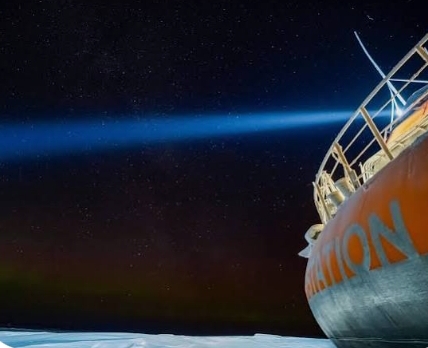
Climate scientists stationed aboard an international research vessel intentionally frozen into the Arctic pack ice have issued an urgent warning regarding an unprecedented thermal anomaly disrupting the polar darkness baseline. Instrumentation tracking atmospheric structures confirmed that surface temperatures in the high-Arctic boundary layer have remained up to 7°C above the historical 30-year average throughout the opening phase of the winter freeze cycle. The prolonged thermal deviation is actively impeding the formation of multi-year pack ice, threatening to destabilise global oceanic circulation systems far sooner than projected by standard environmental models.
The polar drift expedition, which operates a multi-agency floating laboratory to track winter ice dynamics, recorded a significant reduction in initial ice thickness metrics across the Central Arctic Basin. Technical logs indicate that the structural integrity of new ice sheets has been compromised by repeated incursions of humid, sub-polar air masses driven northward by a fractured jet stream. The unexpected atmospheric behaviour has prevented the region from achieving its typical winter cooling equilibrium, keeping large swathes of the Arctic Ocean effectively ice-free well into the dark season.
Polar researchers emphasise that the transformation of the Arctic from a permanent reflective ice shield to an open, heat-absorbing basin represents a critical tipping point for the global climate apparatus. The rapid erosion of the winter baseline alters the mechanical transfer of energy between the ocean and the atmosphere.
"The data we are collecting in absolute darkness is profoundly alarming," stated Dr Alistair Vance, Lead Atmospheric Physicist at the Polar Climate Consortium. "We are observing a systemic failure of the winter cooling mechanism that historically stabilised the northern hemisphere's weather patterns. The ocean is retaining immense amounts of latent thermal energy, which is then released back into the boundary layer, creating a self-reinforcing feedback loop that defies our traditional seasonal expectations."
The disruption of the ice-growth cycle carries immediate geopolitical and environmental consequences, as the thinning ice pack alters the migratory routes of marine mammals and accelerates the degradation of subsea permafrost shelves.
"The structural integrity of the pack ice we are navigating is noticeably more fragile than the baselines documented even five years ago," observed Elena Rostova, Senior Sea Ice Specialist at the International Arctic Research Centre. "Our drilling cores reveal that the crystalline matrix of the newly formed ice is highly porous and susceptible to premature fracturing. If these warming parameters persist through the remainder of the polar night, the spring melt cycle will initiate from a critically weakened baseline, triggering an irreversible acceleration of open-water thermal absorption."
Editor's Note
The critical anomalies documented by the Arctic polar drift expedition provide definitive evidence that the high-latitude climate system has entered a phase of rapid structural destabilisation. The failure of the winter cooling baseline serves as a stark warning that regional tipping points are actively translating into global atmospheric disruptions. The optimal way forward requires the immediate international regularisation of real-time polar observational networks, combined with an unyielding global commitment to enforce absolute carbon reductions, as relying on natural polar stabilisation mechanisms is no longer a viable framework for planetary survival.



Leave a comment