

TreeTake Network
The United Nations Framework Convention on Climate Change has completed final logistical frameworks in Antalya, Türkiye, ahead of the official launch of the COP31 Climate Summit. The international assembly is poised to address severe friction surrounding global climate finance allocations and the real-world management of temporary temperature overshoots. Formal schedules confirmed that a designated Health Day will lead the opening agenda, highlighting the direct biological and structural vulnerabilities of populations grappling with accelerating climate instability.
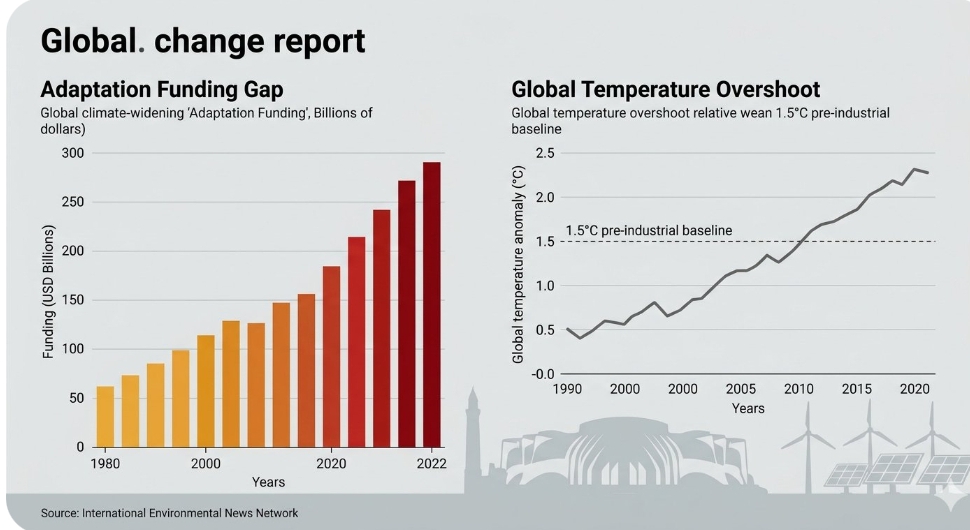
The summit arrives amidst stark warnings from the international scientific community regarding structural resource deficits. The United Nations Environment Programme recently highlighted a massive 305 billion-dollar annual deficit in adaptation funding for developing nations, an economic chasm that threatens to undermine collective carbon mitigation strategies. Simultaneously, operational friction within the Intergovernmental Panel on Climate Change has intensified, as experts warn that severe budget constraints and compressed administrative timelines risk delaying the publication of vital global assessment reports.
Global policy directors emphasise that the Antalya summit must mark a definitive transition from theoretical targets to enforceable financial frameworks. The prioritisation of adaptation protocols reflects a growing recognition that immediate climate impacts are outpacing historical resilience measures.
"Our primary endeavour at COP31 must be the immediate regularisation of predictable, high-volume adaptation capital to vulnerable regions," stated Elena Rostova, Director of Climate Policy at the International Sustainability Alliance. "We can no longer afford to favour mitigation pledges that look 30 years into the future whilst ignoring the present structural degradation of frontline communities. The international community must finalise a transparent, legally binding mechanism to bridge the 305 billion dollar adaptation gap before the conclusion of this negotiating cycle."
Delegates face the delicate task of addressing the statistical reality that global baselines are tracking to breach the 1.5°C pre-industrial threshold. Diplomatic negotiations are expected to focus heavily on establishing harmonised protocols for managing this overshoot period without permanently abandoning long-term stabilisation goals.
"Acknowledging a temporary target overshoot requires rigorous international governance to prevent industrial nations from relaxing their decarbonisation pathways," observed Dr Marcus Vance, Chief Atmospheric Scientist at the European Climate Centre. "The data shows that ignoring the immediate consequences of this overshoot period will lead to irreversible biosystem collapses. COP31 must establish strict legal penalties for cross-border carbon omissions and ensure that temporary atmospheric deviations do not become permanent baselines."
Editor's Note
The finalisation of the COP31 agenda in Antalya highlights a profound pragmatic shift in global climate diplomacy, forcing adaptation and overshoot management to the forefront of international policy. As traditional mitigation timelines fracture under the weight of financial deficits and institutional delays, the success of the summit relies entirely on transforming voluntary pledges into enforceable capital transfers. The optimal way forward demands the immediate structural reform of multilateral development banks to expedite adaptation financing, combined with an unyielding global regulatory framework that prevents overshoot protocols from serving as a pretext for domestic emission delays.



Leave a comment