

TreeTake Network
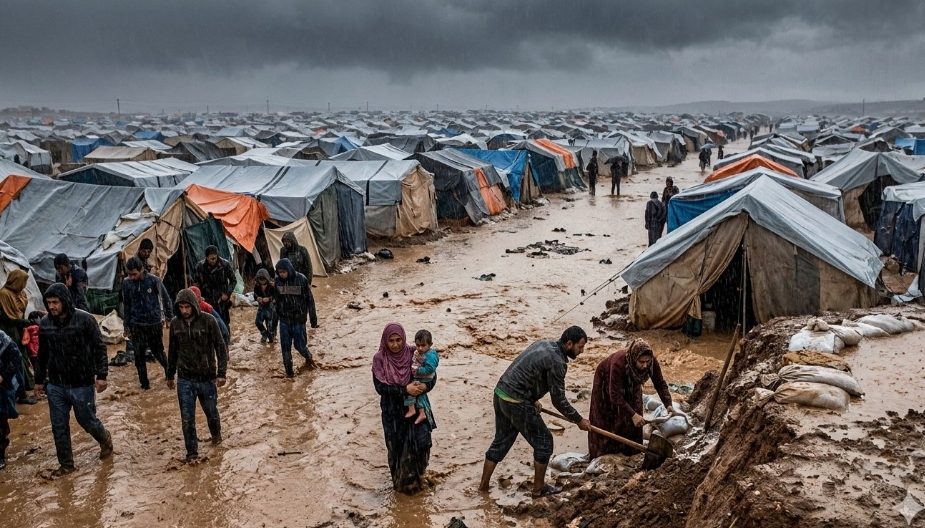
Heavy seasonal rainfall and severe winds have inundated thousands of temporary shelters across the Gaza Strip, triggering a critical humanitarian and environmental emergency for hundreds of thousands of displaced individuals. The initial major storm of the winter season caused water levels within low-lying encampments to rise by 30 to 40 centimetres within a 10-hour window. The sudden influx of rainwater, mixed with localised sewage and mud, has completely compromised makeshift living spaces across major concentration zones, including Gaza City, Khan Younis, Nuseirat, and Deir el-Balah.
The Palestinian Civil Defence Directorate confirmed that emergency rescue teams responded to more than 1,500 urgent distress calls within the opening hours of the downpour. The emergency was further compounded by the partial collapse of residential buildings previously weakened by structural damage, causing injuries in northern areas and forcing rescuers to evacuate multi-storey units in central Nuseirat. UN metrics indicate that approximately 950,000 displaced individuals are currently situated in locations exposed to moderate or high flood risks, with over 400,000 people occupying extreme-danger zones.
Municipal response networks have fractured due to severe equipment shortages and widespread destruction of civil infrastructure. Officials emphasise that the combination of compromised drainage channels and an absolute lack of fuel has synthesised a public health crisis that local resources cannot mitigate.
"What we historically feared has materialised across the entire territory today," stated Mahmoud Basal, Official Spokesperson for the Gaza Civil Defence Agency. "Multiple entire shelter centres have been completely flooded, forcing thousands of families out into the absolute cold without alternative shelter. Premature infants, the sick, and our elderly populations are facing immediate exposure to lethal respiratory illnesses, and those residing in compromised fabric tents remain at risk of death at any moment if structural aid does not arrive."
The breakdown of approximately 85 per cent of municipal heavy machinery has left local authorities unable to deploy water-clearing pumps or secure leaking encampments. Operational teams have attempted to construct primitive earthen berms around low-lying tents using manual tools, but these barriers are rapidly disintegrating under the volume of the ongoing storm.
"The level of municipal destruction has neutralised 85 per cent of our operational fleet, leaving our teams entirely reliant on sparse, manual interventions," observed Hosni Muhanna, Official Spokesperson for the Gaza Municipality. "Nearly one million citizens are compressed into an area representing less than 30 per cent of the city's original territory, overloading the remnants of our drainage networks. Rainwater has penetrated historical structures and informal shelters alike, and without the unconditional opening of border crossings to facilitate heavy pumps, alternative caravans, and fuel, the scale of this environmental disaster will completely eclipse our capacity to intervene."
Editor's Note
The catastrophic flooding across the Gaza Strip highlights the lethal intersection of militarised structural destruction and seasonal climate vulnerability. When environmental infrastructure is systematically dismantled, typical winter depressions inevitably transform into high-fatality disasters for displaced populations. The optimal way forward requires an immediate international humanitarian intervention to bypass local logistical blockades, ensuring the direct deployment of heavy water-pumping machinery, winterised structural shelters, and emergency energy supplies to stabilise frontline encampments before escalating winter temperatures cause widespread exposure fatalities.



Leave a comment