

Thinking Point
TreeTake Network
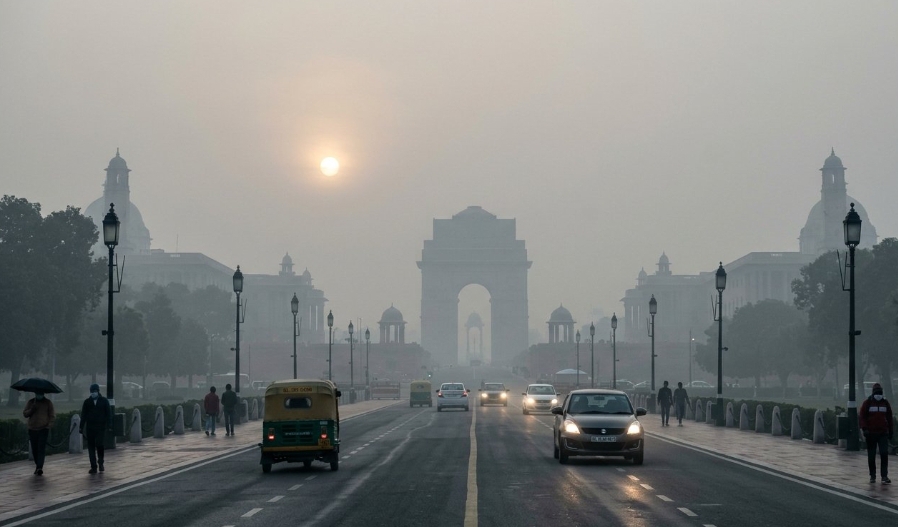
The Ministry of Environment, Forest and Climate Change has released a comprehensive retrospective baseline analysis documenting a marginal 4% structural improvement in the Delhi airshed's long-term particulate averages. The statistical evaluation, spanning a 10-year observational matrix from 2016 to 2026, tracked data layers between January and October to isolate structural policy impacts from seasonal meteorological spikes. The findings indicate that while the capital region remains locked in a critical winter health emergency, multi-year initiatives targeting industrial transition and highway bypasses have achieved a measurable reduction in the underlying baseline pollution load.
The decadal atmospheric review utilised continuous telemetry datasets from 40 municipal monitoring stations to map historical concentrations of PM2.5 and PM10. Analytical models confirmed that the localised air quality index baseline during the ten-month non-winter window progressed from an average of 210 in the 2016–2018 block to 198 in the 2024–2026 reporting period. The structural shift is largely credited to the complete closure of coal-fired thermal utilities within the city borders and the regularisation of commercial freight routing away from core urban zones via peripheral expressways.
National environmental directors emphasise that while the long-term data validates localised structural interventions, it highlights the severe limits of city-centric governance against broader airshed physics.
"The 10-year baseline demonstrates that our persistent regulatory focus on heavy transport corridors and industrial fuel substitution is delivering steady, long-term returns," stated Dr Harshvardhan Pant, Principal Scientific Adviser at the Centre for Atmospheric Studies. "However, the public fails to perceive this 4% progression because it is instantly neutralised by seasonal inversion layers and cross-border biomass combustion each winter. We have effectively lowered the global baseline, but we have yet to minimise the acute meteorological peaks that paralyse the capital every November."
Meteorological specialists caution that the minor baseline improvement must not serve as an excuse to relax enforcement parameters across surrounding agricultural zones. The current atmospheric data shows that despite fewer total industrial violations within the municipality, the total volume of regional emissions still vastly exceeds the carrying capacity of the winter airshed.
"A 4% progression over a decade is a statistical reality, but it remains a biological failure in terms of public health metrics," observed Sunita Narain-Das, Chief Analyst at the Clean Air Advocacy Council. "Our frameworks have successfully legalised cleaner industrial operations and modernised the commercial vehicle fleet, but the northern Indian plains operate as a single, unified airshed. Until our central frameworks transition to legally binding regional airshed management that penalises cross-border biomass omissions, Delhi will remain an annual atmospheric trap for vulnerable citizens."
Editor's Note
The Ministry’s decadal baseline analysis reveals a critical mismatch between structural regulatory progress and the seasonal realities of urban public health. While long-term policy shifts have successfully trimmed the underlying pollution baseline, this marginal progression offers zero immediate relief during intense winter meteorological inversions. The optimal way forward demands that the central government leverage this decadal data to transition from reactive emergency city bans to a year-round, macro-regional airshed authority empowered to enforce absolute compliance across agricultural, industrial, and municipal boundaries simultaneously.



Leave a comment