

Talking Point
Agra witnessed a vibrant celebration of nature as the Horticulture Club Agra staged the sixth edition of its Bougainvillaea Exhibition 2026 from October 24 to 29.
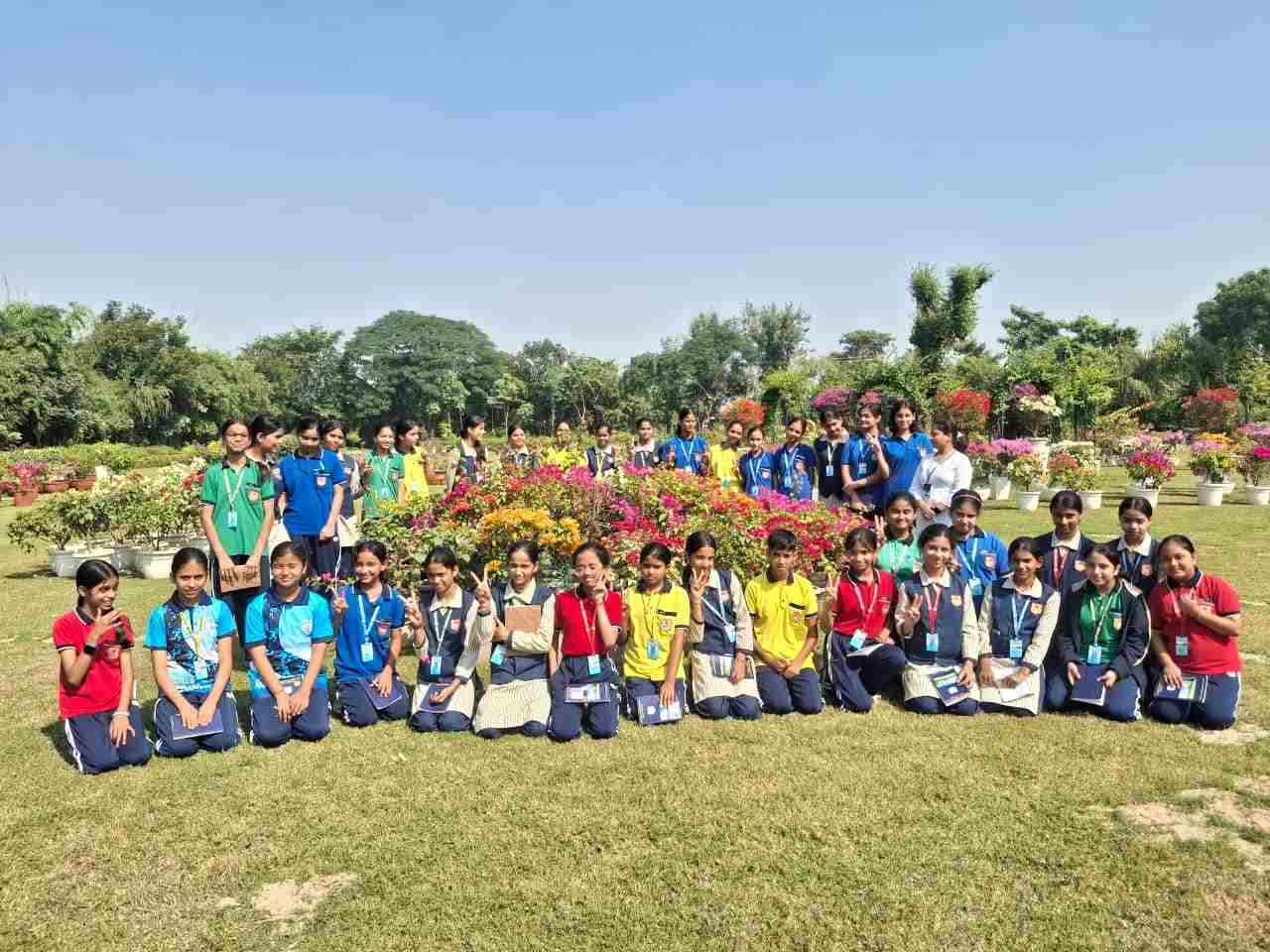
Held amid the manicured lawns and ecologically restored surroundings of Verdant Acres, a serene farm retreat on Taj Mahal East Gate Road, barely a 10-minute drive from the iconic monument, the event drew thousands of residents, schoolchildren, garden enthusiasts and nature lovers.
The exhibition featured more than 2,000 specimens representing approximately 300 bougainvillaea cultivars. The organisers said the exhibition is one of the best bougainvillaea exhibitions of the Indian subcontinent.
The plants appeared in every imaginable form: flowering vines, topiaries, miniature trees, shrubs and bonsai. Landscape architects, horticulturists, botanists and hobby gardeners marvelled at the collection’s diversity and the plant’s remarkable versatility.
The timing and location carried special significance. In a heritage city whose global identity rests on the Taj Mahal, yet which struggles with intense summers, water scarcity, air quality pressures and expanding concrete, the show was more than a floral spectacle. It demonstrated how hardy, low-water ornamentals can beautify public spaces and support ecological resilience right beside one of the world’s most visited monuments.
A Celebration of Horticulture and Environmental Responsibility
At the inaugural ceremony, Horticulture Club Agra president Lovely Kathuria welcomed guests and outlined the club’s wider work. This includes large-scale plantation drives of native species in public parks and residential colonies, the creation of six Miyawaki forests using indigenous plants, and educational workshops on chrysanthemums, adeniums, water lilies, lotuses, orchids, tulips, bonsai and miniature rock gardens. The club has also established a Bougainvillaea Vatika at Shahjahan Park, adding colour to Agra’s green map close to the Taj complex.
Co-founder Daisy Gujral explained why bougainvillaea thrives in Agra’s soil and climate. The plant needs relatively little maintenance, tolerates dry conditions and produces colourful bracts for nearly eight months of the year. These qualities make it an ideal choice for gardens, roadsides, boundary walls and neglected urban pockets.
The club’s stated ambition is to help transform Agra into the Bougainvillaea Capital of India, using this resilient plant to enhance the city’s beauty while advancing practical urban greening.
Bougainvillaea: A Practical Answer for Dry, Monkey-Prone Spaces
River activist Brij Khandelwal underlined the case for scaling up Bougainvillaea plantations, especially in dry and arid zones where conventional ornamentals struggle and monkeys often damage or uproot softer vegetation.
He called for wider planting along roadsides, boundary walls, barren patches, parks and other underused urban spaces. Drought tolerance, modest water needs and the ability to thrive in difficult conditions make the plant a realistic option for Agra and similar cities. Its thorny growth habit can also help protect boundaries when properly managed. Unlike many delicate ornamentals, bougainvillaea is generally less vulnerable to monkey damage.
Khandelwal’s message was straightforward: effective urban greening does not always require expensive or complex interventions. The right plant in the right place can deliver lasting results. In water-stressed cities, hardy species such as Bougainvillaea can usefully complement native trees, rainwater harvesting and other sustainable landscaping measures, turning neglected corners into resilient, colourful green spaces.
Celebrating Excellence in Floriculture and Education
The exhibition recognised outstanding contributions. Lifetime achievement awards were presented to renowned floriculturist Dr B.K. Banerji (formerly associated with IARI and NBRI) and distinguished educationist and physicist Dr Sudipta Ghose.
The event was jointly inaugurated by Brij Khandelwal, Dr Sudipta Ghose, Dr B.K. Banerji, and Mr and Mrs Ramkumar Agarwal and economist Ved Prakash Tripathi.
Dr Banerji spoke on the history and development of bougainvillaea cultivars at major Indian research institutions, including NBRI, IARI, BARC and ICAR-IIHR, Bengaluru, highlighting the role of scientific breeding and hybridisation in expanding ornamental diversity.
Fifty Years of Passion for Bougainvillaea
Exhibition curator Dr Mukul Pandya has devoted nearly five decades to collecting, propagating and grafting bougainvillaea varieties. His collection now exceeds 2,000 specimens across roughly 300 cultivars.
He also shared the historical story of French botanist Philibert Commerson and plant enthusiast Jeanne Baret, whose eighteenth-century explorations helped introduce bougainvillaea from Brazil to Europe, adding depth to an event otherwise dominated by colour and horticultural skill.
Distinguished visitors included Col. Apurva Tyagi, Col. Sanjeev Agnihotri, Dr Nikhil Chaturvedi, Dr Ashok Sharma, Dr R.K.S. Rathore, K.N. Agnihotri, chartered accountant Mridul Pathak, social activist Erum Atmiye of Journey to Roots, educationist Dipika Tyagi, Rubina Khanam and ecological restorer Ankush Dave, among others.
Winners of the Annual Competition
Kanchan Ahuja took first prize. Veena Sachdeva and Anita Munjal jointly secured second place. Ramkumar Agarwal received third prize.
Renu Bhagat, co-founder of the Horticulture Club Agra, coordinated the mega event and delivered the vote of thanks.
An Organising Effort Worth Applauding
The sixth Bougainvillaea Exhibition was a strong tribute to the dedication and expertise of the Horticulture Club Agra. Staging a multi-day display that attracted thousands of visitors and hundreds of schoolchildren demanded careful planning and sustained effort.
The organisers deserve particular credit for turning a horticultural show into a public celebration of nature and environmental awareness. Their work showed how community initiatives can reconnect people with plants, encourage gardening and strengthen commitment to urban greenery.
As Agra faces rising temperatures, water stress and the ongoing challenge of maintaining green cover around its monumental heritage, the exhibition’s message carries wider relevance.
Bougainvillaea will not solve every environmental problem, yet its resilience, beauty and low demands make it a valuable ally, especially in a city whose most famous landmark sits only minutes from the exhibition grounds.
The larger task now is to carry the inspiration beyond Verdant Acres into streets, parks and barren corners across Agra. A city that learns to grow more green with less water will be better prepared for the environmental pressures ahead, while enhancing the setting of one of humanity’s greatest architectural treasures.



Leave a comment