

TreeTake Network
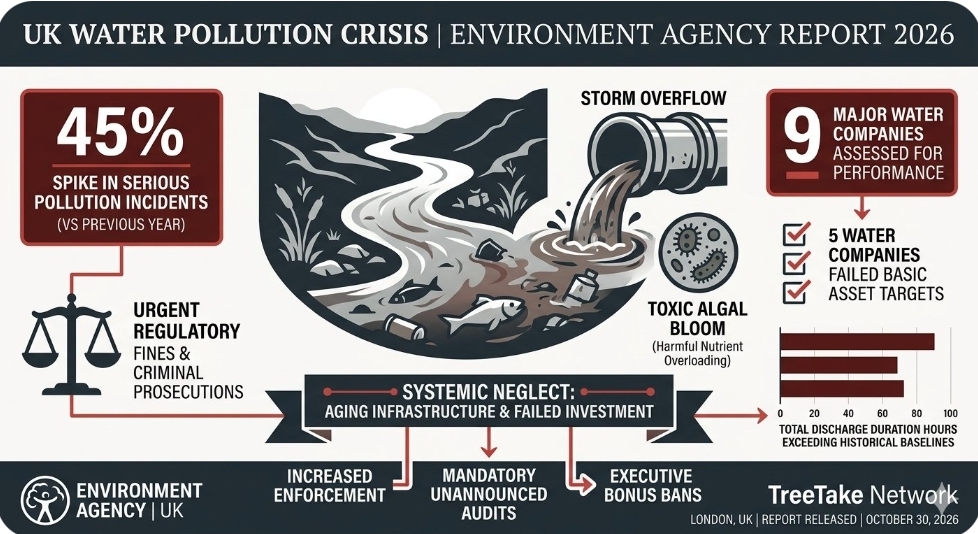
In a devastating assessment of national environmental infrastructure, the United Kingdom Environment Agency released its comprehensive environmental performance report on October 30, 2026, revealing an unprecedented 45 per cent surge in serious pollution incidents across England's waterways. The data tracks compliance, asset maintenance, and wastewater treatment metrics across all major regulated water and sewerage companies, painting the bleakest picture of regulatory failure in a decade. The statutory watchdog confirmed that the overwhelming majority of these incidents directly impacted pristine chalk streams, sensitive salmon spawning grounds, and coastal bathing waters, drawing fierce condemnation from ecological conservation bodies nationwide.
The financial and operational metrics detailed in the report indicate a systemic degradation of infrastructure. Out of the nine major water companies assessed, more than half failed to meet basic asset performance targets, with unauthorised storm overflow discharges into protected river basins rising sharply during heavy rainfall events. The Environment Agency's monitoring network recorded that total duration hours for raw sewage discharges exceeded historical baselines, largely driven by a combination of ageing pipe networks and an intentional lack of capital investment by corporate water boards. This operational negligence has led to severe nutrient overloading, resulting in massive toxic algal blooms that have decimated local freshwater fish populations and macroinvertebrate communities.
Public outrage has intensified as the report highlights a profound disconnect between corporate financial health and environmental accountability. Despite accumulating record regulatory fines and facing ongoing criminal investigations into wastewater treatment compliance, several top-performing water executives secured substantial performance bonuses over the past fiscal year. In response to the widening ecological crisis, the Environment Agency announced it is scaling up its enforcement division, moving toward mandatory unannounced structural audits and demanding a fundamental overhaul of how water companies calculate and report operational spills.
"The findings of this report are thoroughly indefensible and represent an absolute low point for the water industry," stated Alan Lovell, Chair of the Environment Agency, during the press briefing in London. "A forty-five per cent spike in serious pollution incidents is not a statistical anomaly; it is the direct result of a persistent failure by water companies to invest in the basic infrastructure required to protect our environment. We are instructing our legal teams to pursue the maximum statutory penalties, including criminal prosecutions against corporate directors who look the other way."
Demanding immediate legislative intervention, Philip Dunne, Chair of the Environmental Audit Committee, stated: "Our rivers are choking under a deluge of corporate negligence. This data proves that the existing financial penalty framework is failing to act as an effective deterrent against environmental vandalism. We are calling on parliament to pass emergency legislation that entirely bans executive bonuses for any utility company failing to meet its basic statutory environmental protection targets."
Editor's Note
The catastrophic spike in UK water pollution highlights the complete failure of privatized utility models that prioritize short-term shareholder returns over long-term ecological survival. Moving forward, the regulatory framework must transition from retroactively issuing financial fines—which companies simply absorb as operational costs—to enforcing immediate structural receivership for non-compliant water boards. Regulators must demand the implementation of real-time machine learning telemetry across all storm overflows to ensure absolute transparency, while legally binding utility companies to reinvest a mandatory percentage of gross revenue into ecological restoration. Our waterways are shared national assets, and we can no longer allow private monopolies to liquidate our freshwater biodiversity for corporate profit.



Leave a comment