

TreeTake Network
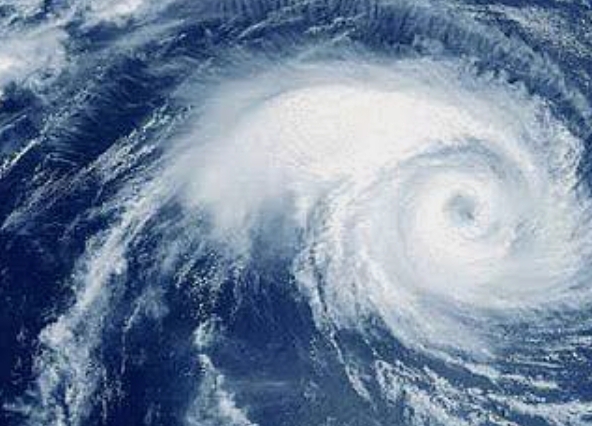
The Indian Ocean region faces renewed atmospheric volatility on October 29 as global tracking models logged the rapid consolidation of a distinct low-pressure core over the South Andaman Sea. Meteorological datasets indicate that the tropical disturbance is drawing immense thermal energy from elevated sea surface temperatures, prompting regional emergency response clusters to prepare for significant marine and coastal disruptions across the southeastern Bay of Bengal.
Cyclonic genesis monitors warm tropical waters
The initial convective system began gathering organisation early in the week, fueled by persistent atmospheric wind shear and warm oceanic currents running well above historical baselines. Satellite sensors tracking the coordinate zones have recorded an expansion of the storm’s peripheral cloud walls, signalling a steady drop in central barometric pressure. National weather forecasters indicate that the system is marching on a steady western track, with current trajectory assessments pointing toward a definitive intensification phase as it enters open maritime corridors.
The emergence of this tropical core after recent severe disturbances underscores a prolonged period of high-energy weather volatility across the region's waters. Marine safety boards have issued immediate navigational restrictions for open-sea operators, warning that local sea states will become increasingly volatile as the inner wind velocities begin organising around the low-pressure centre.
Extensive expert projections and official testimonies
The rapid organisation of this tropical disturbance has driven urgent field briefings and analytical assessments from coastal weather monitors, research meteorologists, and national safety supervisors.
"The thermal profiles across the South Andaman Sea are currently providing optimal thermodynamic fuel for tropical cyclogenesis," stated Dr Mrutyunjay Mohapatra, a leading national scientist specialising in tropical cyclonic tracking. "The moisture convergence around this low-pressure core is intensifying at a rapid rate. Our modelling systems indicate that this structure will consolidate into a well-defined tropical depression within the next forty-eight hours, shifting sea state parameters dramatically across the southeastern Bay of Bengal."
Coastal administrative divisions have already initiated precautionary structural protocols to protect maritime interests and local fishing fleets.
"We have advised all fishing vessels and deep-sea transit operations to completely avoid the south Andaman waters for the next seventy-two hours," confirmed a senior operational safety director from the Coast Guard Headquarters. "Our coastal monitoring stations have been restructured to provide hourly telemetry updates to local harbour masters, ensuring that no small crafts are exposed to the sudden sea swells developing along the outer convective bands."
Regional disaster planners are closely evaluating the system's inland potential, emphasising that early-stage tracking remains vital for minimising public exposure.
"While the exact coastal landfall coordinates cannot be finalised until the system transitions into a mature depression, the volume of moisture accumulation requires immediate multi-state preparedness," explained Sunita Reddy, a principal specialist at the National Disaster Management Authority. "Our emergency response teams across the Andaman and Nicobar chain, as well as adjacent mainland zones, have been placed on comprehensive alert status to manage any sudden escalation in rainfall vectors or localised storm fronts."
Long-term ecological pressure on fragile marine life
Beyond the immediate structural hazards facing maritime infrastructure, marine conservationists warn that repeated late-season tropical disturbances place severe physiological stress on regional coral networks and shallow estuarine habitats.
"Frequent convective storms thoroughly churn the marine columns, altering local salinity and introducing massive volumes of terrestrial silt runoff into fragile coastal coral reefs," explained Dr Rohan Arthur, a senior marine ecologist tracking Indian Ocean reef health. "The severe turbidity blocks sunlight penetration, disrupting the delicate symbiotic relationships essential for coral survival. When these low-pressure systems follow one another in quick succession, the marine ecosystems are stripped of the baseline recovery windows necessary to withstand global thermal stress."
Editor's Note: The rapid genesis of consecutive low-pressure matrices within the Andaman Sea highlights the intensifying thermal load carried by our tropical oceans. Moving forward, subcontinental maritime policy must prioritise real-time subsurface ocean buoys, establish automated storm-alert systems for artisanal fishing clusters, and accelerate trans-boundary regional climate cooperation to shield maritime economies and vulnerable coastal environments from expanding tropical hazards.



Leave a comment