

TreeTake Network
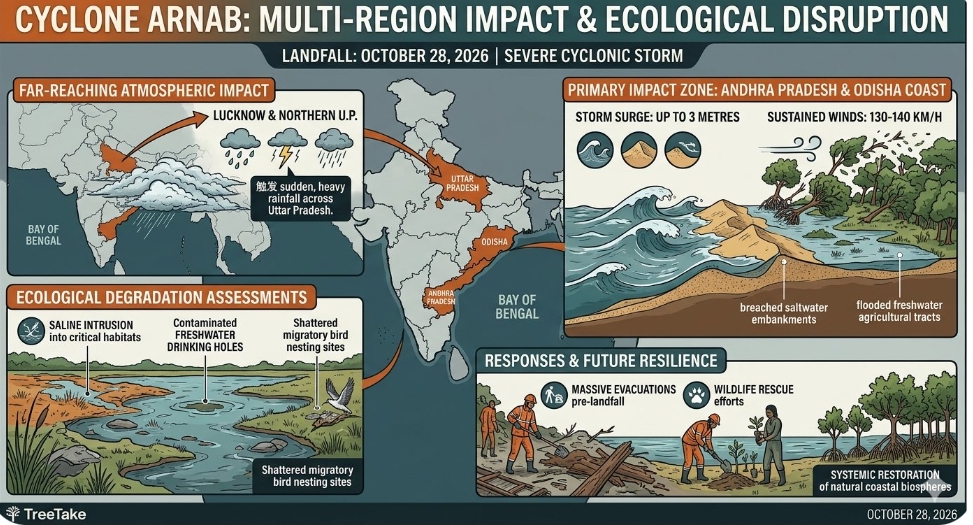
A powerful severe weather system, Cyclone Arnab, officially made landfall along the eastern coast of India on October 28, 2026, bringing destructive gales, torrential downpours, and severe storm surges to the coastal districts of Andhra Pradesh and Odisha. Moving inland from the Bay of Bengal with sustained wind speeds peaking between 130 and 140 kilometres per hour, the severe cyclonic storm has caused widespread coastal inundation, heavily uprooting mature forest canopies and breaching fragile saltwater embankments.
The vast atmospheric reach of the cyclonic system has extended far beyond the immediate impact zone on the coast. In an exceptional display of meteorological scale, the outer convective bands of Cyclone Arnab have pumped immense moisture deep into the Indian subcontinent, triggering sudden, heavy rainfall across northern regions, including Lucknow and several adjoining districts of Uttar Pradesh. Emergency management agencies initiated massive evacuation protocols across low-lying coastal zones ahead of the impact, successfully relocating hundreds of thousands of vulnerable residents to designated cyclone shelters. Beyond the immediate infrastructural damage, conservation specialists are warning of extensive, long-term ecological damage to the region's highly sensitive coastal wetlands, estuaries, and maritime ecosystems.
Devastation of Coastal Biospheres and Mangrove Buffers
Early aerial and field assessments indicate that the intense storm surge pushed saline seawater several kilometres inland, flooding freshwater agricultural tracts and delicate coastal lagoons. This massive influx of saltwater poses a severe threat to local biodiversity, risking widespread die-offs of freshwater flora and fauna while permanently altering the soil chemistry of critical habitats.
Furthermore, the high-velocity winds have caused extensive damage to coastal shelterbelts, fracturing mature trees and stripping deep forest canopies. Environmental teams note that while the region's indigenous mangrove systems acted as crucial natural wave breakers that mitigated the impact on inland human settlements, the sheer intensity of the storm has left large swathes of these protective marine forests severely fractured and waterlogged.
Northern Inversion and Regional Climate Disruption
The unexpected arrival of torrential downpours in northern cities like Lucknow has added a complex layer to the ongoing environmental crisis. The sudden precipitation, occurring outside the traditional monsoon calendar, has caused an immediate drop in regional temperatures while catching local agricultural communities completely off guard.
Meteorologists note that the interaction between the cyclonic moisture surge and existing continental wind patterns has created a prolonged cloud deck over Uttar Pradesh. While this rainfall has temporarily suppressed urban particulate matter, agricultural analysts warn that unseasonal waterlogging in fields could severely damage standing autumn crops and disrupt the upcoming winter sowing cycle.
Statements from Emergency Command and Forestry Experts
"Our primary objective remains the absolute preservation of human life and the rapid restoration of essential civilian infrastructure," stated Mr Pradeep Kumar Jena, a senior disaster management administrator overseeing the state-level response operations. "However, the ecological footprint of this cyclone is exceptionally severe. We are witnessing extensive flooding across thousands of hectares of coastal land, and our field teams report that thousands of trees have been entirely uprooted or structurally damaged. Once the immediate rescue phase concludes, we will deploy specialised teams to evaluate the full scale of the habitat degradation."
Expressing deep concern over the long-term impact on regional wildlife corridors, Dr K. Ramesh, a senior scientist specialising in coastal ecology, highlighted the threat to local species.
"Cyclone Arnab has struck at a highly critical time for our coastal biological communities," Dr Ramesh explained from a regional field office. "The severe storm surge has systematically contaminated vital freshwater drinking holes within our coastal sanctuaries and shattered the nesting habitats of numerous migratory bird species. The extensive structural damage to our coastal tree canopies means that local avian populations have lost vital roosting grounds. The fact that the storm's moisture system has extended far enough north to alter weather patterns in Lucknow underscores the terrifying energetic scale of this event. It will take years of targeted ecological restoration and careful monitoring to rebuild these shattered habitats."
Assessing the Scale of the Surge
Sub-divisional forest officers have confirmed that marine monitoring stations recorded storm surges reaching up to three metres above astronomical tide levels in the worst-affected sectors. The sheer volume of moving water has altered coastal topography, eroding natural sand dunes that serve as the primary defensive barrier against rising sea levels and long-term coastal erosion.
Local forest protection committees are working alongside state emergency teams to clear blocked migration paths and rescue stranded wildlife. Officials emphasise that restoring the natural drainage networks of the flooded wetlands will be crucial in preventing prolonged stagnation, which can lead to root rot in surviving coastal vegetation.
Editor's Note
The destructive landfall of Cyclone Arnab serves as a stark reminder of the escalating vulnerability of India's eastern coastlines to extreme weather events. While disaster management teams deserve immense credit for minimising the loss of human life through timely evacuations, our long-term strategy for handling these crises remains dangerously short-sighted. The fact that a coastal landfall can instantly trigger severe weather disruptions hundreds of kilometres away in cities like Lucknow highlights the systemic connectivity of our climate. We continue to treat these cyclones as isolated infrastructural emergencies rather than systemic ecological disasters. Protective mangrove buffers and natural sand dunes are our most effective defences against oceanic surges, yet they are routinely degraded by uncoordinated coastal development. Moving forward, rehabilitation plans must evolve beyond merely rebuilding concrete structures; they must prioritise the systemic restoration of our natural coastal biospheres to build true, long-term climate resilience.



Leave a comment