

TreeTake Network
In an unprecedented administrative shift to address urban public safety, state governments and municipal corporations have initiated a massive infrastructural transition to structurally isolate every educational campus across the country. The comprehensive plan, impacting approximately 1.5 million schools and colleges, requires local authorities to fortify institutional perimeters within a strict timeline to prevent the entry of free-ranging canine populations into student assembly zones. The massive civil works project follows rigorous administrative deliberations regarding the rising density of street animals in urban ecosystems. The project requires municipal bodies to construct specialised, non-scalable boundary walls and secure gates, moving the focus away from reactive population management to preventative structural exclusion. Local authorities are tasked with auditing all vulnerable educational zones to ensure total physical separation between community animals and student facilities.
Municipal engineering challenges and budgetary reallocations
The sudden scale of the project has raised immediate operational questions among municipal administrators regarding funding and execution. Highlighting the structural strain on local governance, Mumbai Municipal Commissioner Bhushan Gagrani noted, "Securing the perimeters of thousands of primary municipal institutions within a highly condensed window places an immense logistical burden on municipal engineering departments. We are actively diverting infrastructural development funds to ensure compliance, though complete structural reinforcement across every single facility will require extensive coordination." Providing an additional administrative perspective, Delhi Municipal Corporation Commissioner Ashwani Kumar added, "Allocating immediate capital for extensive masonry and engineering works across hundreds of wards means we must temporarily reprioritise municipal budgets. Emergency structural interventions are necessary, but they require substantial fiscal realignments at the zonal level to meet these specific safety targets."
Urban waste ecosystems and structural exclusion mechanisms
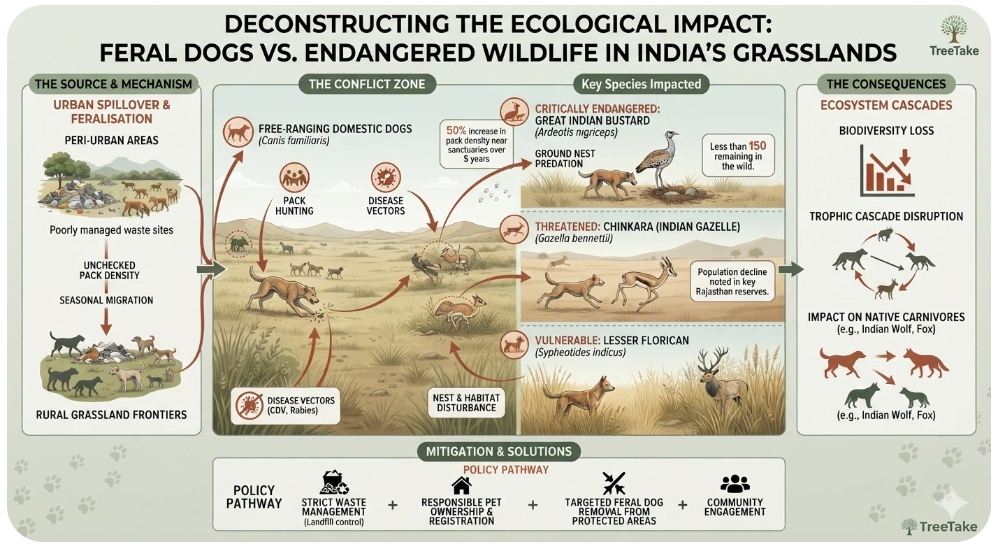
Urban planners argue that changing the physical architecture of public spaces is a necessary step due to the historical failure of local bodies to control municipal waste, which directly sustains street animal populations. Professor KT Ravindran, a renowned urban designer and former Chairman of the Delhi Urban Art Commission, explained, "The modern city landscape has become an open foraging ground. Until our municipal solid waste management systems are completely modernised, structural segregation through high-quality perimeter design remains the only immediate mechanical solution available to protect vulnerable public institutions." Supporting this spatial view, field environmentalist and urban waste researcher Dr Swati Singh Sambyal observed, "Open dump sites and unsegregated commercial waste disposal near public institutions serve as primary resource hubs for street canines. Fortifying institutional perimeters creates a vital immediate boundary, but the broader municipal framework must transition towards closed, modernised waste systems to sustainably alter these urban foraging patterns."
Ecological disruption and biodiversity conservation in peripheral spaces
From a conservation standpoint, the presence of domestic canines in semi-urban habitats is increasingly recognised as an active threat to biodiversity. Dr Arjun Gopalaswamy, a wildlife biologist specialising in carnivore ecology, stated, "Free-ranging domestic canines are highly efficient predators that disrupt fragile urban ecosystems. Beyond the immediate safety concerns inside institutional gates, their unrestricted presence in peripheral green spaces creates an artificial predatory pressure that severely impacts native mammalian species and ground-nesting birds." Expanding on the severe ecological impact, wildlife conservationist and researcher Abi Tamim Vanak noted, "Our studies indicate that domestic canines function as widespread invasive predators in semi-urban and rural grassland habitats. They not only outcompete native carnivores but also cause severe population declines in vulnerable local wildlife populations, necessitating structured zoning policies to isolate wildlife habitats from free-roaming domestic animals."
Population stabilisation limits and veterinary welfare opposition
Animal welfare organisations and veterinary experts maintain that physical barriers do not solve the underlying biological issue. Expressing deep concern over the long-term impact of structural exclusion, PETA India's Director of Veterinary Affairs, Dr Manilal Valliyate, argued, "Erecting fences around specific compounds merely displaces the animal population into adjacent residential streets. The only scientifically proven and humane method to achieve true public safety is to aggressively scale up the Animal Birth Control programme alongside comprehensive anti-rabies vaccination drives, which directly stabilises the population at its source." Echoing these veterinary concerns, Gauri Maulekhi, Trustee of People for Animals, emphasised, "Structural containment strategies do not address the biological realities of territorial dynamics. Without a consistent, highly structured sterilisation and community management policy implemented by local bodies, displacement will only heighten territorial friction and human-animal conflicts in the surrounding residential localities."
Editor's Note
The nationwide structural fortification of educational institutions marks a shift towards mechanical exclusion rather than biological management. While securing school perimeters provides an immediate safety buffer for students, it represents a reactive measure that fails to address the root causes of urban animal conflicts. The sustainable way forward demands that municipal authorities integrate structural upgrades with comprehensive solid waste management to eliminate open foraging sources, alongside the rigorous enforcement of scientific sterilisation protocols to achieve long-term ecological balance.



Leave a comment