

Plants & Pets
TreeTake Network
The arrival of the monsoon brings heavy downpours, soaring humidity, and waterlogged streets across India. For pet parents, outdoor exercise routines are abruptly cut short, muddy walks become a logistical nightmare, and the threat of tick surges keeps companion animals confined indoors for days. Naturally, we look for ways to bring the refreshing essence of nature inside our homes, transforming living rooms and balconies into lush, tropical sanctuaries. While these indoor jungles look beautiful and help purify the air during stuffy monsoon days, they introduce a hidden danger. Many of the most popular tropical house plants are highly toxic to curious cats and dogs. When restless, cooped-up pets are looking for entertainment, a trailing vine or a broad, glossy leaf can quickly turn into an emergency trip to the veterinary clinic. Creating a harmonious, "pet-safe greenhouse" indoors requires a careful balance. You need to understand plant toxicities, select resilient, non-toxic flora that thrive in high humidity, and design your space creatively to keep both your plants and your animals safe and thriving.
The psychology of the cooped-up pet
To successfully manage a shared space for plants and pets, you must first understand why your companion animals suddenly develop an interest in your greenery during the rainy season. Under normal circumstances, a well-exercised dog or an outdoor-facing cat might completely ignore a potted plant. However, prolonged indoor confinement changes their behavioural patterns. Dogs thrive on mental stimulation and physical exertion. When the monsoon eliminates their long runs or trips to the local park, pent-up energy quickly transforms into frustration and boredom. Chewing is a natural stress-relieving mechanism for dogs. A low-hanging leaf or an accessible pot of soil becomes an attractive target for an energetic puppy or an anxious adult dog looking for something to do. Cats, on the other hand, are instinctively drawn to the texture and movement of plants. The rustle of a leaf caught in a cross-breeze mimicking an insect can trigger a cat’s predatory drive. Furthermore, cats often chew on grass and plants in the wild to aid their digestion or to help regurgitate hairballs. When restricted indoors, they will seek out whatever greenery is available, completely unaware that their target might be harmful.
Unmasking the monsoon favourites: Hidden toxicities
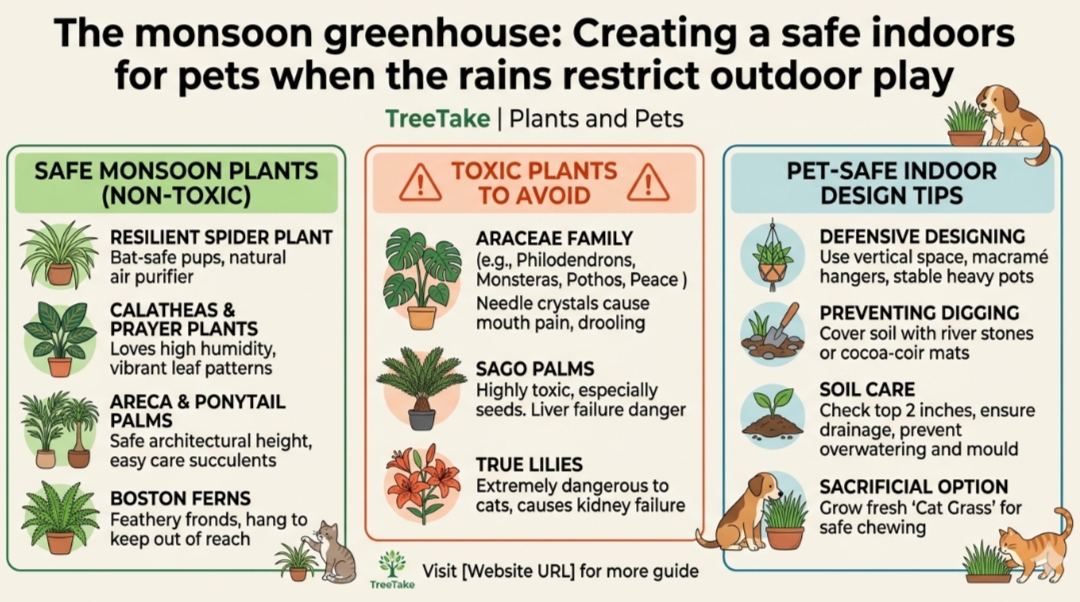
Many plant enthusiasts use the humid monsoon weather to propagate or purchase tropical varieties that struggle during the dry summer months. Unfortunately, several of these seasonal favourites pose severe health risks to pets. The most common culprits found in modern Indian apartments belong to the Araceae family, which includes Philodendrons, Monsteras, Pothos, and Peace Lilies. These plants contain microscopic, needle-shaped crystals called insoluble calcium oxalates. When a pet chews into the leaf or stem, these crystals embed themselves into the delicate tissues of the mouth, tongue, and throat. This causes intense, immediate burning, excessive drooling, swelling of the oral cavity, and difficulty swallowing. While rarely fatal if treated promptly, it causes immense distress to the animal. Far more dangerous are Sago Palms, which are frequently used to add a tropical flair to balconies. Every single part of the Sago Palm is highly toxic, but the seeds contain the highest concentration of cycasin. Ingesting even a small amount can cause severe vomiting, liver failure, and death in both dogs and cats. Similarly, true Lilies are exceptionally toxic to felines. Simply licking a few grains of pollen off their fur or taking a sip of water from the vase can cause acute, irreversible kidney failure in cats within hours.
Building the safe sanctuary: Non-toxic varieties that love the rains
You do not have to abandon your dreams of an indoor jungle to keep your pets safe. A wide variety of stunning, architectural plants thrive in high humidity and are completely non-toxic to dogs and cats.
The resilient spider plant: An absolute staple for any pet-friendly home, the Spider Plant is incredibly resilient and thrives in the ambient humidity of the monsoon. Its cascading, narrow leaves are highly attractive to cats, who love to bat at the dangling pups. Fortunately, even if your feline manages to take a bite, the plant is completely non-toxic. It acts as an excellent air purifier, removing toxins from your indoor environment.
Calatheas and prayer plants: If you love bold patterns and vibrant colours, the Calathea family is the perfect substitute for toxic Monsteras. Known for their stunning, painted leaves that fold up at night, Calatheas absolutely adore the high humidity of the rainy season. They prefer indirect light and moist soil, making them ideal for monsoon conditions, and they are entirely safe for curious paws and teeth.
Areca and ponytail palms: For those looking to add height and structure to a room without risking the dangers of the Sago Palm, true palms like the Areca Palm or the whimsical Ponytail Palm are fantastic choices. The Ponytail Palm, which is actually a succulent rather than a true palm, features a bulbous trunk that stores water, making it incredibly easy to care for if the monsoon humidity keeps your soil damp for longer than usual.
Boston ferns: Ferns add a lush, prehistoric feel to any space, and the Boston Fern thrives perfectly in the heavy, moist air of an Indian monsoon. Hanging them in baskets keeps them out of direct reach of playful dogs, and their feathery fronds are completely safe if a cat happens to swat or nibble on them.
Defensive designing: Keeping plants and pets apart
Even when utilising completely non-toxic plants, you likely want to protect your hard work from being dug up or trampled. Strategic design allows you to display your collection beautifully while minimising interaction with your pets. Utilise your wall space and ceilings. Hanging trailing plants like the safe Burro’s Tail or Boston Ferns high above the ground keeps them entirely out of your dog’s reach and makes them much harder for a cat to access. Energetic dogs can easily knock over lightweight plastic pots during a bout of indoor play. Invest in heavy ceramic, terracotta, or concrete planters that cannot be easily tipped. To prevent dogs from digging in moist monsoon soil, cover the top layer of the pot with large, smooth river stones or a specialised cocoa-coir mat. This keeps the paws clean and deters destructive behaviour. If your cat insists on chewing greenery, provide them with their own dedicated option. Grow a small pot of Cat Grass (wheatgrass or barley grass) and place it at floor level. Cats will naturally gravitate toward their own safe grass, leaving your ornamental house plants alone.
Monsoon management: Overwatering and mould risks
The high humidity of the rainy season means that soil takes significantly longer to dry out. Overwatering causes root rot, damaging your plant's roots and creating a prime breeding ground for moulds, fungi, and fungus gnats. Pets with sensitive respiratory systems can suffer from breathing in airborne mould spores emanating from constantly damp soil. Always check the top two inches of soil before watering. Ensure your pots have excellent drainage holes, and empty out the collection saucers immediately to maintain a clean, dry, and healthy environment for everyone in the home.
What to do in an emergency
Despite your best efforts, accidents can happen. If you suspect your pet has ingested a toxic plant, swift action is crucial. Look for clinical signs such as persistent drooling, pawing at the mouth, sudden vomiting, or lethargy. Never attempt to induce vomiting at home using home remedies, as this can cause severe damage. Instead, immediately take a photo of the plant involved and contact your veterinarian right away. Early intervention is the absolute key to a full and speedy recovery, helping you transform your home into a safe, green oasis where both your plants and your beloved pets can happily weather the monsoon storm together.



Leave a comment