

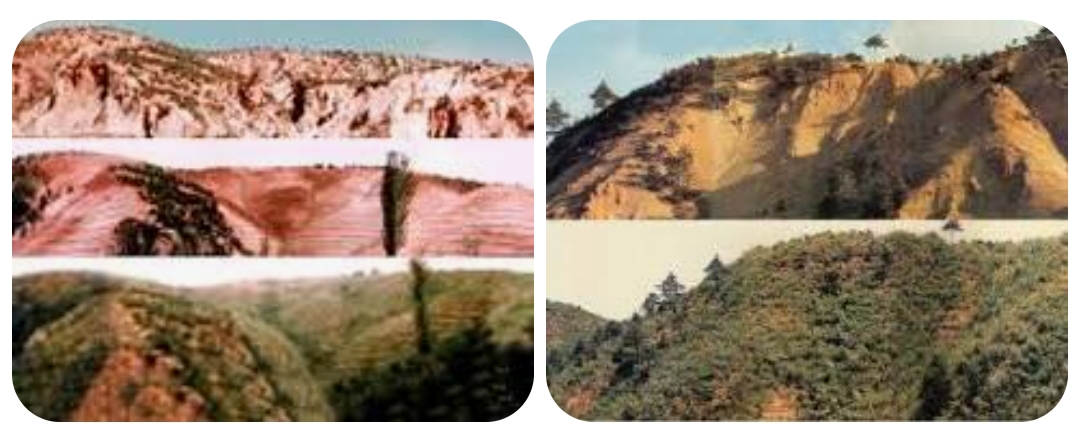
Rising from war-torn ashes to a resilient green canopy, South Korea's 10-billion-tree triumph proves that human determination can heal a broken planet—a blueprint for global restoration that we must urgently learn from…
Following the devastation of the Korean War, which left over 4 million hectares of forest land completely bare or degraded by 1953, South Korea executed one of the most successful ecological recovery campaigns in human history. Beginning in the 1960s and accelerated by the First Ten-Year Forest Rehabilitation Plan launched in 1973, the government orchestrated a massive public-private governance model. The core strategy relied on strict logging bans, severe legal penalties for deforestation, the systematic replacement of fuelwood with alternative energy sources, and extensive community mobilisation through village participation. Over 50 years, the nation planted more than 10 billion trees.
This sustained effort expanded forest cover to span roughly 63% of the country's land today, driving average forest growing stock from a bleak 5.7 cubic metres per hectare in 1953 up to 165 cubic metres by 2020. Recent evaluations from the National Institute of Forest Science show that these diverse, mature stands act as powerful natural air conditioners. By increasing shade and lowering air temperatures via transpiration, the dense mixed and urban forests have effectively cooled local microclimates, slashing daytime summer temperatures by 1.5°C to 1.9°C compared to highly built-up urban centres.
Reflecting on the global impact of this achievement, world-renowned environmentalist Lester R. Brown declared in his publication Plan B 3.0, "South Korea is a reforestation model for the world. We can reforest the earth." Furthermore, historical documentation from the Food and Agriculture Organisation (FAO) formally recognised this unique feat, stating that "Korea is the only developing country that has succeeded in forest rehabilitation after World War II."
Despite achieving near-complete rehabilitation by 2021, the present situation poses severe secondary risks to these man-made ecosystems. Climate change, intense heatwaves, devastating wildfires, and rapid outbreaks of pine wilt disease are threatening the hard-won gains. Because the early stages of the campaign heavily favoured fast-growing coniferous species, the lack of initial biodiversity left vast tracts vulnerable to pests and rapid wildfire propagation.
To address this, the Korea Forest Service (KFS) has shifted away from historic single-species monocultures to modern ecological engineering. Historically, the post-war rapid planting of highly resinous coniferous trees, such as the Korean red pine (Pinus densiflora), created a landscape hyper-vulnerable to fast-moving infernos. To prevent catastrophic fire propagation, the government is actively engineering fire-resistant forest belts across the nation by integrating broad-leaved native species and fire-resilient vegetation.
The primary defence strategy heavily relies on deciduous hardwoods like oak trees (Quercus), ginkgo (Ginkgo biloba), and fir (Abies). Because these broad-leaved species possess high moisture content in their leaves and lack the flammable oil-like resin found in pine trees, they act as natural blockades against windblown fire debris. For instance, on Arbour Day in March 2026, cities like Cheongju initiated large-scale replacement programs, planting 14,700 oak trees across 4.9 hectares to clear out flammable vegetation.
Geographically, this climate-proofing matrix targets critical, high-risk hot spots across South Korea. In Uljin (Gyeongsangbuk-do), following a catastrophic month-long wildfire that scorched 20,000 hectares, stakeholders launched a rigorous five-year masterplan to ecologically revive 4,700 hectares of high-conservation forest. In 2023, vulnerable residential perimeters were reinforced with resident-favoured ginkgo and fir belts.
Additionally, in Yeongyang-gun (Gyeongsangbuk-do), under a partnership established between the Asian Forest Cooperation Organization (AFoCO) and KFS, a massive seasonal campaign across late 2026 and spring 2027 is actively planting 30,000 climate-resilient trees across fire-damaged mountain zones. The community-backed governance and natural regeneration model perfected in Uljin is also being replicated to protect iconic southern parklands like Jirisan National Park and urban green zones like Inwangsan Mountain in Seoul.
To sustain the high volume of climate-resilient seedlings required for this transition, South Korea relies directly on the Baekdudaegan National Arboretum, home to one of only two major doomsday seed vaults globally. The Korea Forest Service has successfully operationalised two Native Plant Supply Centres and plans to build four more to secure a continuous chain of fire-resistant biodiversity. Through these localised efforts, the country remains on track to completely restore its fire-damaged ecosystems and establish comprehensive microclimate defences by 2030


.jpg?resize=120%2C90&ssl=1)



Leave a comment