

TreeTake Network
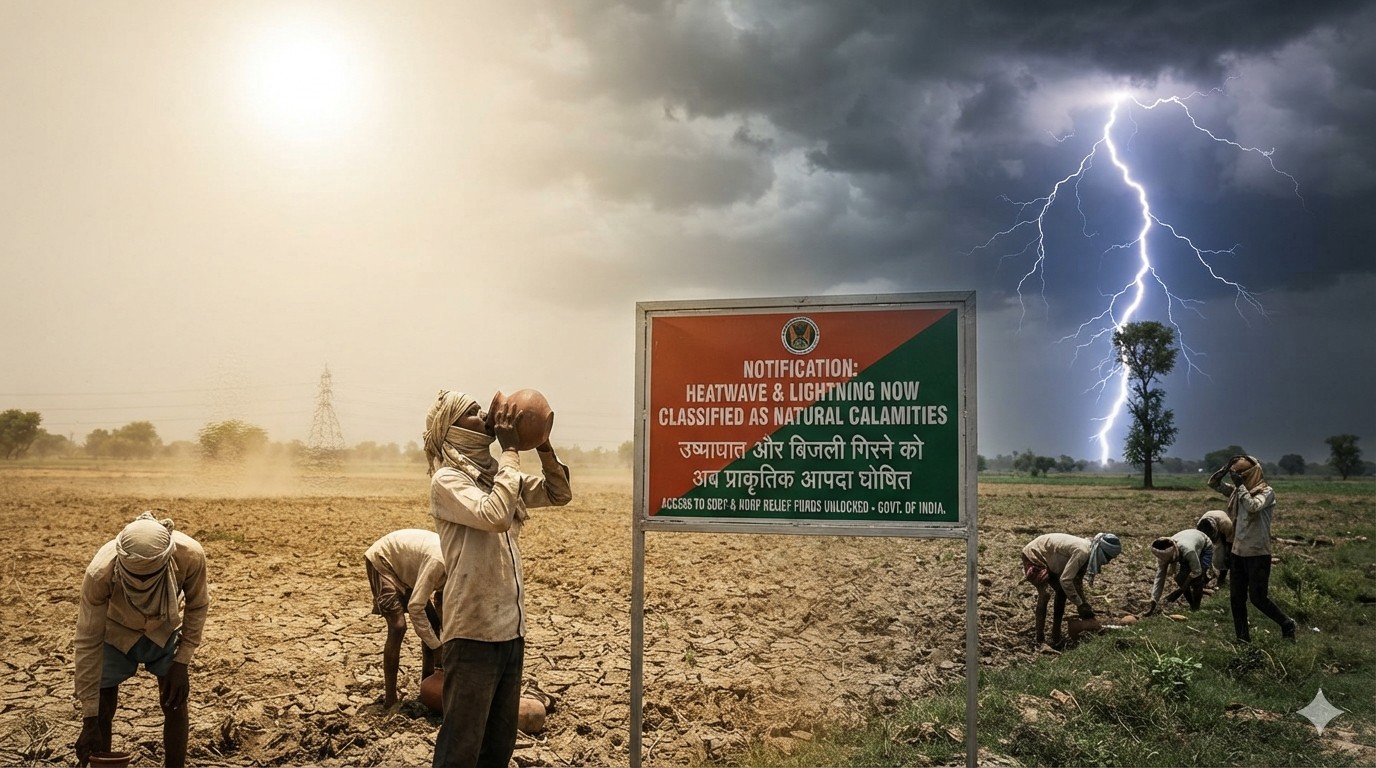
In a monumental structural shift to India's disaster management framework, the Union Ministry of Home Affairs has officially updated the Operational Guidelines of the State Disaster Response Fund (SDRF) and National Disaster Response Fund (NDRF). Following critical recommendations from the 16th Finance Commission, heatwaves and lightning have been formally classified as "notified natural calamities" for the 2026–2031 cycle, transforming how the nation finances its response to escalating climate threats.
The Policy Unlock: Removing the Funding Ceiling
Previously, the central framework deemed heatwaves and lightning as localized or minor issues. This administrative classification severely restricted states, limiting them to spending an absolute maximum of 10% of their annual SDRF allocations on local disaster relief, while lightning was excluded from primary funding entirely.
The newly enacted policy completely dismantles this fiscal bottleneck. By elevating both phenomena to notified natural calamities, the government unlocks immediate, uncapped access to the remaining 80% allocation pool of immediate SDRF funds. State governments can now deploy these massive financial reserves directly toward emergency relief, ex-gratia compensation, and specialised public health setups.
"For years, state governments have fought extreme weather with one hand tied behind their backs due to restrictive funding caps," stated a senior disaster management official. "This policy unlock ensures that state administrations no longer have to ration relief when facing deadly heatwaves or unpredictable lightning strikes. The funds can now flow exactly where they are needed, when they are needed."
The Fatal Cost: Targeting India’s Deadliest Strike
The policy intervention directly targets what has quietly become the deadliest weather phenomenon in India. Lightning currently accounts for over 35% of all natural disaster fatalities in the country, systematically claiming between 2,000 and 2,500 lives annually.
The human cost is heavily skewed by socio-economic vulnerabilities. Data reveals that 96% of these fatal lightning strikes claim the lives of rural agricultural labourers working in open fields, who often have no access to structural shelter during sudden afternoon storms.
The Heat Burden: A Visualising Crisis
The administrative shift arrives on the heels of a bruising summer. Official parliamentary data confirmed that between March 1 and July 26, 2026, India logged 4,853 severe heatstroke cases. The health crisis was heavily concentrated across three primary states: Telangana, West Bengal, and Chhattisgarh.
With uncapped SDRF funds now accessible, these heavily impacted states can legally build cooling centers, equip rural hospitals with specialized heatstroke wards, and distribute immediate compensation to families who lose their breadwinners to extreme weather.
"This is not just an administrative tweak; it is a recognition of climate reality," noted an environmental policy analyst. "By categorizing heat and lightning alongside earthquakes and cyclones, India is finally treating the slow-moving disasters of the 21st century with the financial seriousness they require."



Leave a comment