

Discovering the Lesser-Known Heritage of Lucknow
Need to Conserve Old Monuments-The Need to Protect Lucknow’s Heritage
Lucknow is famous for its grand Imambaras, beautiful palaces and historical monuments. However, the city also has many lesser-known mosques, old shrines and historic buildings hidden in its narrow streets and old neighbourhoods. These places tell us about the history, faith, culture and artistic traditions of the Nawabi period.
I, H.N. Singh, had the pleasure of being a part of this Heritage Walk with my son, Paritosh Singh, guided by Snehil Agarwal. It was an interesting journey through the old parts of Lucknow, where we discovered some important but lesser-known historical places. The walk also helped us understand the need to protect these valuable monuments from neglect and damage.
Dargah Hazrat Abbas: A Place of Faith and Sacrifice:
Our walk began at Dargah Hazrat Abbas in Rustam Nagar, near the Chowk and Mufti Ganj areas of Lucknow.
Hazrat Abbas is remembered for his courage, loyalty and sacrifice at Karbala. For devotees, the dargah is a sacred place for prayer and reflection. It represents faith, devotion and selfless service.
The history of the shrine is connected with the Nawabi period. According to the historical account displayed at the site, the shrine developed during the reign of Nawab Asaf-ud-Daulah (1775-1797). A man named Mirza Faqeera Beg reportedly discovered a bronze religious symbol called an alam after having a dream about its location. This discovery attracted devotees, and a shrine was later established there.
Over time, the rulers of Awadh supported the shrine. Its dome, gateways and other decorative features reflected the importance of the place. Religious gatherings, visits by members of the royal family and the distribution of food to people became part of its traditions.
The shrine is also associated with the events of 1857-58, when the British suppressed the uprising and many places suffered destruction and the loss of valuable objects.
Today, Dargah Hazrat Abbas remains an important place of worship. It reminds us that heritage is not only about old buildings but also about the faith, memories and traditions of the people who visit them.
Rauza Fatimain Masjid: A Mosque in the Heart of Old Lucknow
From the dargah, we proceeded to Begum Fatima Masjid, also known as Rauza Fatimain Masjid in the Rustam Nagar.
The mosque is an important part of this old neighbourhood. Its name recalls Hazrat Fatima, the daughter of Prophet Muhammad, who is respected for her devotion, patience, dignity and compassion.
The mosque and the surrounding houses and narrow lanes give us a glimpse of everyday life in old Lucknow. Such places may not be famous tourist attractions, but they are an important part of the city’s cultural and religious heritage.
Dargah Qutub Azam: A Forgotten Treasure
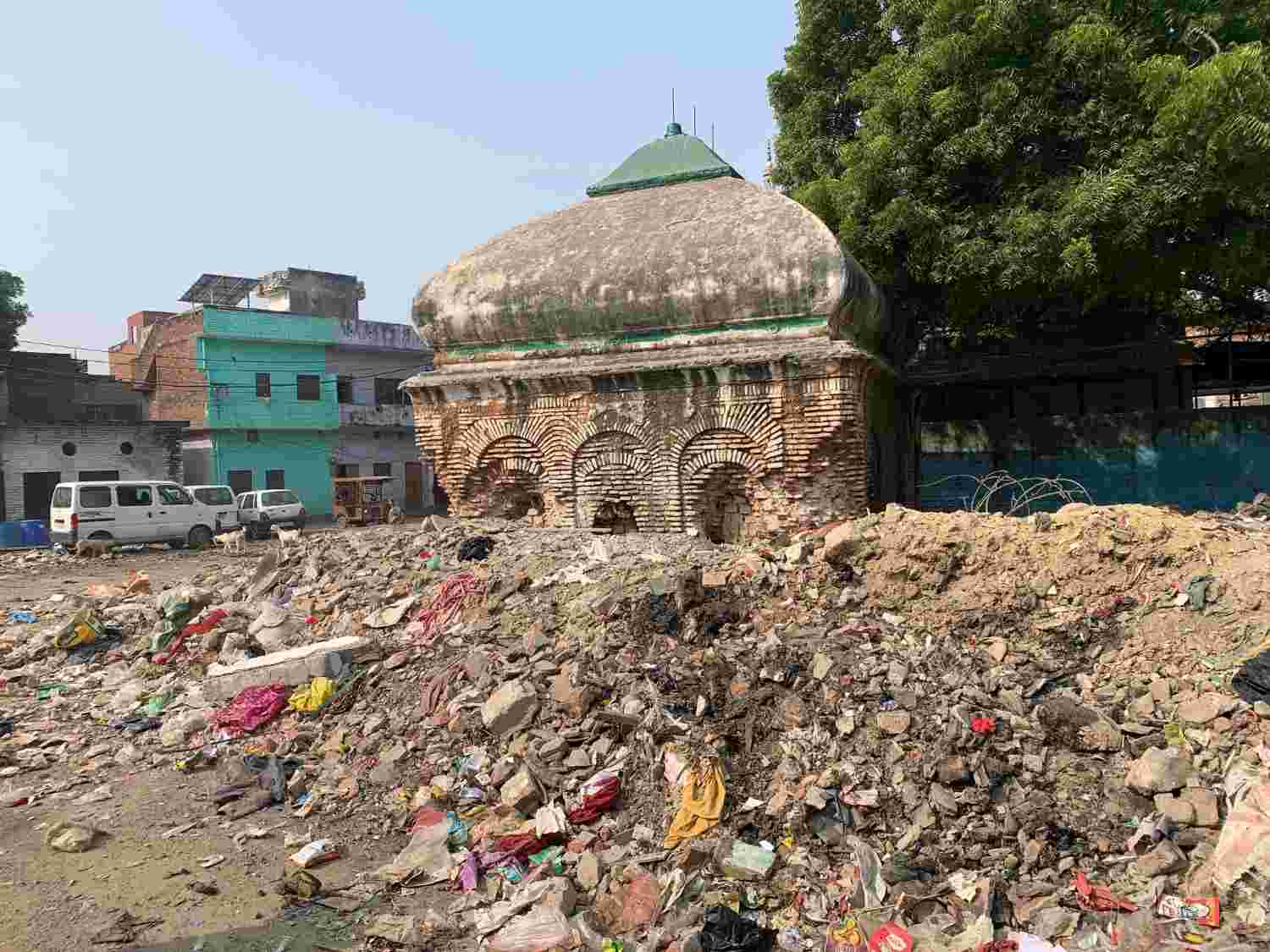
One of the important visit during our walk was the Dargah Qutub Azam in Rustam Nagar, Chowk, Lucknow.
Hazrat Khwaja Sayyad Hasan Maudoodi was born in Delhi in 1742 and later moved to Lucknow during the reign of Nawab Asaf-ud-Daulah. He became a respected religious figure and was held in high regard by several rulers and important people of the Nawabi period.
The tomb and the adjoining mosque are associated with his son, Sayyad Qutub-e-Azam, who is said to have built the structures on family land.
The old brick building has a distinctive ribbed dome that reflects the architectural style of the Nawabi period. Even in its present condition, the structure gives us an idea of the skill of the craftsmen who built it.
Sadly, the monument is now in a neglected state. Rubble and waste around the building make its condition even more worrying.
This historic dargah deserves attention from heritage experts, local residents and the concerned authorities. Proper cleaning, documentation and conservation could help protect this valuable part of Lucknow’s history.
It was painful to see such an important historical structure in this condition. If timely steps are not taken, we may lose not only the building but also an important link with our past.
Mughal Sahiba Imambara: A Fine Example of Nawabi Art
Our walk continued to Mughal Sahiba Imambara in the Wazir Bagh area, near Rustam Nagar.
Mughal Sahiba, also known as Fakhr-un-Nisa Begum, was the daughter of Nawab Muhammad Ali Shah of Awadh. The Imambara is associated with her patronage and reflects the contribution of royal women to Lucknow’s architectural and cultural history.
The building has beautiful decorative plasterwork and traditional designs. Its gateway and other surviving features give us an idea of the artistic skills of the craftsmen of that time.
Unlike some of Lucknow’s better-known monuments, this Imambara receives less public attention. Yet it has considerable historical and architectural value.
Like many old buildings, it faces problems caused by age, moisture, weather and insufficient maintenance. Its decorative work needs proper care by skilled craftsmen who understand traditional building materials and techniques.
A historic building cannot be preserved simply by applying a fresh coat of paint or carrying out ordinary repairs. Its original character must be respected.
Masjid Mughal Sahiba: A Mosque with Distinctive Architecture:
The last heritage site we visited was Masjid Mughal Sahiba, situated in a narrow lane near the historic Imambara Mughal Sahiba in the Mehboob Ganj, Wazir Bagh area.
The mosque has some interesting architectural features. Its minarets have decorative raised designs near their tops, giving them a distinctive appearance. The roof also has beautifully designed double domes with floral patterns and other decorative details.
These features reflect the artistic traditions of the late Nawabi period and the influence of Mughal-style architecture.
Although the mosque is tucked away in a narrow street, it deserves attention from people interested in the history and architecture of Lucknow.
Visiting such places helps us understand that the city’s heritage is not limited to large monuments. Many small and lesser-known buildings also have stories worth discovering.
The Need to Protect Lucknow’s Heritage
One of the strongest messages of our walk was the need to conserve old monuments.
We saw historic structures in different conditions. Some continue to serve the community, some are being repaired, while others have suffered from neglect.
Every old building needs regular maintenance and proper care. Restoration should be carried out by trained people using suitable materials and methods. Local residents can also play an important role by keeping the surroundings clean, reporting damage and creating awareness about the importance of heritage.
Government departments, heritage organisations and local communities should work together to protect these places. Photographs, historical records and architectural surveys can also help preserve information about buildings that may be at risk.
When an old monument is lost, we lose more than bricks and plaster. We also lose valuable evidence of our history, traditional craftsmanship and the cultural identity of the neighbourhood.
A Memorable Walk Through Old Lucknow
Our Heritage Walk with Snehil Agarwal was an enriching experience for me and my son, Paritosh Singh. It gave us an opportunity to explore a lesser-known side of Lucknow and discover places that many people may pass without knowing their historical importance.
From th e spiritual atmosphere of Dargah Hazrat Abbas to Begum Fatima Masjid, from the neglected Dargah of Dargah Qutub Azam to the architectural beauty of Mughal Sahiba Imambara and Masjid Mughal Sahiba, each place offered a different glimpse of the city’s rich past.
The walk was both enjoyable and thought-provoking. It showed us the beauty of old Lucknow, but it also revealed how easily valuable monuments can suffer when they are not properly maintained.
I am grateful to Snehil Agarwal for guiding us through these historic streets and introducing us to these lesser-known treasures. Exploring such places with my son made the experience even more meaningful, as it gave us an opportunity to learn about our city’s history together.
Lucknow’s heritage is not limited to its famous monuments. It lives in its old streets, mosques, dargahs, Imambaras and the memories of its people.
We must discover these hidden treasures, understand their value and encourage their proper conservation so that future generations can also appreciate them.
Every old monument has a story to tell. Every historic street holds memories of the past. Protecting this heritage is our shared responsibility.
Heritage Walk with Snehil Agarwal , discovering our past, appreciating our present and protecting our heritage for the future.
H. N. Singh
Participant, along with my son, Paritosh Singh



Leave a comment