

TreeTake Network
The planetary crises of 2026 have deepened as the combined toll of intense geopolitical conflicts and recurring peacetime industrial accidents has completely destabilised global energy supply lines and compromised the international biosphere. Beyond the immediate physical destruction of oil installations from the Middle East to South Asia, the structural vulnerabilities of the modern global economy and the delicate chemistry of the Earth's atmosphere have been systematically exposed. New data from international economic boards and environmental laboratories confirm that the borderless fallout of these infrastructure failures presents an unprecedented dual crisis: a sweeping global financial shock and a highly toxic chemical contamination event.
The economic shockwaves and maritime choke point paralysis
The physical damage inflicted upon processing hubs throughout 2026—including the Russian refinery drone campaigns in June, the targeted missile strikes on Qatar’s Ras Laffan facility, and the industrial blast along the United States Gulf Coast—has triggered an unprecedented crisis across global shipping lanes and financial systems. The partial closure of the Strait of Hormuz and the vulnerability of Black Sea export corridors forced maritime insurance premiums to rise by over 400 per cent within a three-month window. Commercial shipping volumes through vital economic choke points plummeted by 90 per cent as energy conglomerates rerouted tankers around the Cape of Good Hope, adding twelve to fifteen days to standard transit timelines and drastically increasing global freight expenditures.
This systemic transport gridlock caused Brent crude prices to spike sharply to 134 dollars per barrel by late August 2026, creating an immediate inflationary shockwave for major importing nations. Commenting on the compounding economic fallout during an emergency monetary forum, International Energy Agency Executive Director Fatih Birol stated, "The structural paralysis of primary maritime corridors, coupled with the sudden loss of localised refining capacity across both hemispheres, has placed the global energy supply chain in its most precarious position since the 1970s, threatening to trigger prolonged industrial stagflation worldwide." For developing economies, the steep cost of importing high-value crude has rapidly depleted foreign exchange reserves, forcing immediate domestic fuel price hikes and driving up the cost of transporting daily consumer goods, basic foodstuffs, and agricultural fertilisers.
Analysing the domestic macroeconomic pressure, Dr Arvind Subramanian, former Chief Economic Adviser to the Government of India, observed during a Mumbai banking seminar, "An unmitigated oil shock of this magnitude acts as a direct regressive tax on Indian growth. Every ten-dollar increase in the price of crude expands our current account deficit by billions of dollars and exerts immense downward pressure on the rupee, forcing structural adjustments across our industrial manufacturing sectors."
The hazardous chemical anatomy of modern black rain
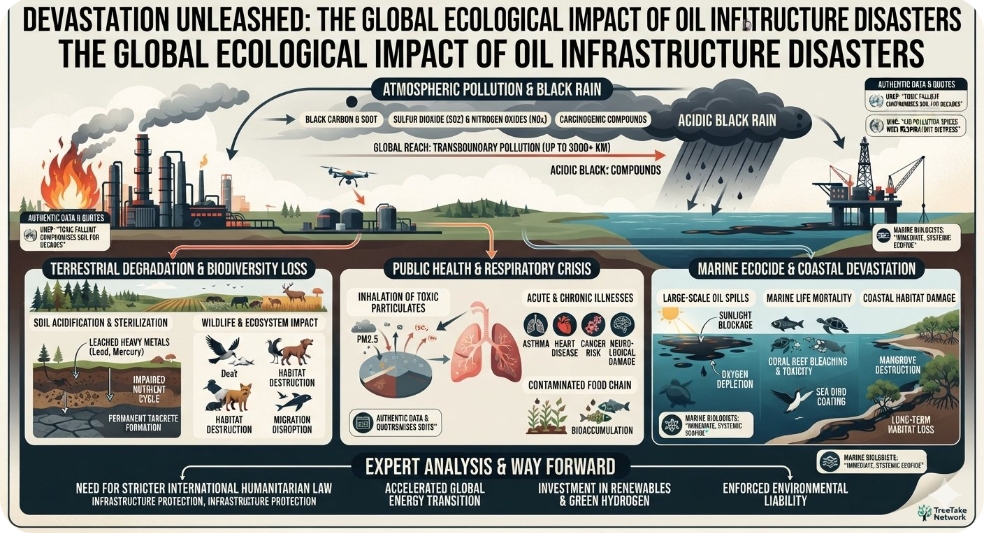
Simultaneously, atmospheric testing laboratories have mapped the precise chemical composition of the highly destructive black rain that has fallen over agricultural belts downwind from the fires. When hundreds of thousands of tonnes of crude oil undergo incomplete combustion, the lack of uniform oxygen distribution prevents the hydrocarbons from converting cleanly into carbon dioxide and water vapour. Instead, the intense thermal updrafts carry unburned complex chemical rings, ultra-fine black carbon soot particles, and high concentrations of sulphur dioxide and nitrogen oxides into the upper troposphere, where they interact with cloud water droplets.
Laboratory analysis of precipitation samples collected downwind from the industrial fires reveals a hazardous mix of toxic compounds. The rainwater has demonstrated extreme acidity levels, with a pH dropping as low as 3.2, which is capable of instantly corroding protective leaf cuticles and causing widespread structural damage to regional cash crops. Furthermore, gas chromatography testing has confirmed high levels of polycyclic aromatic hydrocarbons, specifically benzo[a]pyrene, a highly potent carcinogen that accumulates rapidly in surface soils and surface water networks.
Dr Maria Neira, Director of Public Health and Environment at the World Health Organisation, publicly warned of the invisible, long-term threat: "The chemical precipitation resulting from these massive petroleum infernos acts as an environmental vector for heavy metal mobilisation. As the highly acidic rainwater interacts with the ground, it leaches naturally occurring lead, cadmium, and methylmercury from the soil and washes them directly into civilian drinking water basins and food crops, introducing persistent neurotoxins into the human food chain."
Providing critical laboratory context from South Asia, Dr Ramesh Kumar, Head of Environmental Chemistry at the Indian Institute of Science, added, "Our analysis of recent precipitation anomalies downwind of these regional fires reveals a staggering concentration of heavy aromatic fractions. This is not simple acidic rain; it is an industrial chemical slurry falling from the sky, capable of permanently altering the soil microbial biomass and lowering the natural fertility of vulnerable agricultural tracts."
Transboundary environmental degradation and public health strain
The accumulation of these transboundary atmospheric pollutants has placed an immense strain on public health systems and local biological diversity across multiple continents. Fine particulate matter (PM2.5) composed of toxic soot and chemical residues has been tracked migrating thousands of kilometres along upper atmospheric currents, moving effortlessly across international borders. In northern India, the convergence of foreign atmospheric soot with localised winter weather patterns has created a dense, toxic winter haze over the Indo-Gangetic plain, causing an immediate 35 per cent spike in emergency hospital admissions for acute respiratory distress, ischemic heart disease, and severe asthma attacks.
The ecological degradation is equally severe across marine and terrestrial wildlife reserves. Acidic runoff from polluted agricultural zones has altered the delicate pH balances of inland freshwater streams, causing mass die-offs of sensitive amphibian populations and destroying the spawning grounds of endemic fish species. Along contaminated coastlines, unrefined crude compounds and synthetic chemical residues have entered the marine food chain via bioaccumulation. Small marine organisms ingest the water-soluble fractions of the oil, passing the concentrated toxins up the food web to larger pelagic fish, sea mammals, and apex predators, resulting in long-term reproductive failure and a severe loss of oceanic biodiversity.
Evaluating the public health strain within the subcontinent, Dr. K. Srinath Reddy, past President of the Public Health Foundation of India, publically declared, "The transboundary migration of black carbon and fine petrochemical particulates represents an invisible healthcare emergency. We are seeing a direct correlation between these atmospheric containment failures and a sharp rise in cardiorespiratory morbidity, placing an unsustainable burden on our tertiary healthcare infrastructure."
Stressing the severe threat to regional biodiversity, Dr. Sylvia Earle, a world-renowned marine biologist and oceanographer, publicly stated, "When crude oil compounds enter a marine ecosystem via industrial run-off or coastal fires, they cause immediate, systemic ecocide. The water-soluble fractions of the oil are highly toxic to coral reefs and larval fish, effectively destroying the nurseries of our oceans and causing damage that takes decades to repair."
Editor's Note
The dual crises of economic paralysis and toxic chemical deposition recorded throughout 2026 serve as a definitive baseline warning for modern industrial civilisation: the operational lifecycle and vulnerability of fossil fuel infrastructure are entirely incompatible with a stable global economy and a safe biosphere. The transboundary fallout demonstrates that local infrastructural failures—whether caused by a tactical strike in Europe, an economic blockade in the Middle East, or a mechanical system failure in Texas or Rajasthan—cannot be isolated. The consequences inevitably manifest globally as structural inflation, systemic supply shocks, highly toxic precipitation, and severe public health pandemics.
To address these vulnerabilities, the international community must move beyond temporary economic interventions and implement binding international frameworks that establish absolute legal accountability for large-scale ecocide, penalising the destruction of energy nodes in both war and peacetime. For major importing nations like India, the complex lessons of 2026 demonstrate that true national resilience cannot be achieved by simply renegotiating supply routes or relying on emergency petroleum reserves. Protecting national stability, food security, and public health now requires a rapid, absolute decoupling from the global fossil fuel matrix through a comprehensive transition toward domestic renewable grids, green hydrogen integration, and localised synthetic energy networks.
तेल ढांचागत आपदाओं का वैश्विक पारिस्थितिक प्रभाव: युद्ध और औद्योगिक दुर्घटनाओं से बढ़ता विनाश
ट्रीटेक नेटवर्क
दुनिया भर में भू-राजनीतिक संघर्षों और औद्योगिक दुर्घटनाओं के कारण ऊर्जा क्षेत्र के बुनियादी ढांचे (एनर्जी इंफ्रास्ट्रक्चर) को व्यापक नुकसान पहुँचा है, जिसने पर्यावरण को एक विनाशकारी मोड़ पर लाकर खड़ा कर दिया है। मार्च 2026 में मध्य-पूर्व के तेल भंडारों पर हुए मिसाइल हमलों से लेकर पूर्वी यूरोप में जारी ड्रोन युद्ध, और अमेरिका से लेकर भारत के राजस्थान (पचपदरा) तक में हुई स्वतंत्र औद्योगिक दुर्घटनाओं ने पूरी दुनिया के पर्यावरण को गंभीर खतरे में डाल दिया है। इन तेल भंडारों और रिफाइनरियों में लगने वाली भीषण आग के कारण लाखों लीटर कच्चा तेल बिना किसी नियंत्रण के जल रहा है, जिससे निकलने वाला ज़हरीला धुआं और हानिकारक रसायन हवा में घुलकर 'काली बारिश' (ब्लैक रेन) जैसी भयानक आपदाओं को जन्म दे रहे हैं।
यह संकट किसी एक देश या क्षेत्र तक सीमित नहीं है, बल्कि एक वैश्विक आपदा बन चुका है। कच्चे तेल के अधूरे दहन (इनकम्प्लीट कंबशन) से निकलने वाला गाढ़ा काला धुआं, सल्फर डाइऑक्साइड, नाइट्रोजन ऑक्साइड और भारी धातुएं वायुमंडल की ऊपरी परतों में जमा हो रही हैं। यह प्रदूषित हवा हवाओं के रुख के साथ हजारों किलोमीटर का सफर तय कर रही है, जिससे दुनिया भर के मौसम का चक्र बिगड़ रहा है और साझा पर्यावरण को ऐसा नुकसान पहुँच रहा है जिसकी भरपाई में दशकों लग सकते हैं।
मार्च 2026 में मध्य-पूर्व का तेल संकट और ज़हरीली काली बारिश
इस गंभीर संकट की शुरुआत तब हुई जब मार्च 2026 की शुरुआत में हवाई हमलों के दौरान तेहरान रिफाइनरी सहित चार बड़े तेल डिपो और गोदामों को निशाना बनाया गया। इन ठिकानों पर हुए हमलों से भारी मात्रा में हाइड्रोकार्बन वायुमंडल में फैल गया, जिससे प्रभावित इलाकों के ऊपर ज़हरीले स्मॉग का एक कृत्रिम बादल बन गया। जब यह प्रदूषित धुआं हवा में मौजूद नमी और बादलों के साथ मिला, तो क्षेत्र में एक बेहद तेजाबी और चिपचिपी 'काली बारिश' (ब्लैक रेन) होने लगी।
इस आपदा पर अपनी आपातकालीन रिपोर्ट जारी करते हुए संयुक्त राष्ट्र पर्यावरण कार्यक्रम (यूएनईपी) की कार्यकारी निदेशक इंगर एंडरसन ने चेतावनी दी, "इन ढांचागत तेल ठिकानों पर होने वाले हमलों की पर्यावरणीय कीमत पूरी दुनिया को चुकानी पड़ रही है। इस धुएं में मौजूद कैंसरकारी तत्व सीधे लाखों लोगों के फेफड़ों में जा रहे हैं, जबकि ज़हरीली काली बारिश के कारण मिट्टी और भूजल की शुद्धता दशकों के लिए खत्म होने की कगार पर पहुँच गई है।"
इसके साथ ही, विश्व स्वास्थ्य संगठन (डब्ल्यूएचओ) ने भी क्षेत्र में सांस के मरीजों की संख्या में अचानक हुई भारी बढ़ोतरी को देखते हुए मेडिकल इमरजेंसी एडवाइजरी जारी की। स्थानीय स्वास्थ्य मंत्रालयों ने भी यह स्वीकार किया है कि इस तेजाबी बारिश के सीधे गिरने से राजधानी के आस-पास की कृषि भूमि और पीने के पानी के मुख्य जलाशय बुरी तरह प्रदूषित हो चुके हैं, जिससे फसलों और इंसानी सेहत पर गंभीर खतरा मंडरा रहा है।
पूर्वी यूरोप के तेल ठिकानों पर ड्रोन हमलों का सिलसिला (2024–2025)
तेहरान संकट से ठीक पहले, रूस और यूक्रेन के बीच चल रहे लंबे संघर्ष ने ऊर्जा ठिकानों को जानबूझकर निशाना बनाने का एक बेहद खतरनाक चलन शुरू कर दिया था। साल 2024 के मध्य से लेकर 2025 की शुरुआत तक, लंबी दूरी के ड्रोनों के ज़रिए ब्लैक सी (काला सागर) के तटीय इलाकों में स्थित रिफाइनरियों और मॉस्को के पास स्थितRyazan तेल डिपो को लगातार निशाना बनाया गया। इन हमलों के कारण तेल के बड़े-बड़े डिस्टिलेशन कॉलम फट गए और एक साथ हजारों टन पेट्रोलियम उत्पाद जलकर खाक हो गए।
इस तबाही पर टिप्पणी करते हुए ऑक्सफोर्ड यूनिवर्सिटी की एसोसिएट प्रोफेसर राधिका खोसला ने एक ब्रीफिंग में कहा था, "पूर्वी यूरोप में जीवाश्म ईंधन (फॉसिल फ्यूल) के ठिकानों को योजनाबद्ध तरीके से निशाना बनाए जाने के कारण वैश्विक स्तर पर ग्रीनहाउस गैसों का उत्सर्जन अचानक बहुत ज्यादा बढ़ गया है। यह तबाही जलवायु परिवर्तन को रोकने की वैश्विक कोशिशों को सीधे तौर पर नाकाम कर रही है और क्षेत्रीय मौसम के चक्र को पूरी तरह बिगाड़ रही है।" इन तेल क्षेत्रों से निकला काला कार्बन और कालिख हवा के साथ उड़कर नॉर्डिक (यूरोपीय) देशों के ग्लेशियरों पर जाकर जम गई, जिससे बर्फ की सूर्य की रोशनी को परावर्तित करने की क्षमता (अल्बेडो इफेक्ट) कम हो गई और वहां ग्लेशियरों के पिघलने की रफ्तार काफी तेज़ हो गई है।
अमेरिका और ऑस्ट्रेलिया में शांति काल के दौरान तेल ढांचे की विफलता
पर्यावरण को नुकसान पहुँचाने वाली ये घटनाएँ सिर्फ युद्ध क्षेत्रों तक ही सीमित नहीं हैं; बल्कि सामान्य परिस्थितियों में भी तकनीकी खराबियों और चरम मौसम (एक्सट्रीम वेदर) के कारण ऐसी भयानक दुर्घटनाएँ सामने आई हैं। साल 2025 के मध्य में, संयुक्त राज्य अमेरिका के टेक्सास राज्य में स्थित एक बहुत बड़े पेट्रोकेमिकल रिफाइनरी परिसर में भीषण तकनीकी खराबी के कारण धमाका हुआ और आग लग गई। इस आग से निकले बेंजीन और सल्फर डाइऑक्साइड के ज़हरीले बादलों के कारण आस-पास के 15,000 से अधिक निवासियों को तुरंत अपने घर छोड़कर सुरक्षित स्थानों पर जाना पड़ा।
इसी तरह, साल 2025 के अंत में ऑस्ट्रेलिया के क्वींसलैंड में एक मुख्य तेल पाइपलाइन के फटने और उसमें आग लगने की घटना सामने आई। इस दुर्घटना के कारण आग बुझाने के लिए इस्तेमाल किया जाने वाला सिंथेटिक केमिकल फोम और हजारों गैलन कच्चा तेल सीधे वहां की स्थानीय नदियों में बह गया, जिससे नदियों का पारिस्थितिकी तंत्र पूरी तरह तबाह हो गया।
इन औद्योगिक हादसों पर चिंता जताते हुए पर्यावरण विशेषज्ञों ने कहा कि पुराने होते जा रहे बुनियादी ढांचे और जलवायु परिवर्तन के कारण बढ़ते तापमान का यह एक खतरनाक चक्र बन चुका है। जब भी कोई तेल रिफाइनरी जलती है, तो उससे भारी मात्रा में निकलने वाली कार्बन गैसें धरती के तापमान को बढ़ाती हैं, और यही बढ़ता तापमान आगे चलकर ऐसे चरम मौसमी हादसों को जन्म देता है जो तेल फैक्ट्रियों को दोबारा नुकसान पहुँचाते हैं।
राजस्थान के पचपदरा रिफाइनरी साइट पर घरेलू संकट
भारत भी तेल बुनियादी ढांचे की इस संवेदनशीलता और हादसों से अछूता नहीं रहा है। इसका सबसे हालिया और बड़ा उदाहरण राजस्थान के पचपदरा में निर्माणाधीन ग्रीनफील्ड रिफाइनरी परियोजना स्थल पर देखने को मिला। यहाँ सिस्टम टेस्टिंग (प्रणाली परीक्षण) के दौरान अचानक एक हिस्से में भीषण आग लग गई, जिससे निकलने वाले काले धुएं के विशाल गुबार ने मरुस्थलीय आसमान को ढक लिया। हालांकि, आपातकालीन सेवाओं की मुस्तैदी और तुरंत की गई कार्रवाई के कारण एक बड़े धमाके को टाल दिया गया, लेकिन इस घटना ने यह साबित कर दिया कि तेल प्रसंस्करण (ऑयल प्रोसेसिंग) में तकनीकी जोखिम कितना ज्यादा होता है।
इस तरह की घरेलू और विदेशी घटनाओं से भारतीय पर्यावरण पर पड़ने वाले असर को लेकर देश के वैज्ञानिक बेहद चिंतित हैं। इंडियन इंस्टीट्यूट ऑफ ट्रॉपिकल मेटियोरोलॉजी (आईआईटीएम) के वरिष्ठ वायुमंडलीय शोधकर्ता डॉ. अभिजीत सरकार ने चेतावनी देते हुए कहा, "आग चाहे मध्य-पूर्व में ड्रोन हमले से लगी हो या राजस्थान में किसी तकनीकी खराबी से, वायुमंडल पर इसका असर एक जैसा ही होता है। तेल के जलने से निकलने वाले सूक्ष्म कण (PM2.5) और ब्लैक कार्बन हवा के साथ हजारों किलोमीटर का सफर तय कर सकते हैं। जब ये प्रदूषित कण पश्चिमी विक्षोभ (वेस्टर्न डिस्टर्बेंस) के साथ भारत के गंगा के मैदानी इलाकों के ऊपर आकर फंस जाते हैं, तो ये सीधे तौर पर करोड़ों लोगों के स्वास्थ्य और फसलों की पैदावार को नुकसान पहुँचाते हैं।"
मिट्टी का स्थायी बंजर होना: 1991 के खाड़ी युद्ध का ऐतिहासिक सबक
इन तेल हादसों के दीर्घकालिक (लंबे समय तक रहने वाले) नुकसान को समझने के लिए वैज्ञानिक इतिहास की सबसे बड़ी पर्यावरणीय त्रासदी—1991 के कुवैत तेल संकट का हवाला देते हैं। उस दौरान पीछे हटती सेनाओं ने जानबूझकर 600 से अधिक तेल के कुओं में आग लगा दी थी, जो लगातार आठ महीने तक जलते रहे थे। उस आग से गिरे काले धुएं और तेल की बूंदों ने पूरे रेगिस्तान की मिट्टी के ऊपर 'टारक्रिट' (डामर जैसी सख्त परत) की एक मोटी चादर बना दी थी। इसके कारण वहां की ज़मीन हमेशा के लिए बंजर हो गई, भूमिगत जल का पुनर्भरण (रीचार्ज) बंद हो गया और लाखों प्रवासी पक्षी मारे गए थे। आज यूक्रेन और तेहरान में लग रही आग उसी भयानक ऐतिहासिक त्रासदी को और बड़े पैमाने पर दोहराने की चेतावनी दे रही है।
मानव स्वास्थ्य और श्वसन तंत्र पर ज़हरीले धुएं का सीधा प्रहार
जब कच्चा तेल अनियंत्रित होकर जलता है, तो ऑक्सीजन की कमी के कारण उसका पूर्ण दहन नहीं हो पाता। इस प्रक्रिया से भारी मात्रा में 'ब्लैक कार्बन' (कालिख) पैदा होती है, जो कार्बन डाइऑक्साइड की तुलना में सूर्य की गर्मी को दसियों लाख गुना ज्यादा सोखती है।
विश्व स्वास्थ्य संगठन (डब्ल्यूएचओ) में सार्वजनिक स्वास्थ्य और पर्यावरण विभाग की निदेशक डॉ. मारिया नीरा ने इस स्वास्थ्य संकट को रेखांकित करते हुए कहा, "तेल की आग से निकलने वाले ये अति सूक्ष्म कण इंसानी फेफड़ों के सबसे गहरे हिस्सों तक पहुँच जाते हैं और वहां से सीधे खून के बहाव में मिल जाते हैं। इसके कारण इंसानी शरीर के भीतर गंभीर सूजन (इंफ्लेमेशन) पैदा होती है, जिससे दिल के दौरे, स्ट्रोक, फेफड़ों के कैंसर और अस्थमा जैसी जानलेवा बीमारियों का खतरा कई गुना बढ़ जाता है।" इसके अलावा, तेजाबी बारिश के कारण मिट्टी में मौजूद सीसा (लेड) और पारा (मरकरी) जैसे भारी धातुएं घुलकर पीने के पानी और खाद्य श्रृंखला (फूड चेन) में शामिल हो रही हैं, जो आने वाली पीढ़ियों के लिए मानसिक और शारीरिक विकलांगता का कारण बन सकती हैं।
समुद्री पारिस्थितिकी तंत्र और जैव-विविधता का विनाश
तेल के इन हादसों का सबसे दर्दनाक असर समुद्र के भीतर रहने वाले जीवों पर पड़ता है। तटीय इलाकों में स्थित रिफाइनरियों या पाइपलाइनों में होने वाले हादसों का सारा केमिकल और कच्चा तेल बहकर समुद्र में चला जाता है, जिससे पानी की सतह पर तेल की एक मोटी और अभेद्य परत (ऑयल स्लिक) बन जाती है। यह परत सूर्य की रोशनी को पानी के नीचे जाने से रोक देती है और हवा में मौजूद ऑक्सीजन को पानी में घुलने नहीं देती।
इसके कारण समुद्र के भीतर ऑक्सीजन की भारी कमी हो जाती है, जिससे मछलियां, समुद्री कछुए और डॉल्फ़िन जैसे जीव दम घुटने से तड़प-तड़प कर मरने लगते हैं। मशहूर समुद्री विज्ञानी और समुद्र विज्ञानी डॉ. सिल्विया अर्ल ने इस तबाही पर कहा, "जब कच्चा तेल किसी समुद्री पारिस्थितिकी तंत्र में प्रवेश करता है, तो यह वहां व्यापक स्तर पर 'इकोसाइड' (पर्यावरणीय नरसंहार) का कारण बनता है। तेल के ज़हरीले तत्व समुद्र के भीतर स्थित कोरल रीफ (मूंगा चट्टानों) को पूरी तरह सफेद और बेजान कर देते हैं, जो वास्तव में समुद्र की नर्सरी होती हैं। इस नुकसान की भरपाई करने में प्रकृति को दशकों का समय लग जाता है।"
संपादकीय टिप्पणी
साल 2026 में युद्ध और औद्योगिक लापरवाही के कारण तेल ठिकानों में लगने वाली यह लगातार आग आधुनिक सभ्यता की एक बहुत बड़ी कमजोरी को उजागर करती है: हमारा जीवाश्म ईंधन (फॉसिल फ्यूल) पर आधारित यह ढांचा वैश्विक पर्यावरण के लिए एक टाइम बम बन चुका है। परंपरागत सैन्य और आर्थिक नीतियां इस बात को समझने में पूरी तरह नाकाम रही हैं कि पर्यावरण का विनाश किसी देश की सीमाओं के भीतर बंद नहीं रहता। एक देश में जलने वाली रिफाइनरी दूसरे देश में तेजाबी बारिश, सांस की महामारी और फसलों की बर्बादी के रूप में सामने आती है।
अब समय आ गया है कि अंतरराष्ट्रीय समुदाय एकजुट होकर अंतरराष्ट्रीय मानवीय कानून के तहत बड़े ऊर्जा ढांचों को 'Protected High-Risk Ecological Zones' (संरक्षित उच्च-जोखिम वाले पारिस्थितिक क्षेत्र) घोषित करे, ताकि युद्ध या शांति काल में इन्हें नुकसान पहुँचाने को एक अंतरराष्ट्रीय अपराध (इकोसाइड) माना जा सके। भारत जैसे बड़े आयातक देश के लिए, साल 2026 के ये लगातार तेल संकट यह सबक देते हैं कि विदेशी तेल पर निर्भरता हमारी राष्ट्रीय सुरक्षा के लिए एक बड़ा खतरा है। देश की वास्तविक सुरक्षा अब सिर्फ सुरक्षित तेल आयात करने में नहीं है, बल्कि सौर ऊर्जा, पवन ऊर्जा, ग्रीन हाइड्रोजन और घरेलू सिंथेटिक बायोफ्यूल जैसे नवीकरणीय ऊर्जा स्रोतों (रिन्यूएबल एनर्जी) की तरफ अपने कदमों को तेजी से बढ़ाने में है, ताकि हम अपने देश की सेहत, अर्थव्यवस्था और खाद्य सुरक्षा को विदेशी तेल युद्धों के इस ज़हरीले धुएं से हमेशा के लिए सुरक्षित रख सकें।



Leave a comment