

Tell-All
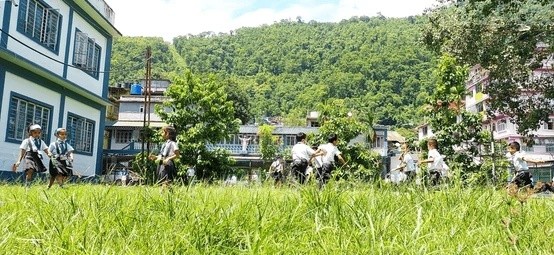
We asked: The rapid concretisation of school campuses is stripping children of natural spaces, making it crucial to mandate that all schools, public or private, maintain a dedicated green lawn on their premises. What do you think should be done to enforce and implement this mandatory greening of all school grounds, regardless of their location?
A school is often thought of as a place where children learn from books, teachers and lessons. But some of the most important things a child learns are not always found inside a classroom. They are experienced. When we talk about providing green spaces in schools, I think the discussion should go beyond simply asking whether every campus should have a lawn. The more important question is whether we are giving children an opportunity to experience nature as part of their everyday lives. There is an irony in the way we have designed education. We bring children into a closed room to teach them about the very world that exists outside it. We teach them about soil without allowing them to touch it, about plants without allowing them to grow them, about rain without allowing them to understand where that water goes, and about ecosystems through diagrams rather than through experience. Knowledge presented in isolation can become a collection of facts; experience gives those facts somewhere to belong. Our five senses develop through experience. The feel of soil, the smell of a flower after rain, the sound of insects and birds, the sight of a seed becoming a plant, or even the simple act of watching leaves change through the seasons are experiences that cannot be completely reproduced through a textbook or a screen. These experiences also give children a reference point through which they can understand what they are taught. If children are to eventually form ideas of their own, they need more than information. They need a framework of experiences onto which that information can connect. The kind of latticework of mental models that thinkers such as Charlie Munger spoke about is not built from memorising isolated facts; it develops when knowledge from different areas begins to connect with things we have actually observed. A child who has watched a plant struggle without water understands a lesson about drought differently from someone who has only read its definition. A child who has seen insects disappear from a garden after excessive chemical treatment can understand an ecosystem differently from someone who has only seen one illustrated in a textbook. This is why I believe nature should not be treated as an extracurricular addition to education. It can be part of the learning environment itself. Children are also deeply influenced by what they see adults doing. If we tell a child that trees are valuable but surround them with concrete and treat greenery merely as decoration, the lesson becomes contradictory. But if a school grows plants, cares for them, composts its leaves, protects its trees and allows children to participate in these processes, environmental responsibility becomes something they experience rather than something they are instructed to memorise. There is also something worth considering about our instinct to protect children. In trying to make every environment completely controlled and convenient, we may unintentionally distance children from the natural world. This does not mean exposing them to unnecessary danger, but allowing them safe opportunities to experience soil, plants, insects, uneven ground, rain and the changing seasons. Familiarity with nature can begin with simply being allowed to interact with it. For this reason, I believe some minimum requirement for natural, planted and permeable outdoor space in every school is worthwhile, regardless of whether the school is in a dense city or a smaller settlement. But I would hope that such a requirement does not become merely another box to tick. A lawn created only to satisfy a regulation is very different from a living landscape that children actually use and care for. Schools should not merely teach sustainability; they should operate sustainably. Children learn more from systems than from lessons. If every child grows up seeing textbooks passed on to juniors, resources shared, waste sorted, plants cared for and spaces maintained collectively, sustainability becomes normal rather than something reserved for a chapter in a textbook. Perhaps the greatest value of a green school campus is not the greenery itself, but the relationship it creates between a child and the natural world. If we want the next generation to protect nature, perhaps we should first make sure they have something real to know, experience and care for.- Ar. Anand PJ, Architect, sustainable design enthusiast
Mandating a dedicated green lawn at every school is an important step toward establishing children's connection with nature. However, enforcing this across diverse geographic and financial landscapes requires a flexible, phased, and highly incentivised strategy rather than a rigid punitive framework. Implement a Tiered Compliance Framework: A one-size-fits-all mandate will fail because school environments differ drastically. Urban schools often face severe spatial constraints, while arid regions face water scarcity. Urban Zones: In densely built cities where ground space is unavailable, the mandate should allow vertical gardens, rooftop lawns, or potted micro-forests. Arid Zones: In drought-prone areas, traditional grass lawns should be replaced with drought-tolerant native groundcovers or clover to conserve water. Rural Zones: Schools with abundant land should face stricter requirements, dedicating fixed percentages of total acreage to natural spaces. Establish Financial and Resource Support: Implementation cannot succeed as an unfunded mandate, especially for underfunded public schools or low-budget private institutions. Greening Grants: Governments should allocate specific capital improvement funds to help public schools de-pave and landscape their grounds. Corporate Sponsorships: Tax incentives can encourage corporations to sponsor school greening projects as part of corporate social responsibility initiatives. Public Partnerships: Municipalities can provide free native saplings, organic compost, and landscaping expertise through local departments of forestry or agriculture. Connect Greening to Accreditation and Licensing: To ensure private and public schools comply, green spaces must be integrated into official educational infrastructure standards. Licensing Requirements: National and regional education boards should make a minimum green footprint a prerequisite for renewing school operating licenses. Accreditation Scoring: Points should be added to institutional ranking and accreditation scores for maintaining high-quality, accessible natural areas. Grace Periods: Schools should be given a three-to-five-year window to comply, preventing immediate administrative gridlock. Embed Maintenance into the Curriculum. The primary challenge of a green lawn is long-term upkeep. Shifting the maintenance burden into an educational opportunity ensures sustainability. Student Eco-Clubs: Integrate lawn and garden care into biology, environmental science, and agriculture classes. Community Stewardship: Form partnerships with local gardening clubs or parent-teacher associations to manage the spaces during summer and winter vacations. Eco-Audits: Implement annual student-led audits to monitor biodiversity and lawn health, fostering ownership and pride. Enforce via Independent Inspections: Unannounced, independent environmental audits should replace self-reporting systems. Digital Mapping: Use satellite imagery or drone mapping to track school green cover remotely over time. Public Dashboards: Publish school greening metrics online to allow parents and communities to view compliance status. Graduated Penalties: Apply warnings and minor fines for non-compliance, with funds funnelled directly into a central pool used to green nearby underfunded schools. Transforming school concrete into living green spaces requires moving past rigid rules. By blending strict accreditation standards with financial aid and local community involvement, cities can build healthier, greener learning environments for all children. -Dr Ravinder Pall Saini, I.F.S. (retd.), PhD. (Forest Entomology), MBA (HRM), Member, Board of Management, Forest Research University, Dehradun
Imagine a school where children spend six hours a day surrounded by concrete—concrete classrooms, concrete corridors, concrete playgrounds and concrete walls—with barely a tree in sight. Now imagine another school where the morning begins under the shade of trees, where butterflies visit flowering plants, birds sing during recess, and children can run barefoot on grass. Which child is more connected to nature? The answer should concern every parent, teacher and policymaker. Rapid concretisation of school campuses is quietly stealing nature from childhood. As cities expand and land becomes increasingly expensive, green spaces within schools are often sacrificed for additional buildings, parking areas, laboratories or paved playgrounds. Yet a school is not merely a building where lessons are taught. It is the environment in which young minds develop. Every child deserves an opportunity to experience living nature—not merely read about it in a textbook. Therefore, every school, whether government or private, urban or rural, must be required to maintain a dedicated green lawn or functional green space within its premises. But making a rule is only the first step. Implementation must be measurable, practical and enforceable. First, school authorities should be required to include a minimum percentage of their campus as green space. The requirement could be adapted according to the size and location of the school. Where a conventional lawn is impossible, schools should be permitted to create vertical gardens, rooftop gardens, biodiversity corners, native-plant beds or other scientifically designed green spaces. Second, greening should become part of the school recognition and renewal process. Education departments and local authorities should conduct periodic inspections, just as they inspect fire safety, sanitation and infrastructure. Schools failing to maintain their mandatory green space should receive a compliance notice and a reasonable period to rectify the deficiency. Third, governments should provide technical and financial assistance, particularly to government schools and institutions located in densely populated cities. Local municipalities, forest departments, environmental organisations and universities could help schools design low-cost gardens using native, drought-resistant plants. This would ensure that greening does not become an unfair financial burden. Fourth, schools should not treat green areas as decorative lawns that students are forbidden to enter. A green space should be a living classroom. Students can participate in tree planting, composting, butterfly gardens, bird observation, biodiversity surveys and rainwater harvesting. In this way, environmental education moves from the textbook to the soil. Technology can make enforcement even stronger. Every school could maintain a digital Green Campus Register, containing photographs, location maps, plant inventories and annual maintenance records. Periodic geo-tagged photographs or satellite-based monitoring could support physical inspections and discourage schools from maintaining green spaces only for inspection day. Most importantly, children should have a voice. Student Eco-Clubs can monitor campus greenery and report neglect, creating a culture of environmental responsibility from an early age. A green school is not a luxury. It is an investment in healthier, happier and environmentally conscious citizens. If we teach children to protect forests while surrounding them with concrete, we are sending the wrong message. Future schools should not prepare children merely to live in the world, but they should teach them how to best care about it. Let every school have a green patch. Let every child touch the soil. Let nature become part of education—not an escape from it. -Dr Siddharatha Sharma, MCSFS, WildLifer, Anthropologist; Wildlife Forensics Expert; Conservation Educator; Environmental Professional
Schools are places of learning. Learning includes literacy, sports, morality, socialisation, habit formation, learning respect, ethics, cooperation and all that. All these have an important place in one's life. So going to school does not only mean going for learning, reading and writing. Schools must be designed to provide a learning environment and spaces for other activities like physical training, playing, creativity and cultural activities, etc. The school premises must be designed to provide natural light. Air ventilation, open space, playground, gyms and space for other cultural activities. In ancient India, the education system was based on the Gurukul system, where students used to get educated in lush green open areas in forests and big gardens. John Dewey, a great educationist, gave four core principles of progressive education, which are learning by doing, discussion, interactive classes and interdisciplinary learning. These all require open, free spaces. Schools need not only to have a concrete structure but more than that. Not so long ago, even schools 50 years back used to be designed with spaces beyond classrooms, but land crunch and the motive of profitability have made people open schools in limited space with multi-storeyed buildings, leaving no space or little space for playing or other activities. The government must make rules and regulations to provide for such spaces. No school should be allowed to operate that does not provide for such spaces. Very frequently it is seen that government schools do provide for such spaces, but a large number of private schools lack such spaces. Only a few private schools provide such spaces, but they are very costly and common people cannot afford schooling in them. So, the government must also have control over the fee structure. - V P Srivastava, Member (retd), Commercial Tax Tribunal; President, C-CARBONS
मेरे विचार से विद्यालय केवल पढ़ाई के केंद्र नहीं, बल्कि बच्चों के व्यक्तित्व, स्वास्थ्य और प्रकृति से जुड़ने के स्थान भी हैं। आज विद्यालय परिसरों में तेजी से हो रहा कंक्रीटीकरण बच्चों को खुले मैदान, पेड़-पौधों और मिट्टी से दूर कर रहा है। इसलिए प्रत्येक सरकारी और निजी विद्यालय में न्यूनतम हरित क्षेत्र सुनिश्चित करना अनिवार्य किया जाना चाहिए। इसके लिए सबसे पहले राष्ट्रीय स्तर पर स्पष्ट हरित मानक निर्धारित हों। प्रत्येक विद्यालय के कुल परिसर के आकार और स्थानीय परिस्थितियों के अनुसार एक निश्चित प्रतिशत भूमि को लॉन, वृक्षारोपण, छोटे बगीचे या अन्य हरित क्षेत्र के रूप में सुरक्षित रखा जाए। जहाँ भूमि सीमित है, वहाँ छतों पर गार्डन, वर्टिकल गार्डन, गमलों तथा अन्य उपयुक्त हरित व्यवस्थाओं को भी मान्यता दी जा सकती है। इस व्यवस्था को केवल कागजों तक सीमित रखने के बजाय स्कूल की मान्यता और नवीनीकरण को हरित मानकों से जोड़ा जाना चाहिए। प्रत्येक विद्यालय का समय≤ पर भौतिक निरीक्षण हो और उसके परिसर का जियो-टैग्ड रिकॉर्ड तथा फोटो आधारित हरित ऑडिट तैयार किया जाए। नियमों का पालन नहीं करने वाले विद्यालयों को पहले सुधार का अवसर मिले और लगातार उल्लंघन की स्थिति में जुर्माना तथा मान्यता संबंधी कार्रवाई की जाए। नए विद्यालयों की स्वीकृति देते समय यह सुनिश्चित किया जाए कि भवन निर्माण के साथ पर्याप्त हरित क्षेत्र के लिए भूमि छोड़ी गई है। पुराने और अत्यधिक घने शहरी क्षेत्रों में स्थित विद्यालयों के लिए स्थानीय प्रशासन वैकल्पिक उपाय जैसे सामुदायिक पार्क का निर्धारित उपयोग, रूफटॉप ग्रीनिंग या आसपास उपलब्ध सार्वजनिक भूमि का साझा उपयोग कर सकता है। सबसे महत्वपूर्ण बात यह है कि हरित परिसर को केवल सौंदर्य का विषय न मानकर बच्चों के अधिकार और शिक्षा की गुणवत्ता का हिस्सा माना जाए। विद्यालयों में बच्चों की भागीदारी से पौधारोपण, किचन गार्डन और प्रकृति-आधारित गतिविधियाँ कराई जाएँ। इससे उनमें पर्यावरण के प्रति जिम्मेदारी भी विकसित होगी। सरकार को इसके लिए स्थानीय निकायों, शिक्षा विभाग, विद्यालय प्रबंधन समितियों और अभिभावकों की संयुक्त निगरानी व्यवस्था बनानी चाहिए। कॉरपोरेट सामाजिक उत्तरदायित्व और स्थानीय समुदाय की सहायता से आर्थिक रूप से कमजोर विद्यालयों के हरित विकास को भी प्रोत्साहित किया जा सकता है। हर विद्यालय में एक हरित स्थान कोई विलासिता नहीं, बल्कि बच्चों के स्वस्थ और संतुलित विकास की आवश्यकता है। कंक्रीट के बीच पलती पीढ़ी को प्रकृति से जोड़ना आज की नहीं, आने वाली पीढ़ियों की जिम्मेदारी है। - एच एन सिंह, लायंस इंटरनेशनल फैकल्टी, स्फीहा सदस्य, प्रकृतिविद्, हैम रेडियो लाइसेंस, ट्रैकर और पर्वतारोही
बच्चों के खेलने, दौड़ने, खुली हवा में सांस लेने और प्रकृति से जुड़ने की जगह कम होती जा रही है। ऐसे समय में यह विचार बहुत महत्वपूर्ण हो जाता है कि सभी स्कूलों, चाहे वे सरकारी हों या निजी, में एक निश्चित हरित क्षेत्र या हरा लॉन अनिवार्य होना चाहिए। मेरा मानना है कि यह केवल सौंदर्य का विषय नहीं, बल्कि बच्चों के शारीरिक, मानसिक और भावनात्मक विकास से जुड़ा गंभीर मुद्दा है। सबसे पहले, इस नियम को शिक्षा विभाग की नीति का हिस्सा बनाया जाना चाहिए। जिस तरह स्कूलों के लिए भवन, शौचालय, पानी और सुरक्षा के मानक तय होते हैं, उसी तरह हरित क्षेत्र के लिए भी न्यूनतम मापदंड निर्धारित होने चाहिए। उदाहरण के लिए, स्कूल के कुल क्षेत्रफल का एक निश्चित प्रतिशत भाग हरियाली के लिए आरक्षित किया जाए। यह नियम केवल कागज पर न रहे, बल्कि स्कूल मान्यता और नवीनीकरण की प्रक्रिया से जुड़ा हो। जो स्कूल इस मानक को पूरा न करें, उन्हें समय-सीमा देकर सुधार का अवसर दिया जाए और फिर भी पालन न करने पर कार्रवाई की जाए। दूसरा, यह ध्यान रखना जरूरी है कि हर स्कूल के पास एक जैसा स्थान या संसाधन नहीं होता। शहरों में कई स्कूल छोटे भूखंडों पर बने होते हैं, जबकि ग्रामीण इलाकों में अपेक्षाकृत जगह अधिक होती है। इसलिए नियम लचीला लेकिन सख्त होना चाहिए। जिन स्कूलों के पास पर्याप्त खुली जमीन है, वहाँ वास्तविक लॉन, पेड़ और पौधे लगाए जाएँ। जिन स्कूलों के पास सीमित स्थान है, वहाँ छत पर ग्रीन जोन, वर्टिकल गार्डन, गमले, छायादार पौधे और छोटे हरित कोने विकसित किए जाएँ। उद्देश्य केवल घास लगाना नहीं, बल्कि बच्चों के लिए जीवंत प्राकृतिक वातावरण तैयार करना होना चाहिए। इस व्यवस्था को सफल बनाने के लिए स्थानीय प्रशासन, नगर निकाय और पर्यावरण विभाग की साझेदारी भी जरूरी है। स्कूलों को केवल आदेश देने के बजाय तकनीकी सहायता, पौधे, मिट्टी, पानी की व्यवस्था और देखभाल का प्रशिक्षण भी मिलना चाहिए। कई बार स्कूल हरियाली शुरू तो करते हैं, लेकिन बाद में रखरखाव की कमी से पौधे सूख जाते हैं। इसलिए प्रत्येक स्कूल में एक हरित समिति बनाई जाए जिसमें शिक्षक, छात्र, अभिभावक और स्थानीय विशेषज्ञ शामिल हों। यह समिति नियमित निगरानी करे कि पौधे जीवित रहें, लॉन ठीक रहे और पानी का सही उपयोग हो। बच्चों को भी इस अभियान में भागीदार बनाना चाहिए। जब विद्यार्थी स्वयं पौधे लगाते हैं, उनकी देखभाल करते हैं और हरियाली के महत्व को समझते हैं, तो उनमें प्रकृति के प्रति जिम्मेदारी विकसित होती है। इससे केवल स्कूल सुंदर नहीं होगा, बल्कि बच्चों में पर्यावरण चेतना भी बढ़ेगी। पौधारोपण को एक औपचारिक कार्यक्रम न बनाकर उसे सीखने की प्रक्रिया का हिस्सा बनाया जाना चाहिए। अंत में, सरकार को यह समझना होगा कि स्कूल का हरित वातावरण कोई अतिरिक्त सुविधा नहीं, बल्कि आवश्यक शैक्षणिक संसाधन है। हरा परिसर बच्चों के मन को शांत करता है, ध्यान बढ़ाता है, तनाव कम करता है और स्वास्थ्य सुधारता है। इसलिए स्कूलों में हरियाली अनिवार्य करना एक दूरदर्शी और जनहितकारी कदम होगा। यदि नीति, निगरानी, सहयोग और जनभागीदारी साथ चलें, तो हर स्कूल एक छोटे पर्यावरणीय मॉडल के रूप में विकसित हो सकता है। यही बच्चों के बेहतर भविष्य और स्वस्थ समाज की मजबूत नींव बनेगा। -डॉ. मोनिका रघुवंशी, लेखिका, पत्रकार एवम् सामाजिक कार्यकर्ता
Topic of the month: The systemic proliferation of individual overhead water tanks, private borewells, and even corporator-funded public groundwater tanks in residential areas has exposed severe municipal distribution failures and triggered dangerous localised water table depletion. What structural city-wide water management reforms or strict extraction policies do you think are necessary to halt this redundant, fragmented infrastructure and enforce a reliable, collective public utility model? Send your replies of no more than 400 words, in either Hindi or English, to [email protected] along with your recent photo and designation.



Leave a comment