

Thinking Point
Anusreeta Dutta
The writer is a columnist and climate researcher with experience in political research analysis, ESG research and energy policy. Her writing focuses on climate change, energy transition, environmental governance and public policy
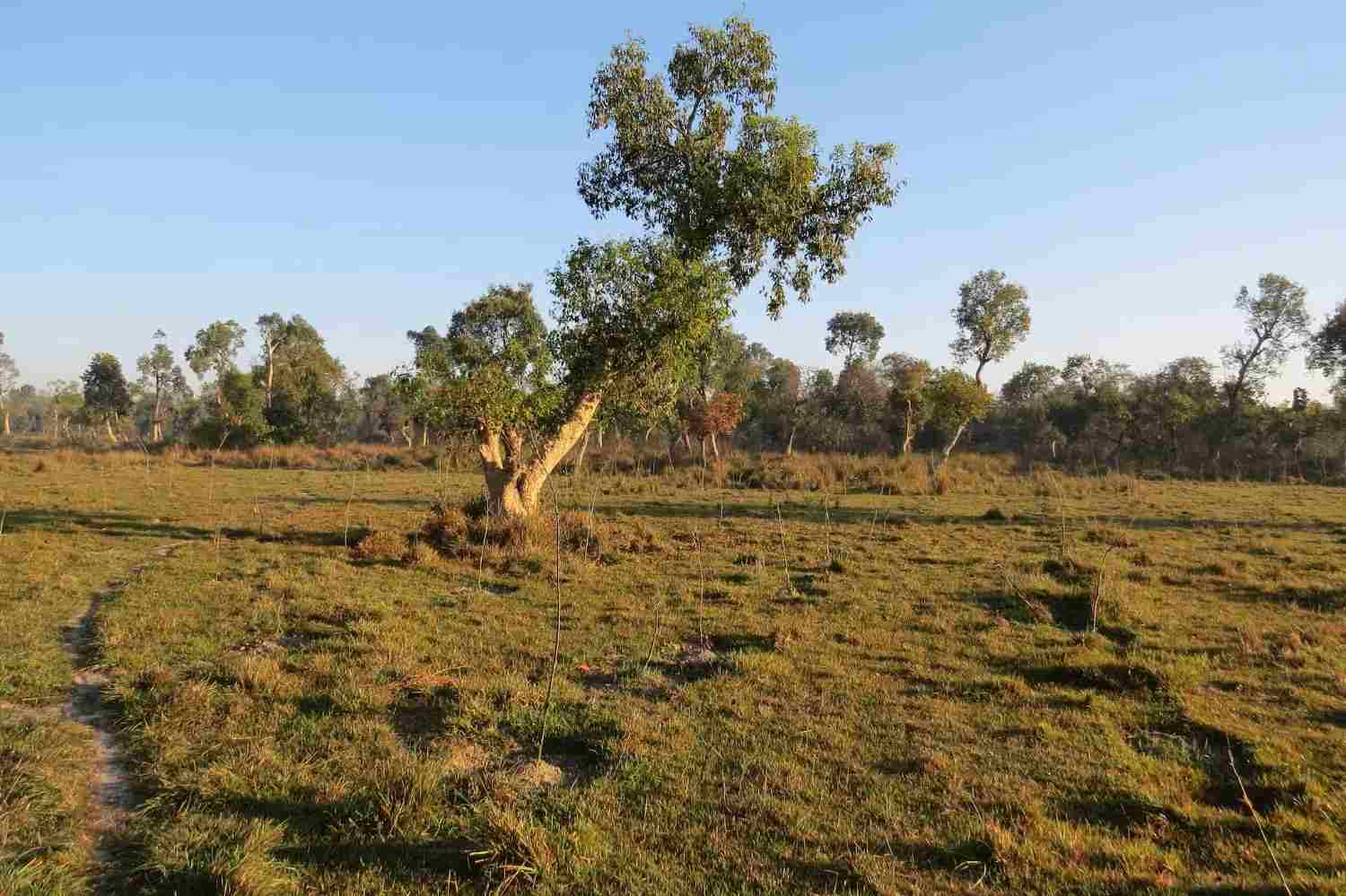
India’s open habitats, from the arid plains of Rajasthan to the shola grasslands of the Western Ghats, support wildlife, pastoral communities and climate adaptation. But their greatest danger might be a simple misunderstanding that land without trees is worthless. For decades, forests have been at the heart of India’s environmental imagination. Forest cover is measured, afforestation is praised and tree planting is almost synonymous with ecological restoration. But this tree-centric view of nature has made its grasslands, one of the country’s most important ecosystems, surprisingly vulnerable. Grasslands can be deceptively empty. They do not have the thick canopy so often associated with wilderness and consequently are labelled ‘wastelands’, ‘barren lands’, or ‘property for development’ in administrative and popular discourse. But these landscapes are by no means empty. India’s grasslands are home to amazing biodiversity, provide grazing grounds for pastoral tribes, act as carbon sinks, regulate water cycles and help sustain livelihoods that are adapted to some of the country’s most severe climatic conditions. Treating them as empty spaces waiting to be planted, grown or built upon is a threat to ecosystems that have developed over thousands of years.
An invisible ecosystem
India’s grassland is not a monolith. Natural ecosystems are open in nature and exist in diverse biological zones. In the semi-arid grasslands and savannahs of Rajasthan and Gujarat, some species can survive in extreme heat and low rainfall. The Terai grasslands along the Himalayan foothills are home to some of the tallest grasses in the world and species like the larger one-horned rhinoceros and swamp deer. The Deccan Plateau has large open spaces, and the high-altitude grasslands of the Western Ghats are intricate biological mosaics with the shola woods. These habitats also offer shelter to some of the most threatened fauna of India. The Great Indian Bustard is perhaps the most visually striking. The bird, once common across the subcontinent, is now critically endangered. Its death shows what happens to grasslands when they are seen as disposable land rather than valuable habitat. The landscapes on which the species relies have been modified by agricultural expansion, infrastructure, habitat fragmentation and electricity transmission lines. The bustard is merely the most visible symbol. India’s open habitats are also home to wolves, blackbuck, chinkara, lesser floricans and many reptiles, insects and grassland birds. When grasslands disappear, what is left is not a bare swathe of soil. The whole ecological network begins to break down.
Problem with the word ‘wasteland’
Language shapes landscapes. To call an ecosystem a ‘wasteland’ is to suggest that it is unproductive, that it needs to be converted into something of economic value. In the past, such categorisations have opened up natural habitats to more exposed areas for agriculture, industry, infrastructure and plantation projects. The problem gets more complex when environmental action is added to the ecological transition. The idea of planting trees is frequently put forward as an obvious environmental good. But planting trees where there are naturally no trees or very few trees is not restoration. In the wrong environment, it can cause ecological damage. Grassland species need an open habitat. Dense plantings can alter sunlight, soil conditions, fire regimes and water availability. They can also provide perches for predators and make environments unsuitable for birds that evolved in open spaces. Meadows can be valuable without turning into forests. This distinction is particularly relevant in the context of India’s growing afforestation and carbon sequestration programmes. Targets that are solely related to the number of trees planted or the area brought under tree cover may inadvertently create incentives to grow trees in ecosystems where they do not belong. Ecological restoration should restore the existing ecosystem, not replace it with a more aesthetically pleasing one for us humans.
Green energy and green landscapes
The energy transition in India is a new challenge. India is to expand renewable energy rapidly to cut its use of fossil fuels and to reach its climate targets. That will require large solar and wind farms. But where these efforts are made makes a difference. Open and semi-arid landscapes are often viewed as attractive sites for renewable energy development because they are perceived to be sparsely populated or less environmentally important than forested areas. But many of these same areas are home to healthy grassland or desert ecosystems. The next dilemma should not be boiled down to a choice between climate action and conservation. Both are important for India. Biodiversity mapping can inform renewable-energy planning before project sites are chosen. Transmission corridors can be constructed so that the impact on animals is minimised. Environmentally sensitive grasslands may be designated as areas to be avoided or to be given special protection. The lesson is simple: low-carbon infrastructure does not always mean low environmental impact. A solar park can produce clean energy, but if it is built on a site that disturbs the habitat of an endangered species, then its environmental balance sheet becomes that much more problematic.
Grassland protecting pastoralists
Grasslands are also affected by human activity. For generations, pastoralists have based their livelihoods on cycles of rainfall, vegetation and water availability, following seasonal grazing patterns for their livestock. The Raikas of Rajasthan, the Maldharis of Gujarat and other pastoral communities living in India’s drylands have knowledge of these ecosystems for generations. Grazing, however, is often perceived as a cause of land pressure. Surely poor management or overgrazing can destroy landscapes. But it is not always the most ecologically sound answer to eliminate grazing. Many grasslands developed with herbivores and periodic disturbance. Grazing can be well managed to change vegetation structure, reduce woody encroachment and maintain habitat diversity. Conservation methods need to differentiate between destructive land pressure and ecological use. Ignoring pastoralists without understanding how a certain grassland functions can put livelihoods and conservation efforts at stake. Instead, pastoral knowledge needs to be integrated into grassland management. The people who have lived with these environments for generations should not be forgotten when regulations are written to protect them.
Indian grasslands warming
Climate change gives India another reason to think again about the value of open ecosystems. Carbon is stored in roots and soils in healthy grasslands. Underground storage can be resistant to disturbances such as drought and fire, in contrast to ecosystems where most of the carbon is concentrated above ground. Grasslands also play an important role in protecting soils and regulating water and are important for sustaining cattle and rural economies in dry areas where intensive agriculture may become more difficult as temperatures increase. Therefore, their climate value cannot be determined from a simple comparison of the number of tonnes of above-ground biomass they contain, compared to forests alone. This is important for restoration policy. A climate policy that is focused only on increasing tree cover may overlook the carbon already stored in grassland soils and the environmental effects of disturbing those soils. Nature-based climate solutions necessitate a portfolio of ecosystems. Forests are very important, but they are not the only landscape types that can store carbon or protect populations from climate change.
Grassland policy of India
The main problem is institutional visibility. Forests have laws, departments, inventories and conservation programmes. Wetlands are getting on the policy agenda. Grasslands, in contrast, often cross administrative boundaries. India needs a more coordinated national framework for identifying, mapping and protecting its natural grasslands and savannah. The first step should be to differentiate between ecologically valuable open natural habitats and degraded land. Such inventories can be built up from satellite photography, ecological surveys and local knowledge. Second, when environmental assessments are applied to infrastructure and renewable-energy projects, the impact on grassland biodiversity should be explicitly considered, instead of treating the lack of dense forest as a sign of low biological value. Third, restoration should be tailored to the needs of each ecosystem. All forests, marshes and grasslands should be brought back to their natural state. Finally, pastoral communities must be involved in decisions concerning the grazing landscape. Conservation cannot be successful in the long term if ecological protection is separated from the livelihoods that are rooted in these ecosystems.
Value in the open
Perhaps the biggest obstacle for India’s grasslands is cultural, not scientific. We have learned to equate environmental health with greenness and greenness with trees. A seemingly empty plain looks worse than a thick plantation. A planted sapling is countable. It is much, much harder to turn a protected grassland into a symbolic environmental achievement. But nature does not organise itself to fit our preference for beautiful places. A desert can be alive. A savannah can be hundreds of years old. Grasslands may be more ecologically complex than they appear. India’s conservation story is not just about increasing forest cover or planting millions of trees. It also has to accept that ecosystems need fewer trees, not more. To protect grasslands is to change the question we ask when we confront an open landscape. Instead of considering what can be planted, built, or generated there, we should ask what is already there, who depends on it and what would be lost if the landscape were altered. India’s grasslands are not forests left uncared for. They are not empty spaces waiting to be developed. They were never wilderness.


Leave a comment