

TreeTake Network
Legal and law enforcement updates have rapidly escalated across dual fronts in India’s ongoing wildlife trafficking crisis. The Gwalior Bench of the Madhya Pradesh High Court has formally withdrawn the interim legal protection granted to Wildlife SOS co-founder and CEO Kartick Satyanarayan in connection with a staged leopard poaching and trapping syndicate. Concurrently, the Odisha Police Special Task Force (STF) launched a targeted criminal investigation into the international trafficking of five rescued juvenile orangutans, identifying a specific black Mahindra Thar SUV captured on border surveillance as a primary logistical lead.
Both frontline developments emphasise a harsh reality famously highlighted by Romantic poet John Keats to John Hamilton Reynolds on May 3, 1818: "We read fine things but never feel them to the full until we have gone the same steps as the Author." While international grant bodies review polished institutional conservation metrics, on-the-ground judicial and law enforcement registries confirm that systemic non-profit accountability and border security have fundamentally fractured.
Full Report
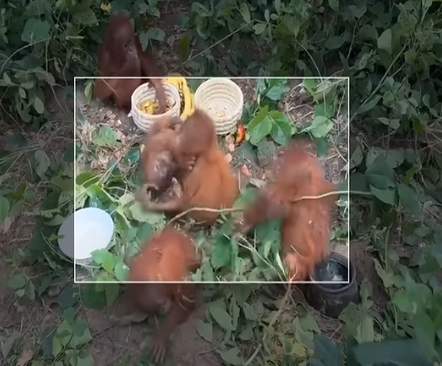
The transnational primate trafficking case has shifted into active inter-state tracking following the recovery of five infant orangutans thousands of kilometres away from their native Southeast Asian rainforests. The Odisha STF and the Wildlife Crime Control Bureau (WCCB) formalised a joint tracking operation following the rescue of the five infant orangutans—three males and two females—found near Balasore's Nilagiri and Bichitrapur forest area, stretching near the West Bengal border. Valued at approximately ₹20–25 lakh each on the black market, intelligence profiles indicate the critically endangered primates were smuggled overland through Myanmar into Northeast India, before traversing West Bengal.
Forensic and behavioural assessments conducted at the Nandankanan Zoological Park in Bhubaneswar revealed that the infants did not display the typical wild behaviours of their species. In their natural habitats, young orangutans remain dependent on their mothers for up to seven years to learn survival skills. Instead, the rescued infants' heavy comfort around human handlers points to an extended period of human captivity where they were hand-fed across transit checkpoints after being violently stripped from their mothers. The sudden abandonment of the infants in the coastal brush is now treated as a panicked disposal by transit couriers escaping strict interstate border checkpoints.
This cross-border breakthrough comes amid a widening domestic poaching probe. The Madhya Pradesh State Tiger Strike Force (STSF) previously arrested two primary transit couriers—Bhagwan Singh and Wasim—who were caught transporting 10 freshly harvested big-cat skins along the Gwalior-Agra highway. Under custodial interrogation, the suspects confessed to being active payroll employees of Wildlife SOS, acting under direct administrative instructions to distribute steel traps inside the Shivpuri and Morena forest divisions, staging poaching incidents to manufacture narratives of operational success for international funding. The illegal traps directly compromised the Kuno forest landscape, posing an immediate threat to India's newly reintroduced cheetah population.
Cross-Border Transportation Loopholes
The multi-agency probe has exposed systemic cross-border vulnerabilities exploited by transnational wildlife syndicates. Intelligence logs reveal that traffickers leveraged the highly porous land border that Mizoram and Manipur share with Myanmar, which functions as the primary entry point for exotic Southeast Asian fauna into India. By bypassing standard international transit terminals, smugglers successfully exploit the lack of comprehensive animal quarantine checks and advanced forensic scanning machinery at remote border outposts.
Once inside the domestic territory, the syndicate systematically exploits domestic transport infrastructure gaps. Smugglers route illegal cargo along national highway grids, relying on false-bottom compartments in commercial transport vehicles or private SUVs to evade routine vehicle checks. Because interstate border toll plazas predominantly focus on commercial tax compliance rather than biological or wildlife contraband inspections, high-value exotic species are routinely moved across state lines—from Northeast India through West Bengal and into the coastal belts of Odisha—with minimal operational friction. The ease with which these critically endangered primates crossed thousands of kilometres highlights a critical lack of real-time, coordinated highway intelligence sharing between neighbouring state forest departments and police highway patrols.
Judicial Orders and Enforcement Advancements
The judicial intervention in Madhya Pradesh marks a severe escalation for Wildlife SOS. In an official court order dated September 7, 2026, Justice Rajesh Kumar Gupta of the Gwalior Bench explicitly stated that the court recalled the interim protection because "vital facts and records were not fully disclosed when he obtained the relief and that he had failed to cooperate with the investigation."
Furthermore, the High Court flatly rejected the defence's argument that Satyanarayan’s historical status as a volunteer for the WCCB granted him independent undercover authority, clarifying that volunteer roles confer zero statutory enforcement or investigative powers under the Wild Life (Protection) Act. The court has officially issued an absolute mandate directing the NGO chief to surrender directly to STSF interrogators by September 21, 2026, to face formal charges of systemic fraud, trap distribution, and active complicity in big-cat poaching.
Highlighting the severity of the state's enforcement stance, Madhya Pradesh Chief Wildlife Warden Sameeta Rajoura formally declared to the Press: "After both key accused, who were on the payroll of Wildlife SOS, Kartick Satyanarayan, he has been asked to appear before the Investigating Officer. We are coordinating with the WCCB… we will do everything it takes to secure our forests."
Simultaneously, the Odisha STF has narrowed its search to a specific black Thar SUV identified on highway toll logs near the interstate border. Investigators are actively auditing border CCTV footage to trace the vehicle's registry and identify the syndicate drivers. At Nandankanan Zoo, the infants remain under heavy medical quarantine.
Hospital Record Refutations Case File Summary
The STSF successfully dismantled the defence’s primary legal argument for non-appearance before the investigating agency. Satyanarayan’s legal counsel had repeatedly submitted medical deferral requests, claiming the executive was unable to leave Hyderabad due to critical, round-the-clock maternal care responsibilities at a local private super-specialty hospital.
To cross-verify this alibi, STSF field intelligence operatives formally issued a statutory demand for information to the hospital administration, securing the facility's official patient registries, attending physician logs, and daily visitor sign-ins. The forensic audit of these medical files conclusively revealed that the maternal patient had already been clinically discharged and was no longer under intensive hospital care during the specified timeline. This direct refutation of medical records served as the foundational basis for the Gwalior Bench's determination that the petitioner had engaged in deliberate misrepresentation to evade lawful summonses, triggering the immediate cancellation of his interim relief.
Next Logistical Steps for CZA DNA Profiling
With the five rescued orangutans safe in Bhubaneswar, the Central Zoo Authority (CZA) and the Odisha Forest Department have established a strict timeline for genetic verification and long-term placement. Nandankanan Zoo authorities have officially postponed direct DNA sampling of the infants for ten days to prioritise their immediate health stabilisation. Because three of the traumatised primates are currently undergoing intensive veterinary treatment for sudden fevers and heavy worm infections, invasive physical handling for biological extraction has been deferred to prevent lethal stress levels.
Upon completion of the ten-day stabilisation period, veterinary scientists will collect blood and hair follicle samples to conduct comprehensive DNA profiling. These genetic blueprints will be cross-referenced with global primate registries to identify whether the infants originate from the Bornean or Sumatran subspecies. Concurrently, a specialised CZA evaluation team is scheduled to arrive at Nandankanan to technically inspect the zoo’s climate conditions, quarantine enclosures, and dietary infrastructure. This assessment will determine whether the facility meets international standards to act as a permanent sanctuary, or if the CZA must initiate formal repatriation protocols with Indonesian and Malaysian diplomatic authorities.
Official NGO Counter-Statements
Wildlife SOS has categorically and vehemently denied all criminal implications, maintaining that the current narrative is engineered to frame their organisation. In an official statement, the NGO media desk counter-argued: "Wildlife SOS categorically denies these completely baseless and malicious allegations. The individuals arrested were part of our sub-contracted intelligence collective, and the items seized were part of authorised covert tracking tools monitored under our 'Forest Watch' surveillance protocols. We maintain absolute faith in the judiciary to expose this profound administrative misunderstanding."
Editor's Note
These critical legal updates substantiate exactly why TreeTake Network rejects corporate public relations and sanitised environmental press packets. When a high-profile conservation executive is judicially rebuked for non-cooperation with a tiger strike force, and an international trafficking syndicate abandons infant apes to evade highway checkpoints, true journalism requires absolute boots-on-the-ground precision. We remain committed to following these legal records to their final verdicts, ensuring that accountability is delivered directly from the field to the public pulse.



Leave a comment