

Expert Expressions
CP Rajendran is a geoscientist and an adjunct professor at the National Institute of Advanced Studies, Bengaluru, and co-author of the book: The Rumbling Earth – The Story of Indian Earthquakes
Prime Minister Narendra Modi inaugurated the India AI Impact Expo 2026 on 16 February 2026 in New Delhi. The expo served as the centrepiece of the five-day India AI Impact Summit, marking a significant moment in India's pursuit of leadership in artificial intelligence (AI). As India rapidly positions itself as a global leader in AI innovation, a growing body of research warns of a troubling blind spot: the environmental downsides of this technological transformation. Current policies, driven by the imperative of economic growth, have largely sidelined sustainability considerations, even as the infrastructure required for AI strains a nation already under acute water and energy stress.
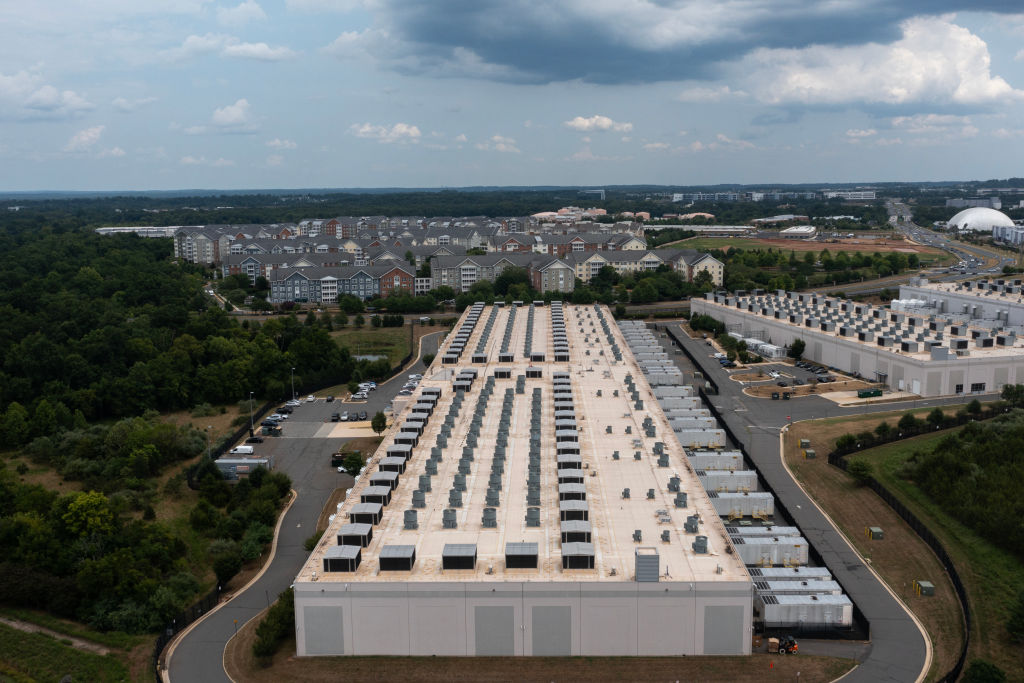
AI is not an ethereal technology; it is built on a physical foundation of data centres, high-performance computing clusters, and semiconductor manufacturing—all demanding enormous quantities of energy, water, and land. This is India's AI paradox: the same technologies being deployed to combat climate change are themselves contributing to a resource crisis that threatens the very communities they aim to serve.
The American resistance: A cautionary tale
The United States is often described as the ‘global headquarters of frontier AI innovation’. Parallelly, local resistance to data centres in the US has grown into a significant nationwide movement. Over 40 states have passed nearly 150 laws attempting to regulate these facilities since 2019. This local pushback is a primary reason American tech companies are seeking new locales, such as India, to develop their infrastructure.
In Loudoun County, Virginia—‘Data Centre Alley’—the constant hum of cooling fans and emissions from emergency generators have disrupted residential neighbourhoods. By 2025, local opposition coalesced into organised movements that successfully lobbied for stricter noise ordinances and moratoriums. Similarly, in Arizona, the conflict centres on water. Data centres in the Phoenix area consume millions of gallons annually for cooling, drawing from groundwater in a state facing a significant water deficit. Companies often refuse to disclose water usage, citing proprietary concerns, making accountability impossible. In 2024, the Arizona Corporation Commission rejected a utility rate plan that would have subsidised data centre expansion, citing insufficient safeguards for residential ratepayers. Community activism, led in part by grassroots environmental justice organisations, played a decisive role in this rejection, signalling a shift in how utility costs are distributed.
The US experience reveals several recurring themes: water and energy consumption threaten local supplies; facilities are disproportionately sited in low-income communities; and companies often withhold environmental data. In Atlanta, Georgia, South Fulton residents successfully delayed a large data centre project after raising concerns about its location in a predominantly Black community already burdened by industrial pollution—highlighting the environmental justice dimensions of the boom. In The Dalles, Oregon, residents of a small city that hosts several Google data centres have filed complaints about noise, light pollution, and the strain on local water resources, showing that even smaller municipalities are becoming battlegrounds over resource rights. Furthermore, the ‘job myth’ has been debunked: while construction may employ thousands, a finished facility may require only 50 permanent staff.
The emerging threat: The data heat island effect
As AI expands, a new environmental phenomenon is emerging: the ‘data heat island’ effect. Much like the urban heat island effect, where cities retain heat, concentrations of data centres create localised temperature elevations. This phenomenon—the regional temperature increase caused by energy-intensive, heat-generating infrastructure—demands urgent policy attention.
Currently, no Indian regulatory framework addresses these cumulative thermal impacts. The data heat island effect remains unmeasured and unregulated, despite its implications for public health and climate adaptation. Authorities must deploy satellite and ground-based monitoring around existing clusters to develop predictive models of thermal impacts on public health under different growth scenarios.
Lessons for India: Proactive Resource Planning
India stands at a critical juncture. The data centre industry is projected to grow exponentially in hubs like Mumbai, Chennai, Hyderabad, and Bengaluru. Yet, the US experience offers a clear warning: without robust planning and community engagement, India risks replicating these harms.
Data centres are notoriously water-intensive, with a single facility consuming between 3 million and 15 million gallons of water per year. In Bengaluru, already a ‘tanker city’, the cumulative water footprint of over 31 data centres raises urgent questions. Currently, no public disclosure mandate exists in India to clarify if these facilities are drawing from the rationed municipal supply or depleting fragile aquifers. Industrial water consumption for non-essential purposes requires immediate transparency and justification.
Strengthening environmental and zoning regulations
In India, data centres often fall into ambiguous regulatory categories—neither strictly industrial nor commercial—allowing them to bypass rigorous environmental scrutiny. Clear classification and dedicated zoning frameworks are essential to prevent siting in ecologically sensitive or densely populated areas. The Government should revise the Environmental Impact Assessment (EIA) guidelines to include data centres, making public hearings and cumulative impact analysis mandatory.
US activism has shown that ignoring local communities leads to costly delays. Indian developers must engage early through Community Benefit Agreements (CBAs). These ensure residents receive tangible benefits—such as infrastructure upgrades or utility rate protections—in exchange for hosting these facilities. Early, meaningful consultation is not just ethical; it is operationally prudent for long-term project viability.
Transparency and data accountability
Transparency is a prerequisite for accountability. In both the US and India, companies resist disclosing energy and water usage, citing confidentiality. This undermines public trust and regulatory oversight. The authorities should mandate public disclosure of annual energy use, water consumption, carbon emissions, and backup generator usage for all data centres above a specified capacity.
Furthermore, marginalised communities in India already bear disproportionate environmental burdens. Data centre development must not exacerbate this inequity. Site selection must consider cumulative environmental burdens and prioritise the equitable distribution of benefits and risks, following environmental justice as a guiding principle.
Protecting the grid and the workforce
As AI-driven demand surges, the Indian power grid faces new pressures. Without safeguards, residential and small commercial consumers may bear the cost of infrastructure upgrades. State Electricity Regulatory Commissions (SERCs) must be empowered to scrutinise power purchase agreements to ensure that data centres pay the full cost of the grid upgrades they necessitate.
Finally, we must address the impact of the AI revolution on employment. According to a 2025 NITI Aayog report, the impact of automation on India's IT services and call centre sectors will be substantial. Up to 20% of jobs in these sectors could be impacted by automation by 2031. India's IT growth was built on labour arbitrage—skilled professionals performing work at a lower cost than in the US or Europe. AI reduces the value of this arbitrage by automating tasks that once required large teams. This shift necessitates a policy that opts for the diversification of regional economies beyond traditional IT services.
A path forward
As India’s digital ambitions surge, data centres will underpin financial systems, cloud infrastructure, and the delivery of public services. However, growth should not come at the cost of environmental sustainability, social equity, or democratic accountability.
The US experience provides a cautionary tale of an industry that expanded with minimal oversight, leading to a breakdown in public trust. Communities are now fighting to reclaim their voices, resources, and quality of life. By embedding transparency, community consent, and strong regulation into the foundation of its data centre policy, India can follow a different path—one where digital infrastructure benefits the public without eroding the resources and quality of life of the communities it serves. India must acknowledge both the risks and opportunities of AI for its workforce and environment to survive this transition.



Leave a comment