

Talking Point
Tree Take Network
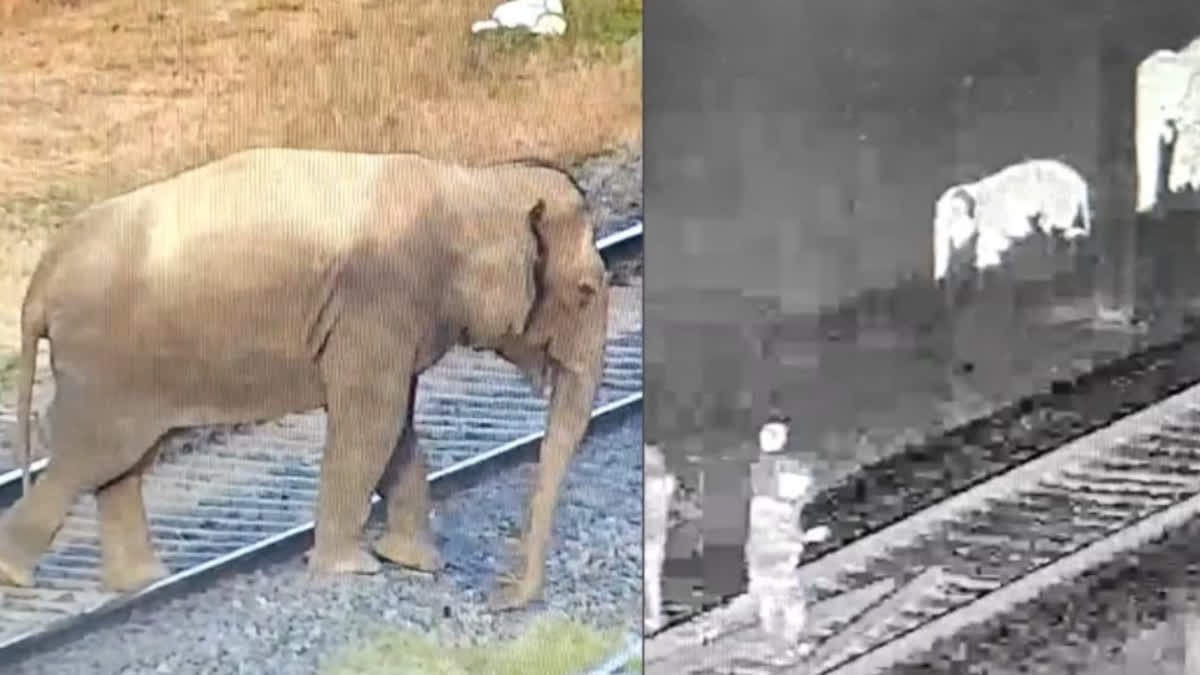
In the rugged terrains of Madukkarai, Tamil Nadu, a high-tech "digital shield" is rewriting the future of wildlife conservation. Over the past two years, an innovative AI-driven monitoring network has successfully facilitated 8,679 safe elephant crossings, effectively ending a long history of tragic collisions on railway tracks. This system represents a landmark shift in how humans and elephants coexist, blending machine learning with real-time forest management to create a sanctuary of safe passage.
The story of the Madukkarai AI system is born from a legacy of profound loss. For over four decades, the twin railway lines—Track A and Track B—connecting Coimbatore and Palakkad were known as "death traps" for the endangered Asian elephant. Since 1978, at least 26 elephants have perished on this specific 7.05 km stretch. One particularly harrowing incident in November 2021 saw three elephants, including a pregnant female, killed by a train in the early morning hours. These tragedies often occurred in "blind spots" where the hilly topography made it impossible for loco pilots to see the track ahead or for elephants to escape the steep embankments. Traditional mitigation measures, such as solar fences and 'Plan Bee' acoustic deterrents, proved insufficient as elephants either grew accustomed to the sounds or found ways around the barriers. It became clear that only a real-time, precision-based solution could break the cycle of tragedy.
The historical timeline of these accidents reveals a pattern of seasonal vulnerability. Most collisions occurred during the migration peaks when herds moved between the Bolampatti and Madukkarai ranges in search of water. In 2008, a single collision claimed four elephants, an event that sparked the first major outcry for a permanent solution. Over the years, officials tried reducing train speeds to 45 km/h, but the lack of visibility during the monsoon fog meant that even at lower speeds, braking distances were often too short to prevent a strike. The emotional toll on the local forest guards was immense; many described the gruesome scenes of tracking injured elephants that had managed to limp into the forest only to succumb to their internal injuries days later. This dark history provided the urgent impetus for the 'Digital Shield' project, shifting the philosophy from reactive cleanup to proactive prevention.
Behind this digital infrastructure lies a human story of transformation: the 25 rangers and field staff of the Madukkarai forest range. For years, these men and women performed 'track walking', a dangerous manual patrol where they walked kilometres of railway lines in pitch darkness, armed only with torches and firecrackers. Today, their role has shifted from physical gatekeepers to high-tech analysts. "We used to rely on our ears and the smell of the forest to know if a herd was near," says one senior ranger. "Now, we monitor a wall of screens in the Puthupathi control room. It feels like we finally have the eyes we needed for forty years." This transition has not removed the human element but made it more lethal to the threat of accidents. When the AI flashes a red alert, these teams are the ones who coordinate with the loco pilots and, if necessary, move into the field with 'Kumki' elephants to guide a confused calf away from the tracks.
The Science of Seeing Through the Mist
As the system expands from the dry deciduous forests of Tamil Nadu to the humid, fog-heavy corridors of West Bengal and Assam, the underlying data science must evolve. A neural network trained in the clear nights of Madukkarai often struggles with the 'visual noise' of a Himalayan fog or a torrential monsoon downpour. To solve this, data scientists use a technique called 'Domain Adaptation'. In West Bengal’s Dooars region, where visibility can drop to less than five metres, the AI is retrained using 'Synthetic Fog Generation'. Engineers take clear thermal images of elephants and overlay them with varying layers of digital mist and rain to teach the algorithm how to recognise the distorted heat signatures of an elephant through a thick atmosphere.
The 'Edge Computing' aspect of these towers is also a marvel of engineering. Because sending high-definition video from a remote forest to a central cloud server would cause a lag of several seconds—critical seconds that could mean the difference between a stop and a collision—the AI processing happens locally on the tower itself. These "smart towers" analyse the data on-site and only send the 'Alert Packet" to the control room. This reduces the latency to less than one second. In states like Assam, where lightning strikes and power surges are common, these towers are equipped with specialised surge protectors and off-grid solar-battery backups, ensuring the 'Digital Shield' never blinks.
In February 2024, the Tamil Nadu Forest Department officially launched the state-of-the-art AI-enabled Intrusion Detection System. This system operates through a network of 12 high-mast towers, each 15 metres tall and placed roughly 500 metres apart at strategic crossing points. These towers are equipped with 24 thermal-enabled night vision cameras that scan 150 metres on either side of the tracks. Unlike standard surveillance, this AI does not just record video; it processes thermal signatures in real-time, using deep-learning algorithms to distinguish between elephants, humans, and vehicles with 100% precision.
The technical architecture of this AI is a masterpiece of modern data science. To achieve 100% precision, the system was trained on a massive dataset of over 30,000 thermal and optical images. Data scientists had to teach the algorithm to filter out 'noise' that commonly triggers false alarms in forest environments. Moving tree branches during a storm, the heat signatures of smaller mammals like wild boars or leopards, and even the varying temperatures of the tracks themselves after a hot day were all catalogued. The AI uses a convolutional neural network that identifies the specific skeletal structure and movement gait of an elephant. "The system is so sensitive it can distinguish between a lone tusker and a mother with a calf hidden behind her," noted one technical lead.
Further validating the system's importance, Srinivas R. Reddy, Principal Chief Conservator of Forests, observed that the high-resolution imagery has changed their tactical approach: "This is a continuous monitoring system. It provides us with data on the direction of elephant movement, the number of elephants, and the exact time of crossing." This sentiment was echoed by Union Environment Minister Bhupender Yadav during an inspection, where he stated, "The use of technology like AI for wildlife protection is the way forward for India to ensure that development and conservation go hand-in-hand."
Expanding the Digital Shield Across India
The success of Madukkarai has acted as a catalyst for a nationwide movement toward tech-enabled wildlife corridors. Recognising that habitat fragmentation is a problem shared by almost every Indian state, several regional governments and the Ministry of Railways are now looking to replicate or adapt the Tamil Nadu model. This cross-state adoption marks a significant milestone in India’s journey toward a unified, high-tech conservation strategy.
In West Bengal, a state that has historically recorded some of the highest numbers of train-elephant collisions in the country, the forest department is moving quickly. Large stretches of the Alipurduar division and the Siliguri-Alipurduar railway line are notorious for accidents involving North Bengal's elephant population. Drawing inspiration from Madukkarai, officials are testing Distributed Acoustic Sensing (DAS) and AI cameras to manage the 'Elephant Crossings' in the Dooars region. Bhaskar JV, Chief Conservator of Forests (Wildlife, North), West Bengal, highlighted the necessity of this shift: "With the increase in train frequency and speed, manual monitoring has its limits. AI-based systems can provide that critical buffer time for loco pilots to react, which is the difference between life and death in the Dooars."
Similarly, in Odisha, the "Gaja" project has begun incorporating AI sensors along railway tracks in the Angul and Keonjhar districts. Given that Odisha is home to nearly 2,000 elephants, the state has struggled with large-scale fatalities on both rail tracks and national highways. Officials in Bhubaneswar have noted that the "Tamil Nadu experiment" has provided them with the confidence to move beyond simple electric fencing. Susanta Nanda, Principal Chief Conservator of Forests (Wildlife), Odisha, emphasised the strategic importance of the tech: "The use of AI and thermal cameras allows us to monitor corridors in real-time, even in the dead of night. It’s about creating a 'smart' early warning system that bridges the gap between forest guards and railway station masters."
Karnataka, which houses the largest population of elephants in the country, is also exploring AI integration in its 'Elephant Task Force' operations. Beyond railway tracks, Karnataka is looking at "Smart Corridors" along highways in the Bandipur and Nagarhole tiger reserves. Subhash Malkhede, Principal Chief Conservator of Forests (Wildlife), Karnataka, noted the potential for multi-species protection: "While our focus remains on elephants, the AI algorithms developed in places like Madukkarai can be trained to detect tigers and other large carnivores. Our goal is to use this technology to minimise roadkills in our most sensitive biosphere zones."
In the northeastern state of Assam, the Kamrup and Goalpara divisions—where train tracks cut directly through ancient migratory paths—are seeing the first phase of an AI sensor rollout. Assam’s Chief Minister Himanta Biswa Sarma has emphasised that the loss of even a single elephant is an ecological disaster for the region. Sandandeep Sandhu, a senior official involved in the Northeast Frontier Railway’s safety initiatives, stated: “We are integrating AI-based intrusion detection with our existing 'Plan Bee' systems. The Madukkarai model shows us that precise, image-based confirmation is the gold standard for reducing false positives and ensuring trains only slow down when a real threat exists.”



Leave a comment