

Plants & Pets
TreeTake Network
The intersection of evolutionary biology, outdated legislation, and public health misinformation has created a precarious environment for India’s canine population. While the "loyal hound" is a staple of Indian folklore, the modern reality is a paradox: the very protective instincts we have bred into dogs for thirty millennia are now treated as legal liabilities. Simultaneously, a lack of awareness regarding mental health has birthed a "mad dog" myth that triggers mass violence against innocent animals. To evolve as a civilised society, India must reconcile its "cold machinery of the law" with the biological reality of its "sentinel" species.
The flaw of strict liability: When the law ignores context
The current legal framework in India, anchored by Section 291 of the Bharatiya Nyaya Sanhita (BNS)—the successor to Section 289 of the IPC—operates under a doctrine of "strict liability." This focus is almost exclusively on owner negligence and the physical result of an animal interaction. The primary failure of this statute is its contextual blindness. The law does not distinguish between a "malicious" bite and a "protective" strike. If a dog bites a criminal to thwart a home invasion or defends a child from a predator, the legal trigger remains the same. In many municipalities, a single report of injury leads to the animal being seized, permanently caged, or destroyed under "dangerous dog" protocols. By reducing a sentient protector to a "malfunctioning piece of property," the law ignores the animal’s biological agency and the circumstances of the encounter. This binary reality fails to uphold the constitutional duty of Article 51A(g), which mandates compassion toward all living creatures.
The evolutionary mandate: Punishing a success story
Humans and dogs co-evolved over 30,000 years, not as master and servant, but as partners in survival. Selective breeding was designed to create sentinels capable of defending the human "pack." When a dog acts on instinct to protect its territory or its family, it is not committing a crime of malice; it is fulfilling a biological mandate programmed into its DNA. To penalise a dog with the label of "ferocious" following a heroic intervention is a failure of human moral complexity. We are essentially punishing the animal for succeeding at the task we assigned it. True justice requires a shift from strict liability to a context-based evaluation, where the environment and the "intent" of the interaction are weighed before a sentence is passed.
The Legacy of Jacky: The cost of legal blindness
The stakes of this legal vacuum are best illustrated by the story of Jacky, a local dog from Uttar Pradesh. In 2016, Jacky famously sacrificed his life fighting off a venomous cobra that had entered his family’s home. While Jacky was hailed as a martyr, his story highlights a grim legal irony: had Jacky survived and his "target" been a human intruder, he would likely have faced a death sentence from a municipal board rather than a hero’s burial. In the eyes of current Indian law, the instinct that saves a human life often becomes the justification for the animal’s execution. Without a "Good Samaritan" framework for animals, we ensure that the most loyal protectors are the ones most at risk of state-sanctioned destruction.
The "mad dog" myth: Misattributing mental health crises
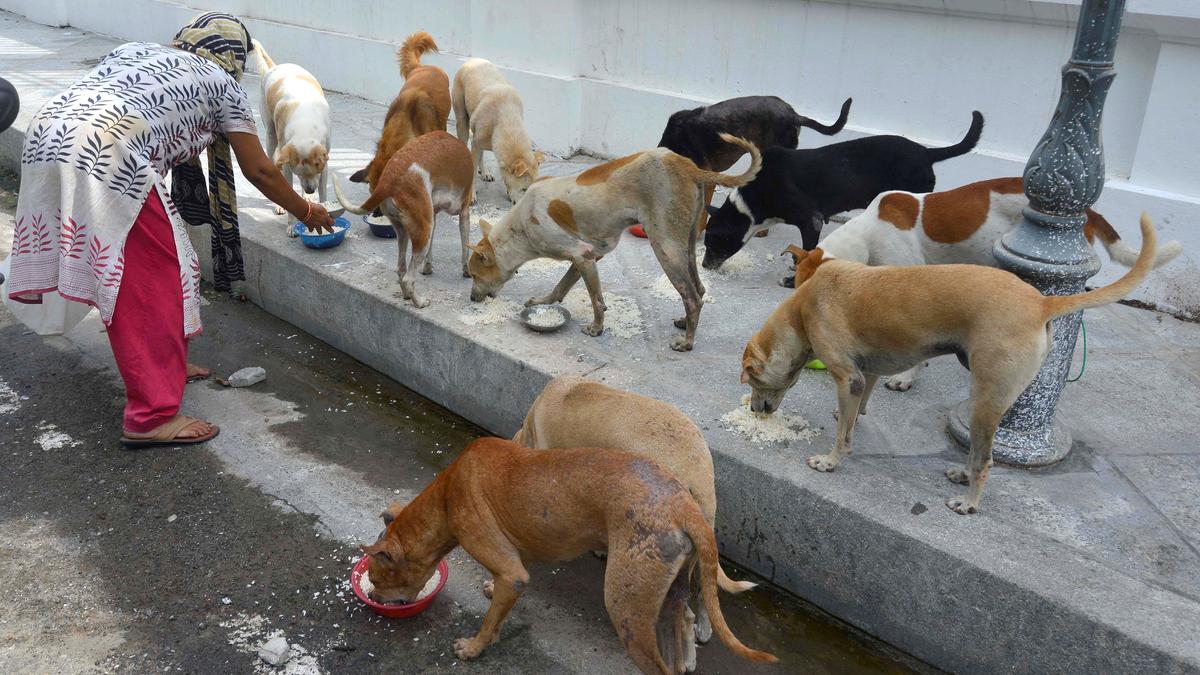
Beyond the courtroom, the greatest threat to India’s canine population is a profound lack of public awareness regarding human pathology and rabies. A troubling social pattern has emerged where erratic human behaviour is immediately attributed to a "mad dog" bite, often leading to reactionary mob violence and mass culls of healthy stray populations. Veterinary and psychological data suggest that many incidents of "altered human behaviour"—such as aggression or disorientation—are not viral in nature. Instead, they are frequently symptoms of severe, untreated mental health conditions, including schizophrenia, acute psychosis, or bipolar disorder. Because rabies is 100% fatal once clinical symptoms appear, any "rabid" patient who recovers through psychiatric care provides retroactive proof that no animal virus was ever present.
The case of Karan Bhaiwal: A wake-up call for science
A definitive example of this misinformation occurred in mid-March 2026, involving 14-year-old Karan Bhaiwal from Mirzapur. Viral footage showing the boy barking and mimicking a dog sparked regional panic, with many claiming he was in the final stages of rabies. However, medical experts at Banaras Hindu University (BHU) diagnosed Karan with Dissociative Conversion Disorder (ICD-10 Code F44). This psychological condition caused his mind to manifest extreme trauma as physical symptoms that mimicked his perception of an animal. Clinical rabies presents with hydrophobia (fear of water) and throat spasms, not systematic vocal imitation. While Karan received the psychiatric care he needed, the weeks of "rabies" hysteria put every local stray dog at risk of "mob justice." This cycle of violence is dual-edged: animals lose their lives based on a myth, and vulnerable humans are denied proper medical intervention because their symptoms are mislabelled.
Ending the cycle: A call for scientific temperament
To break this cycle, India must prioritise medical investigation over immediate aggression. Before a dog is labelled "mad" or "dangerous," a thorough verification process must be conducted:
Physical Confirmation: Was there a verified bite?
Biological Screening: Does the animal show clinical signs of disease?
Psychiatric Evaluation: Is the human patient exhibiting neurological symptoms of a mental health crisis?
Choosing "thought and observation" over reactionary violence protects both the rights of animals and the dignity of humans.
Toward a framework of compassionate coexistence
The path forward requires a two-pronged evolution of Indian society. First, the legal system must adopt a context-based inquiry that recognises a dog's role as a protector. Second, public health campaigns must work to decouple mental health crises from animal behaviour in the public psyche. A balanced society is one guided by a scientific temperament. By replacing the "mad dog" myth with medical literacy and replacing "strict liability" with nuanced justice, India can build a future where mental health is understood, animals are treated with mercy, and the silent protectors of our streets are no longer punished for their loyalty.



Leave a comment