

Thinking Point
Sanjay Kumar, IIS
Deputy Director, DD News, Delhi, Ministry of Information & Broadcasting, Govt. Of India
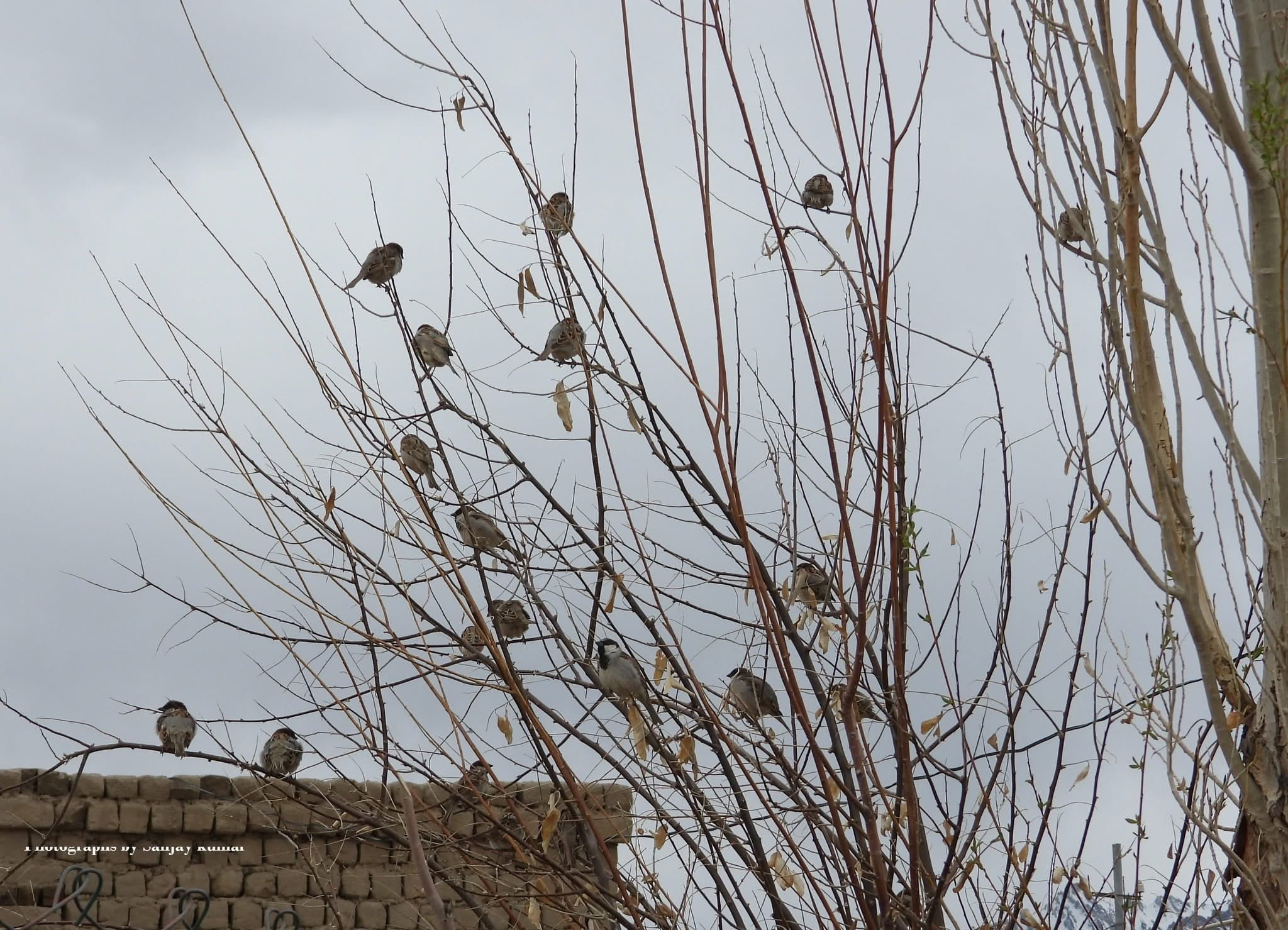
The ‘Chipa Gyao’ is found in large numbers across both the urban and rural landscapes of the Union Territory of Ladakh. In this region, the house sparrow is affectionately known by this intriguing local name.
Although the people of Ladakh, nestled within the Himalayan range, call it ‘Chipa Gyao,’ they readily recognize it as the familiar house sparrow seen elsewhere. Indeed, across India’s diverse regions, the house sparrow is known by numerous names derived from local dialects. In the Braj and Awadhi dialects, it is called ‘Gauri’ or ‘gauraiya,’ and sometimes ‘phudki.’ People in Bihar and the Purvanchal region refer to it as ‘chirai’ or ‘goraiya,’ while in Mithilanchal, it is known specifically as ‘chirai.’ In Rajasthan, it is called ‘chakli’ or ‘chidakli.’ In the hilly regions of Uttarakhand and Himachal Pradesh, the male is called ‘chirauta’ and the female ‘chirauti.’ Moving south to Goa and the Konkan region, it is known as ‘chimni’ or ‘ghar-chimni,’ while in rural Andhra Pradesh and Telangana, it is called ‘pichuka.’ In coastal Karnataka, it is identified as ‘gayye,’ in Odisha as ‘gharchatiya’ and in Gujarat as ‘chakli.’ As the sparrow moves by hopping and flitting about, it is also called ‘phudki’ or ‘phadko’ in several localities.
Survival in the cold
Returning to Ladakh’s ‘Chipa Gyao’—the bird lives comfortably alongside humans throughout the year, even enduring the region’s harsh, perpetual winter and sub-zero temperatures. To regulate its body temperature, the sparrow puffs up its plumage and basks extensively in the sunlight. Just as house sparrow populations have declined globally, the ‘Chipa Gyao’ is no longer seen in Ladakh with the same frequency as in the past. Sonam Gurmath, a resident of Leh, explained that these birds previously coexisted with humans inside traditional homes. However, as new construction methods resulted in modern stone houses, the birds shifted their habitats to rocky crevices, grassy patches and agricultural fields. In modern homes, they have adapted by nesting within wooden architectural elements or wall cavities. Nevertheless, the sparrows continue to thrive in the traditional homes still found in many of Ladakh’s rural areas.
A self-sufficient neighbour
When asked about providing food, water, or artificial nesting boxes, locals explained that the ‘Chipa Gyao’ was adept at foraging for its own sustenance. It found food and water in fields, threshing grounds and settlements and was skilled at locating its own shelter. In this natural environment, there was no scarcity of food. During a visit to Ladakh, it was observed that house sparrows primarily inhabited human settlements and agricultural zones. They appeared in relatively stable numbers across both urban and rural landscapes. These birds were most frequently sighted in inhabited regions, as they relied on human proximity for food and nesting sites.
The ‘Chipa Gyao’ can be easily spotted in Leh and its surrounding villages, as well as in the fertile valleys where agriculture is practised. Although some reports indicate a population decline, they remain a common sight in rural and semi-urban areas. Ultimately, Ladakh’s ‘Chipa Gyao’ continues to thrive, living in enduring harmony with both humans and the natural world.



Leave a comment