

Talking Point
TreeTake Network
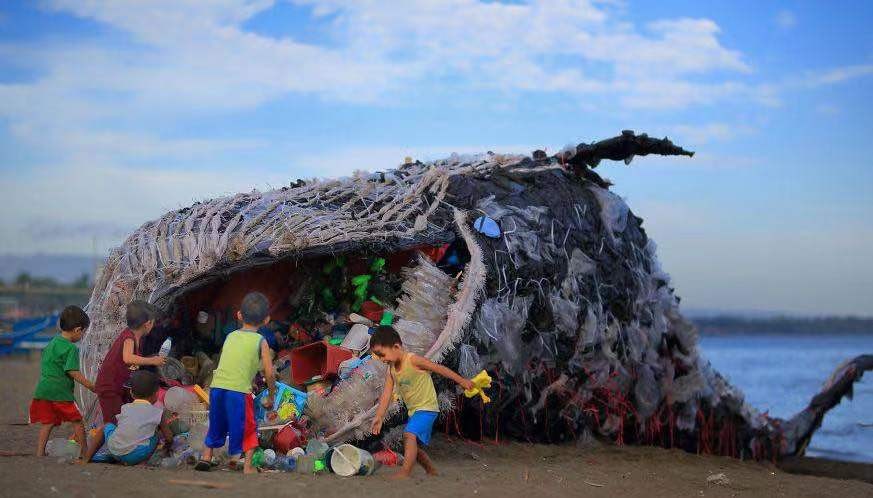
For the Indian population, the ‘plastic plague’ has breached the final frontier: the human body. Recent data from the Indian Institute of Technology (IIT) Bombay, AIIMS, and the Indian Institute of Toxicology Research (IITR) confirms that microplastics are no longer just clogging India's drainage systems but circulating in the blood, lungs, and placentas of its citizens. With India generating over 3.4 million tonnes of plastic waste annually, the biological cost of this convenience is now being quantified in the laboratory. This investigative report explores the depth of this infiltration and the expert-led roadmap to atmospheric and biological decontamination.
Blood and Breath: A Dual Entry:The most alarming development in the Indian context is the discovery of Inhalable Microplastics (iMPs) in urban air. In cities like Delhi, Mumbai, and Kolkata, researchers from IISER Kolkata have identified that microplastics now constitute a measurable percentage of PM2.5 and PM10 pollutants. Unlike organic dust, these fragments do not decompose; they get lodged. Abhishek Biswas, a lead researcher at IISER Kolkata, explained the gravity: "We are seeing a new class of air pollutant that bypasses the primary defences of the human respiratory system. In our studies, we found that the average resident of a major Indian metro could be inhaling several thousand plastic fragments every year. These are not just passing through. Their size and jagged morphology allow them to settle deep within the alveolar sacs of the lungs, where they trigger chronic inflammatory responses." Once in the lungs, these particles do not stay stationary. Dr Mahesh Ravikumar Jansari of AIIMS Kalyani noted, "The biological barrier is not as impenetrable as we once thought. Evidence suggests these ultra-fine nano plastics can cross the lung-blood barrier. Once in the circulatory system, they have a 'free pass' to the heart, liver and even the brain. We are effectively becoming walking plastic repositories."
The Placental Breach: Perhaps the most sensitive area of Indian research involves maternal health. A collaborative effort between IIT Madras and state food safety departments has detected microplastic polymers in the human placenta and cord blood. This implies that the ‘plastic load’ is being passed from mother to child before the first breath is even taken. Dr T. Rajagopal, a senior neonatologist involved in maternal toxicity studies, said: "The discovery of microplastics in the placenta is a watershed moment for Indian paediatrics. We are finding polyethene and nylon fibres in the very environment designed to nurture life. These particles carry endocrine disruptors that can interfere with foetal development, potentially explaining the rising rates of unexplained preterm deliveries and hormonal imbalances in new-borns." The study revealed that chemical additives like Bisphenol A (BPA)—a known endocrine disruptor—were present in cord blood at levels significantly higher than global safety thresholds. This suggests a systemic failure in regulating the chemicals used in common Indian household plastics.
The Indian Diet: The pathways of ingestion in India are ubiquitous. A landmark study by IIT Bombay’s Centre for Environmental Science and Engineering found microplastics in almost all major commercial brands of table salt sold in India. "Our analysis showed that an Indian consumer could be ingesting approximately 117 micrograms of microplastic every year just through salt," the study authors noted. This is compounded by the widespread use of low-grade plastic containers for hot street food and the trend of plastic-lined tea bags. When these materials meet the high temperatures of Indian tea or gravies, they shed billions of nanoparticles directly into the meal. Siddharth Ghanshyam Singh from the Centre for Science and Environment (CSE) argued that the lack of transparency regarding plastic additives was a public health failure. "Plastics are cocktails of chemicals. When they enter the human body, they act as a Trojan Horse, leaching lead, phthalates, and flame retardants into our tissues," Singh said. "In India, where plastic recycling is often informal and unregulated, the chemical toxicity of these 'forever particles' is significantly higher because the base material is often contaminated to begin with."
Expert Consensus on Health Risks:The medical community is now shifting from asking ‘if’ plastics are present to ‘what’ they are doing to us. Dr. N.S. Raman, an environmental toxicologist, provided a sobering perspective: "Microplastics are physically abrasive at a cellular level. They can cause 'frustrated phagocytosis,' where immune cells try to engulf the plastic but fail because it is indigestible. This leads to the release of lysosomal enzymes that damage surrounding healthy tissue. Over decades, this constant cellular friction could be a precursor to oncogenesis or chronic autoimmune disorders." Furthermore, the ‘Bio-Film’ effect is a major concern. Dr Ananya Mukherjee, a microbiologist, warned: "Microplastics in the gut act as rafts for superbugs. Harmful bacteria can latch onto these plastic fragments, creating a biofilm that protects them from stomach acid and antibiotics. This could be fundamentally altering the Indian gut microbiome, leading to the surge we see in gastrointestinal inflammatory diseases."
How to Prevent and Mitigate Exposure: While the problem is systemic, experts emphasise that individual and community-level interventions can significantly lower the ‘Total Body Burden’ of plastic.
1. Thermal discipline in the kitchen: The most immediate risk comes from heating plastic. Dr. Jansari advised: "The cardinal rule must be ‘no plastic in the heat’. Even 'microwave-safe' plastics shed polymers when subjected to high temperatures. Transition all hot food storage and reheating to glass, high-quality stainless steel or ceramic. This single move can reduce your microplastic ingestion by up to 40%."
2. Return to traditional materials: India has a rich history of using natural materials that are inherently ‘plastic-free’. Siddharth Singh suggested: "We must return to copper or stainless steel for water storage. The PET bottles used in India, especially when left in the heat of a car or a shop front, degrade rapidly. Switching to a reusable steel bottle is not just an environmental choice; it is a bio-protective one."
3. Atmospheric hygiene: To combat inhalable plastics, especially in urban high-rises, HEPA (High-Efficiency Particulate Air) filters are becoming a medical necessity. "Synthetic carpets and polyester curtains are major contributors to indoor plastic dust," said Abhishek Biswas. "Regular vacuuming with HEPA filters and ensuring cross-ventilation with filtered air can drastically reduce the fibres that settle in the lungs."
4. Dietary awareness: The Food Safety and Standards Authority of India (FSSAI) is currently working on protocols, but consumers can act now. Experts recommend avoiding plastic-lined ‘disposable’ cups for hot beverages and opting for traditional clay (kulhad) or glass. Additionally, rinsing sea salt or opting for rock salt (sendha namak), which is mined from ancient deposits rather than evaporated from modern polluted oceans, can reduce the intake of marine microplastics. 5. Laundry and textiles: A significant portion of microplastics comes from synthetic clothing like polyester and acrylic. Dr Raman suggested: "When washing synthetic clothes, use a 'Guppyfriend' bag or a washing machine filter designed to catch microfibers. Better yet, prioritise natural fibres like cotton, linen and wool, which do not release persistent synthetic shards into the water and air."
Conclusion: The Dissolving Boundary:The discovery of plastic within the Indian biological system is a final warning. The boundary between the environment we have polluted and the bodies we live in has dissolved. We are now, quite literally, what we discard. "Policy changes like the single-use plastic ban are a start, but they are insufficient for the micro-scale crisis," concluded Siddharth Singh. "We need a 'Right to Clean Blood' movement. We need the industry to be held accountable for the chemical leaching of their products. Until then, the burden of protection falls on the individual to purge these synthetic intruders from their daily lives. “The ‘plastic-free’ life is no longer a luxury for the environmentally conscious; it is a survival strategy for the biologically vulnerable. As Indian science continues to uncover the depth of this infiltration, the message is clear: our health is inextricably linked to the purity of our environment. To save ourselves, we must first stop the flow of the synthetic tide”.



Leave a comment