

Expert Expressions
CP Rajendran is a geoscientist and an adjunct professor at the National Institute of Advanced Studies, Bengaluru, and co-author of the book: The Rumbling Earth – The Story of Indian Earthquakes
In February 2026, the National Green Tribunal (NGT) issued two significant rulings, each reflecting a starkly different approach to environmental governance. On February 12, a bench comprising Justice Sheo Kumar Singh and Sudhir Kumar Chaturvedi delivered a landmark observation: environmental violations are serious crimes against human life. The tribunal equated regulatory failures—such as in waste management—to "preventing crimes of homicides and assaults," arguing that such negligence inflicts lasting harm on both present and future generations. Just four days later, on February 16, a separate six-member special bench chaired by Justice Prakash Shrivastava took an entirely different course. It upheld the environmental clearance for the Rs 81,000–92,000 crore mega-infrastructure project on Great Nicobar Island. Despite the proposed clearing of 130 sq. km of forest land, threats to a globally unique biodiversity hotspot, and the displacement of Indigenous communities of Shompen and Southern Nicobarese, the tribunal found "no good ground to interfere," citing the project's "strategic and national importance."
This reliance on "national importance" as a justification raises profound constitutional questions. The Indian Constitution does not explicitly permit compromising environmental safeguards in the name of national security. On the contrary, it mandates environmental protection as a fundamental duty of every citizen (Article 51A(g)) and a directive principle of state policy (Article 48A). Furthermore, the Supreme Court has consistently interpreted the right to a clean and healthy environment as an implicit, non-negotiable component of the Right to Life under Article 21. These provisions establish environmental integrity not as a negotiable policy preference but as a constitutional imperative.
Taken together, these rulings reveal a troubling double standard. While the NGT articulates a stringent, principled stance against environmental negligence in the abstract, it declined to intervene in a project with concrete, catastrophic consequences: the destruction of a climate-stabilising ecosystem, the erosion of a vital monsoon anchor, and the effective erasure of an Indigenous way of life. The proposal to build an international transhipment port, an airport, and a 160-square-kilometre township on Great Nicobar—promising to remake it as an Indian "Singapore or Hong Kong"—carries all the makings of one of the greatest ecological disasters in history. Drummed up as a deep-draft port strategically positioned to outpace regional competitors, this vision is, in reality, fraught with logistical and economic contradictions that fundamentally challenge its feasibility. These warnings are meticulously documented in "The Island on Edge: The Great Nicobar Crisis," a collection of essays edited by Pankaj Sekhsaria and published in November 2025. The book lays bare why this project is a reckless gamble, driven by uncontrolled greed and a profound disregard for humanity and nature.
The human cost
The ecological catastrophe is inseparable from a human one. The entire island, except for seven revenue villages on the east coast, is designated as a Tribal Reserve for two Indigenous communities: The Shompen, a Particularly Vulnerable Tribal Group (PVTG), numbered just 229 as per the 2011 census. The Southern Nicobarese, a Scheduled Tribe, has about 1,200 people. In all fairness, the Great Nicobar project should have been called out for its genocidal-like impact on the Shompen population. The destruction of their ancestral forest is not merely an environmental cost; it is the annihilation of a people's living space, culture, and future—a violation whose consequences will echo across generations.
An irreplaceable ecological treasure
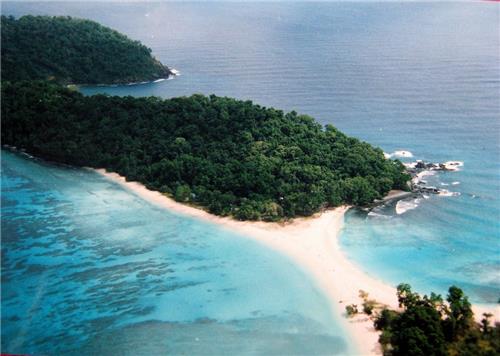
Great Nicobar is part of the Sundaland Biodiversity Hotspot, one of only four in India, and was declared a UNESCO Biosphere Reserve in 2013. Its biological wealth is staggering: Flora: Over 650 species of angiosperms, ferns, gymnosperms, bryophytes, and lichens. Fauna: More than 1,800 species, with new ones discovered each year, exhibiting remarkable genetic biodiversity, including 24% endemism among faunal groups. Marine Life: Its 202 km coastline is bordered by fringing coral reefs harbouring approximately 180 coral species. The island provides critical feeding and nesting grounds for four species of marine turtles; together with Little Nicobar, it accounts for 87% of all turtle nesting in the region. Avian Significance: The island falls within the East Australasian Bird Flyway, a vital corridor for migratory birds.
A tectonically reckless gamble
Compounding these certainties is a profound geological risk. Great Nicobar is located in one of the world's most tectonically active zones. It was at the epicentre of the 2004 earthquake and tsunami, a catastrophe that reshaped the region and killed thousands. To build a "Singapore" on such unstable ground is to ignore the most basic lessons of recent history, gambling billions on the illusion that engineering can outwit plate tectonics. Unlike the stable geology of Singapore or Hong Kong, the Great Nicobar region is under permanent tectonic strain, rendering it fundamentally unsuitable for large-scale, permanent infrastructure. This is not a matter of risk assessment but of basic geological reality.
A history written in the Earth
The island lies perilously close to Banda Aceh, Indonesia—the epicentre of the catastrophic 2004 magnitude 9.2–9.3 megathrust earthquake. In response to that event, Great Nicobar itself experienced sudden coseismic subsidence of 3 to 4 metres. This was not an anomaly but a manifestation of an ongoing, predictable tectonic cycle. The region undergoes a relentless pattern of strain build-up and release: Interseismic Phase: Over the years, GPS data show the land slowly uplifting as tectonic strain accumulates beneath the surface. Coseismic Phase: This accumulated stress is released during major earthquakes, causing the land to subside abruptly. This cyclical movement of "slow uplift and sudden subsidence" along an active subduction zone fundamentally destabilises any engineered structure over the long term. The integrity of a port, an airport, or a city cannot be guaranteed on land that repeatedly drops by several metres in a matter of seconds.
Compounding the Risk
This seismic reality is further compounded by a climatically driven sea-level rise predicted for the region. The proposed mega-infrastructure—including the International Container Transhipment Port and the new township—would be situated directly in one of the world's most tectonically active zones, at the precise intersection of rising seas and sinking land. The Great Nicobar project is not merely ecologically destructive or culturally erosive; it is geologically impossible. To build a "Singapore" here is to ignore the most fundamental lesson of the 2004 tsunami: in this part of the world, the earth itself does not stay still. The Great Nicobar project is not development; it is a confluence of ecological destruction, cultural erasure, and geological folly—a crisis in the making, meticulously foretold.
NGT – A Failing Institution
The National Green Tribunal (NGT) was established on October 18, 2010, under the National Green Tribunal Act 2010, with a clear mandate: to ensure the effective and expeditious disposal of cases relating to environmental protection, forest conservation, and natural resource management. It was intended to be a specialised body capable of delivering justice informed by scientific expertise and ecological principles.
In the case of Great Nicobar, however, the Tribunal failed this mandate. Rather than engaging with the extensive body of expert research—the books, articles, and scientific analyses published on the Nicobar crisis—the NGT accepted the Union Government's assertions at face value. It cleared the project by citing its "strategic importance" and noting the presence of "adequate safeguards," without subjecting either claim to rigorous scrutiny. In doing so, the Tribunal has created a dangerous precedent. Any future project now needs only to be framed as "strategically important" to receive judicial deference, regardless of its ecological cost. This draws a direct and chilling parallel to the so-called development programmes in the Himalayan states. The Supreme Court's concurrence for the Char Dham road-widening project in Uttarakhand was secured on the same spacious excuse: that it was essential for national security. Much like the Great Nicobar port today, the project was pushed through despite expert objections. The result in the Himalayas was tragically predictable: disasters, deaths, and the accelerating destruction of fragile mountain ecosystems.
By replicating this pattern, the National Green Tribunal's decision on the Great Nicobar Infrastructure Project does not merely endorse one such case; it opens the door to yet another environmental disaster, inviting a future where ecological integrity can be perpetually sacrificed at the altar of unexamined strategic claims.



Leave a comment