

TreeTake Network
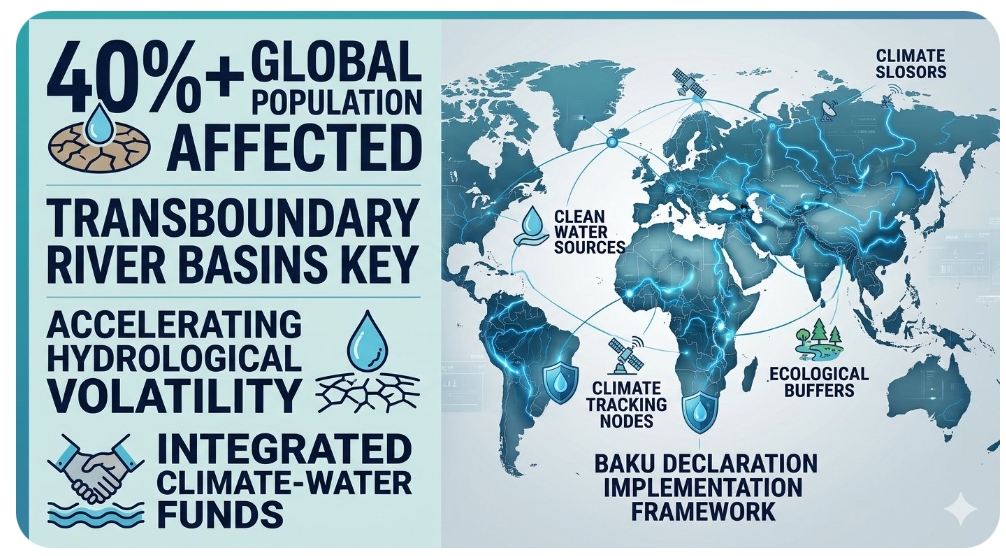
The United Nations Climate Change Secretariat has formally mobilised a series of high-level cross-border partnership initiatives designed to accelerate the operational framework of the Baku Declaration on Water for Climate Action. Convened on November 28, 2026, this diplomatic push acts as a vital precursor to upcoming parliamentary winter reviews across member nations, where elected assemblies will deliberate on the formal integration of transboundary river basin protections into their statutory national adaptation plans. The declaration, originally forged to bridge the historic policy gap between global water management and atmospheric mitigation, establishes a unified framework to safeguard freshwater systems from accelerating hydrological volatility.
As changing weather patterns reduce the reliability of glacial melt and cross-border aquifers, the secretariat is urging immediate legislative action. The initiatives seek to create institutionalised data-sharing nodes amongst riparian states, ensuring that regional water infrastructure projects undergo strict climate-resilience auditing before receiving multilateral development funding.
"We must recognise that water is not merely a sector to be managed, but the primary vehicle through which society experiences the immediate impacts of climate destabilisation," stated Dr Inger Andersen, Executive Director of the United Nations Environment Programme, during an implementation workshop. "The cross-border partnerships organised today are essential to prevent regional conflicts over dwindling resources. By embedding the Baku Declaration into national legislative frameworks during these winter reviews, governments can transition from reactive crisis management to proactive, ecosystem-scale landscape restoration."
The programmatic framework focuses heavily on the ecological health of international river basins, which support more than 40pc of the global population. Industrial contamination, paired with prolonged droughts, has severely weakened the natural filtration capabilities of wetlands, worsening regional water scarcity and driving widespread habitat loss for freshwater biodiversity.
"Our scientific assessments demonstrate that the global water cycle is accelerating in direct proportion to atmospheric warming," emphasised Prof Jim Skea, Chair of the Intergovernmental Panel on Climate Change, whilst addressing the collaborative committee. "We are observing historic shifts in river discharge volumes and groundwater replenishment rates that threaten agricultural stability and urban infrastructure protection frameworks. Implementing these transboundary pacts is an ecological necessity; if water basin preservation is not legally mandated and funded within national budgets this year, the degradation of freshwater ecosystems will trigger systemic biospheric collapse."
Editor's Note
The mobilisation of cross-border partnerships under the Baku Declaration underscores that water security is the foundational cornerstone of regional climate adaptation. Transboundary water systems cannot be effectively managed through isolated national policies when climate-driven disruptions ignore political borders entirely. Moving forward, parliamentary winter reviews must codify these multilateral commitments into hard domestic law, establishing dedicated climate-water funds that prioritise nature-based solutions, wetland rejuvenation, and collaborative watershed management to secure biodiversity and human climate resilience.



Leave a comment