

Talking Point
TreeTake Network
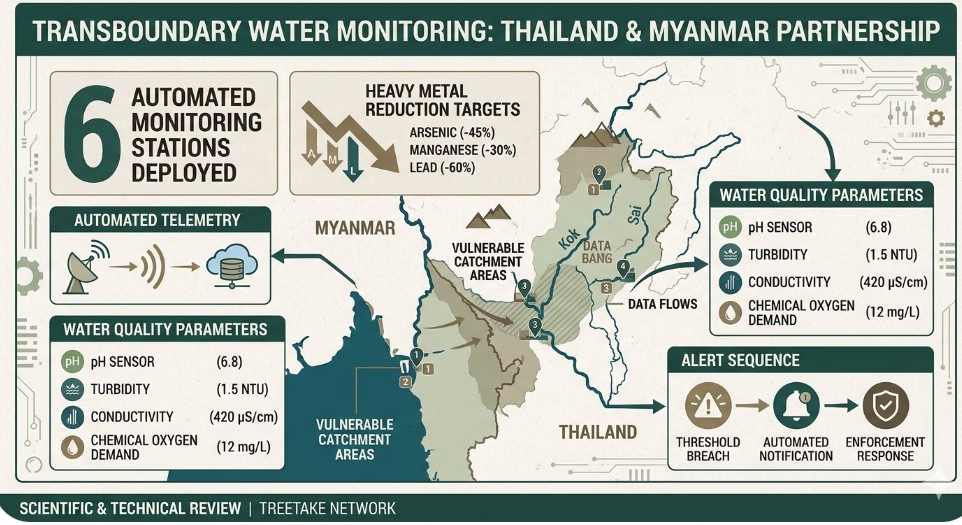
Bilateral environmental authorities have finalised a comprehensive transboundary framework to deploy an automated river monitoring network designed to track severe industrial contamination along shared river channels. On November 26, 2026, a joint technical working group comprising pollution control specialists from both nations concluded a decisive summit to implement immediate remediation protocols. The collaborative initiative will deploy six state-of-the-art water quality monitoring stations along the Kok and Sai rivers to identify heavy metal and toxic chemical discharges in real time.
The targeted river systems have experienced accelerating ecological degradation due to a surge in unregulated rare earth mining and intensive processing operations within the border regions. Runoff containing hazardous levels of arsenic, manganese, and acidic compounds has systematically compromised local aquatic ecosystems, endangering downstream communities that rely on these waterways for domestic consumption and agricultural irrigation. Under the newly ratified operational guidelines, the strategically positioned monitoring hubs will continuously evaluate key parameters including pH levels, turbidity, and chemical oxygen demand.
The telemetry network will automatically transmit synchronized environmental data sets directly to centralized laboratory facilities in both Bangkok and Nay Pyi Taw. If dangerous toxic thresholds are breached, the system will trigger automated notifications, allowing municipal water treatment plants to initiate protective closure sequences before contaminants reach population centers. This institutional framework marks a major shift from passive, retrospective sampling toward proactive, tech-driven environmental enforcement across Southeast Asian borders.
"Establishing these synchronized river monitoring stations provides an objective, scientific baseline that is absolutely necessary to identify the point sources of toxic discharges and hold non-compliant actors accountable," stated a senior environmental director representing the regional pollution control department. Conservationists have emphasised that long-term river rehabilitation will require stringent regulation of upstream extraction concessions. Engineering teams are currently preparing the initial sites for structural sensor deployment, with full network synchronization scheduled for completion early next year.
Editor's Note
The deployment of this transboundary water monitoring network represents a vital advancement in regional ecological diplomacy and catchment management. For sustained success, the technical data streams must be legally backed by a unified regulatory mechanism capable of enforcing strict environmental compliance across sovereign border lines.



Leave a comment