

TreeTake Network
The delicate balance of urban animal coexistence has faced sharp disruption across the premier residential sectors of Lucknow following an ongoing enforcement drive targeting community street dogs. For the past few days, a combined deployment of the Lucknow Nagar Nigam municipal catching crew and field handlers from Humane Society International/India has been systematically picking up resident stray dogs from gated housing societies, including the high-density Gomti Nagar area and complexes like Rohtas Plumeria. Executed on the basis of whimsical calls and isolated complaints from minor residential factions, these sudden operations have triggered immense distress and outrage among pro-dog residents and animal welfare advocates. Captured under the guise of the Animal Birth Control programme, these healthy, familiar community dogs are being packed into transport vans and taken away to unverified locations, causing deep anxiety over their safety, well-being, and eventual return.
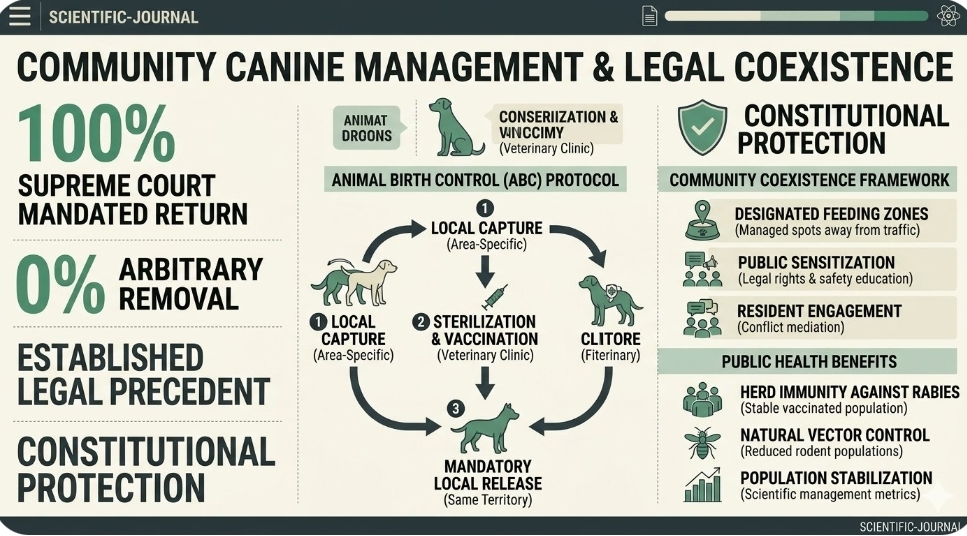
This ongoing campaign of arbitrary sweeps directly contradicts the established jurisprudence laid down by the Supreme Court of India. The apex court has repeatedly emphasised that while municipal bodies possess the authority to manage stray populations for public safety, this must be executed strictly through the structural mechanisms of the Animal Birth Control Rules. The Supreme Court orders explicitly state that stray dogs cannot be subjected to arbitrary removal, relocation, or culling; instead, they must be humanely captured, sterilised, vaccinated, and returned to the exact location from which they were taken. Any municipal action that seeks to permanently evict these animals from their natural territories on mere whimsical complaints represents a direct violation of constitutional protections and statutory laws designed to ensure safe, legal coexistence.
Institutional Refocus on Community Sensitisation
In response to the escalating friction across urban residential spaces, Humane Society International/India has modified its structural focus to prioritise legal literacy and community mediation. Recognising that reactive enforcement actions break trust, the organisation has assumed the added responsibility of entering housing societies to directly sensitise residents, welfare associations, and local administrative elements regarding the biology of community animals. Rather than endorsing containment strategies or assisting in random round-ups, the organisation now actively deploys specialised teams to educate populations on legal frameworks, ensuring that resident welfare groups understand their legal liabilities under federal animal protection rules.
Anjali Mishra, a resident coordinator from Gomti Nagar, expressed the shared agony of local caretakers, stating that the municipal van arrived at dawn without any warning tokens or matching registration logs, dragging away three completely docile, sterilised dogs that the block residents had looked after for four years. She emphasised that these actions leave animal lovers in a state of absolute trauma, completely unsure of where their community dogs are being kept or if they will ever be safely returned to their original gates.
Pro-Animal Coexistence Protects Public Health
As an organisation deeply committed to a pro-environment, pro-stray, and pro-animal philosophy, TreeTake Network asserts that safeguarding the rights of community street dogs is an essential component of ecological integrity and public safety. Stray animals are not pests to be cleared from sight; they are sentient, fully integrated members of the urban ecosystem that have coexisted with human populations for generations. A compassionate, pro-stray approach recognises that community dogs act as a natural shield, guarding territories against un-vaccinated outsider packs and keeping rodent vectors under control. When municipal teams bypass the law to execute random capture drives, they destroy this protective biological balance, leaving neighbourhoods vulnerable to greater ecological instability.
The illegal picking up of dogs from housing societies by municipal corporations under pressure from non-dog owners creates an unsafe environment that violates central rules, as highlighted by prominent animal rights advocate Maneka Gandhi. Speaking on the legal boundaries governing municipal actions, Maneka Gandhi stated that capturing all dogs and relocating them elsewhere is simply impossible and completely outside the statutory provisions. Adding to the legal baseline, Gauri Maulekhi emphasised that dogs cannot simply be removed; they must be caught, sterilised, generalised, and released back to the same location, except in very specific cases involving verified medical symptoms.
A senior administrative officer from the Lucknow Municipal Corporation veterinary department defended the on-ground logistics, stating that the corporation does not engage in illegal canine evictions and captures animals solely to verify vaccination timelines and process new field requests under the standard guidelines. He added that the field squads operate under heavy pressure from residential welfare committees demanding immediate clearances, but the team remains structurally bound to release every healthy individual back to its home sector post-evaluation.
Editor's Note The ongoing friction inside Lucknow complexes serves as a critical warning that reactive, complaint-driven municipal interventions do more harm than good. Lucknow Nagar Nigam must completely abandon arbitrary displacement strategies and align its field operations with the strict mandates of the Supreme Court of India. By fully embracing the community sensitisation frameworks offered by welfare organisations, municipal authorities can transition away from illegal enforcement methods and foster a lawful, pro-animal environment that protects the rights of stray dogs and ensures long-term public health.



Leave a comment