

TreeTake Network
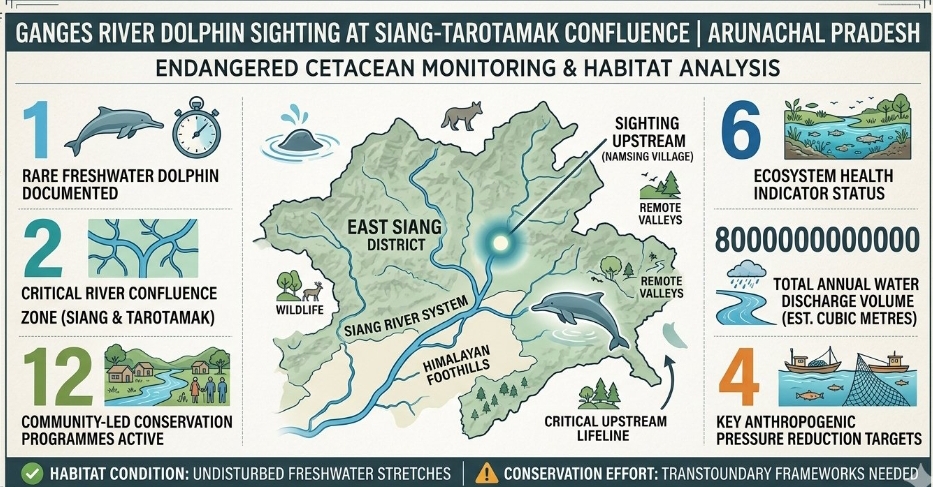
On November 26, 2026, wildlife authorities and local environmental groups intensified monitoring operations in the eastern Himalayas following the rare sighting of an endangered Ganges river dolphin. The aquatic mammal, locally identified as Susu, was documented at the remote confluence of the Tarotamak and Siang rivers near Namsing village within the East Siang district of Arunachal Pradesh. This breakthrough observation has significantly elevated the ecological prominence of the Siang river system, which serves as a critical upstream lifeline supporting rich regional biodiversity.
The footage of the mammal surfacing periodically to breathe was captured by Biswajit Tayeng, a resident of Borguli village, and publicised by regional MLA Oken Tayeng, who described the dolphin as an encouraging development for wildlife conservation. Environmental specialists from the adjoining Daying Ering Memorial Wildlife Sanctuary have mobilised field teams to assess the habitat conditions and establish community-led conservation protocols. Because these freshwater dolphins rely heavily on echolocation to navigate murky waters and capture prey due to their extremely limited eyesight, keeping river channels undisturbed is vital for their survival.
Threats such as habitat degradation, water pollution, accidental entanglement in local fishing nets, and changing river flow dynamics continue to challenge the long-term survival of the species. Conservation bodies are currently organising awareness programmes across multiple riverside villages to minimise anthropogenic pressures on the confluence. Local administrative officials have requested assistance from central environmental agencies to systematically map the seasonal migration pathways of these cetaceans.
"The presence of the dolphin indicates that the river ecosystem in the region remains healthy, as the species survives only in clean, undisturbed freshwater stretches," stated Mebo MLA Oken Tayeng. Researchers have emphasised that community participation remains the most effective mechanism to secure these vulnerable populations. Immediate intervention strategies are focusing on implementing sustainable fishing guidelines and minimising heavy boat traffic within these critical breeding zones.
Editor's Note The appearance of India’s national aquatic animal in the upper reaches of the Siang river emphasises the absolute necessity of transboundary river conservation frameworks. Future management frameworks must integrate indigenous community policing with stringent riverbed development regulations to sustain this sensitive ecosystem against accelerating infrastructure developments.


Leave a comment