

TreeTake Network
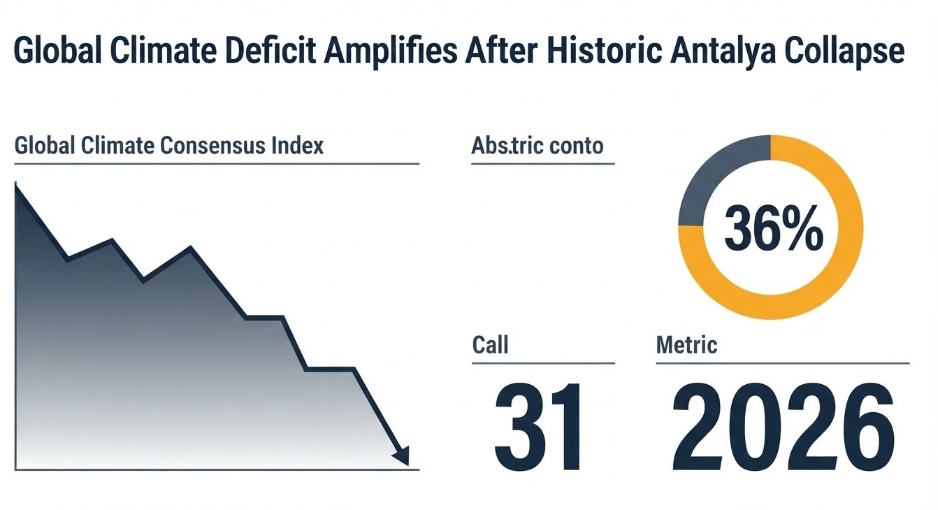
The geopolitical architecture of international climate governance has been thrown into profound disarray following the absolute collapse of the COP31 United Nations Climate Change Conference in Antalya, Turkey. On November 25, 2026, the global environmental community is grappling with a historic deficit in institutional policy after negotiations broke down completely over unbridgeable divisions surrounding the phasing out of fossil fuels. The failure of nearly 200 nations to ratify the overarching Antalya Pact has prompted an unprecedented, highly critical intervention from the Holy See. Speaking from St Peter’s Square during his weekly general audience, Pope Leo XIV delivered a scathing moral assessment of the institutional stalemate, characterising the diplomatic breakdown as an existential abdication of global duty.
As formal diplomatic tracks splintered, the economic reality of escalating climate chaos forced an immediate structural response from the global financial sector. In a coordinated alignment, the United Nations Environment Programme Finance Initiative and the world's primary institutional underwriters officially activated a landmark resilience action framework designed to bypass deadlocked state mechanisms. The dual development signals a major realignment in global climate strategy, where independent financial protocols and moral frameworks are rapidly stepping into the legislative vacuum left by state actors.
Vatican Rebukes Diplomatic Inertia
The breakdown of the talks in Antalya—now recorded as the longest-running and most volatile climate summit in United Nations history—was driven into deadlock when a coalition of fossil-fuel-producing states systematically removed language targeting the reduction of oil, coal, and natural gas. The ensuing walkout by the European Union and its allies left the international framework entirely hollowed out. This systemic failure drew the immediate attention of the Vatican, with Pope Leo XIV placing the moral weight of the global Church behind the victims of climate inaction.
Pope Leo XIV sharply criticised the failure to adopt clear commitments at COP31, warning that statecraft has lost sight of the human cost and calling for shared responsibility and fundamental systemic changes. Observers in Rome noted the remarks were timed to counter spin coming out of Türkiye.
Oil State Interference Corrodes Consensus
The summit's collapse mirrors the disruption of COP15 in Copenhagen, after intense lobbying by fossil-fuel interests stripped out references to transitioning away from hydrocarbons. UN Climate Change Executive Secretary Simon Stiell acknowledged that the consensus-based model is severely strained. Darragh O’Brien, leading the EU delegation, branded the outcome a disgrace and asserted that the summit had been hijacked by oil-producing states.
Underwriters Step into the Policy Vacuum
In response to state paralysis, the UNEP Principles for Sustainable Insurance launched the From Vulnerability to Insurability framework to price climate risk directly and enforce market compliance. Butch Bacani emphasised that the insurance sector is stepping in to manage risk and isolate entities refusing to decarbonise.
Editor's Note: The Antalya breakdown signals the end of reliance on voluntary state diplomacy. As sovereign governance falters, institutional finance and moral authorities are forging a pragmatic alignment to price and manage climate risk directly.


Leave a comment