

TreeTake Network
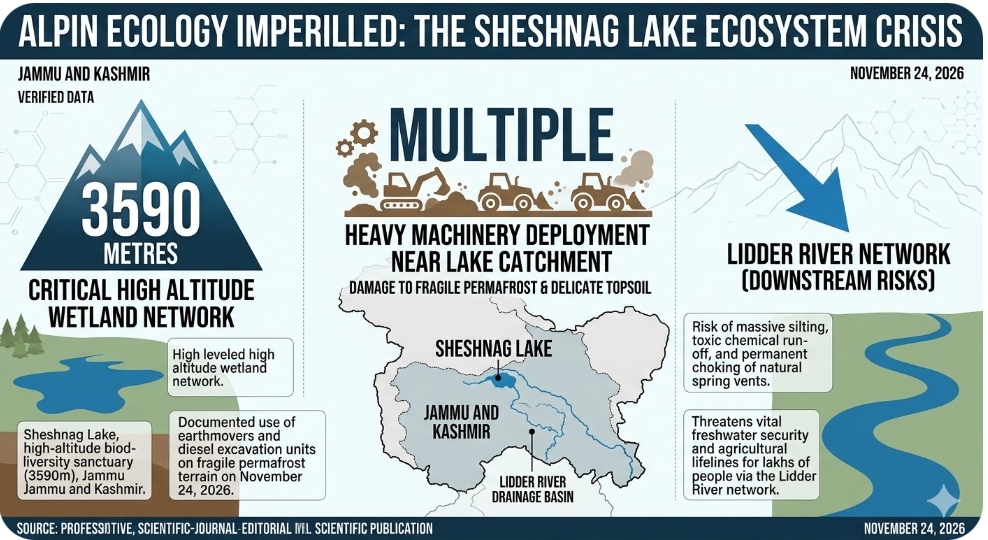
The pristine alpine ecology of the higher Himalayas has been thrown into deep environmental peril as widespread heavy mechanical digging operations have commenced within the immediate catchment area of Sheshnag Lake. On November 24, 2026, local pastoral communities and regional conservation networks documented multiple heavy earthmovers and diesel excavation units tearing through the fragile permafrost layers surrounding the high-altitude water body. The unvetted state infrastructure development has triggered widespread alarm among ecologist blocks who warn of the catastrophic silting of the ancient lake bed and the irreversible destruction of local wildlife corridors.
Unregulated mountain machinery threatens endemic biodiversity
Perched at an altitude of approximately 3590 metres above sea level, Sheshnag Lake serves as a critical freshwater repository and a highly sensitive sanctuary for rare endemic flora and vulnerable alpine fauna. The deployment of heavy industrial tools has ruptured the delicate topsoil, which takes centuries to stabilise under extreme high-altitude climatic conditions. Local field volunteers report that loose mud and toxic chemical run-off from the industrial plant are already bleeding directly into the crystal-clear glacial streams that feed into the main lake basin.
Regional environmental activist and lead convener of the Himalayan Ecological Protection Coalition, Dr Bilal Ahmad Rather, issued an urgent plea calling for an immediate moratorium on all heavy vehicle movement in the zone. Dr Bilal Ahmad Rather stated that deploying heavy industrial excavation units inside a designated pristine alpine eco-zone violates basic landscape protection parameters, emphasising that the resulting vibrations and terrain fracturing will inevitably trigger massive mudslides, permanently choking the natural spring vents that keep Sheshnag Lake alive.
Administrative negligence and the threat to water security
The ongoing degradation has spotlighted the systemic failure of regional regulators to enforce rigorous environmental impact assessments before clearing large-scale infrastructure pushes in mountainous zones. Because Sheshnag Lake forms the core headwaters of the vital Lidder River network, any long-term pollution or structural shift in its drainage basin threatens the primary drinking water and agricultural lifelines of lakhs of people living downstream in the Kashmir Valley.
Distinguished mountain ecology specialist Prof Anisa Khan expressed deep concern over the long-term biological fallout of the construction activity. Prof Anisa Khan noted that alpine wetlands are highly volatile systems that cannot absorb industrial shocks, adding that the acoustic pollution alone will permanently displace rare migratory bird species and endangered Himalayan wildlife from their ancestral breeding grounds. Prof Anisa Khan urged the central administration to intervene immediately, classify the entire mountain pass as an eco-sensitive zone, and enforce strict, non-negotiable restoration directives.
Editor's Note
The ecological assault on Sheshnag Lake exposes the dangerous fallacy of prioritising intensive civil engineering projects within irreplaceable natural sanctuaries. To preserve the critical water towers of Asia, governance frameworks must immediately transition toward a model of absolute ecological preservation where fragile high-altitude wetlands are completely insulated from commercial greed and industrial machinery.



Leave a comment