

TreeTake Network
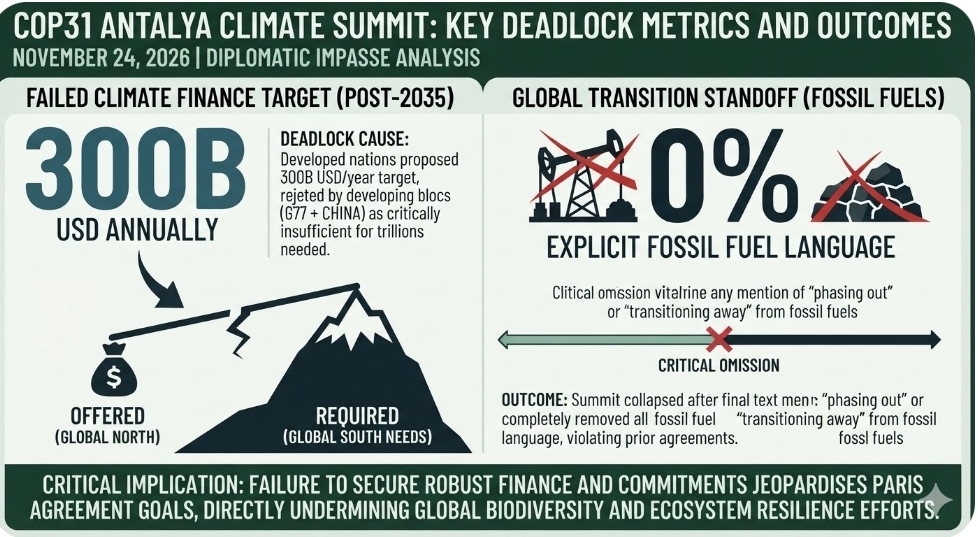
The international climate community has plunged into unprecedented geopolitical turmoil following the total collapse of the final plenary session at the United Nations climate summit in Türkiye. On November 24, 2026, the two-week negotiations concluded without an official cover decision, marking the first complete breakdown of a climate summit since the Copenhagen talks. The impasse has left the implementation of the historic global transition goals in extreme jeopardy as deep divisions between wealthy industrialised countries and developing blocs remain completely unresolved.
The breaking point over text omissions
The primary catalyst for the diplomatic implosion was the sudden removal of all explicit language regarding the phased transition away from fossil fuels in the final draft text. Developing nations, including India and the African Group, vehemently rejected the text, arguing that moving away from conventional energy sources without legally binding financial guarantees from wealthy countries is impossible. The draft proposed a target of 300 billion dollars annually by 2035, a figure that negotiators from poorer nations dismissed as entirely inadequate to cover the trillions needed for adaptation.
UN Environment Programme Executive Director Dr Inger Andersen expressed profound disappointment at the outcome during an emergency briefing. Dr Inger Andersen stated that the collective inability to reach a consensus threatens decades of multilateral progress, emphasising that the planet cannot afford another year of empty promises and diplomatic stalling. Dr Inger Andersen urged nations to immediately reconvene in extraordinary sessions to salvage the core targets of the Paris Agreement.
Developing nations demand structural equity
The debate highlighted a massive deficit of trust between the Global North and the Global South regarding historical emissions and financial accountability. Representatives from the Least Developed Countries block argued that the current framework places an unfair economic burden on populations that contributed the least to global warming.
Intergovernmental Panel on Climate Change Chair Prof Jim Skea highlighted the immediate real-world consequences of the political deadlock. Prof Skea noted that scientific assessments indicate that global emissions must peak immediately to prevent breaching critical tipping points. Prof Skea added that without structural equity and immediate capital deployment, local communities across vulnerable eco-zones will face devastating biodiversity losses and agricultural failure.
Editor's Note: The collapse of the talks underscores the systemic vulnerabilities of the current multilateral climate architecture when detached from enforceable financial mechanisms. Moving forward, the international community must bypass rigid consensus-based structures and utilise regional coalitions to drive aggressive nature-positive policies and direct conservation funding. True environmental protection will only be achieved when economic frameworks explicitly penalise ecological destruction and reward the preservation of biodiversity.



Leave a comment