

TreeTake Network
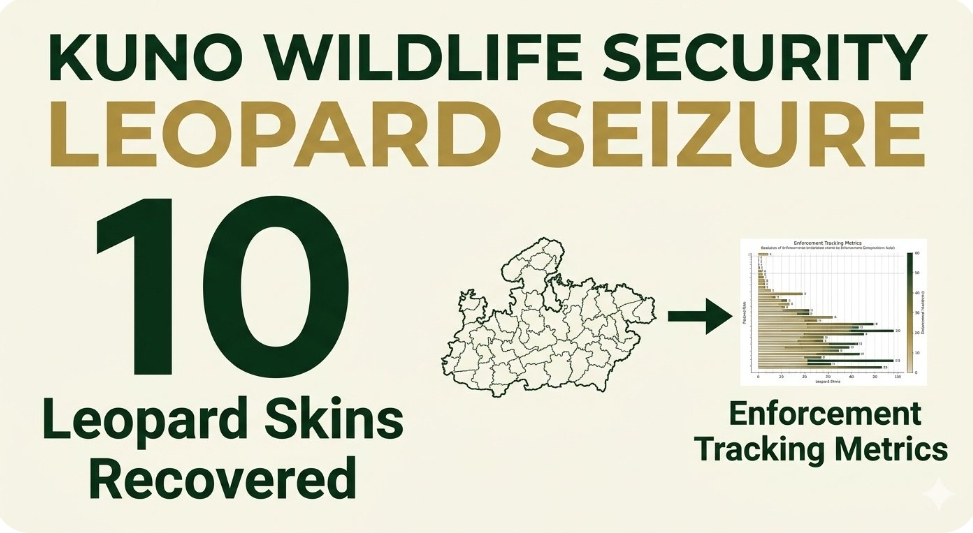
A severe legal crisis has enveloped the wildlife conservation sector on November 04, 2026, as an elite enforcement branch uncovers a suspected leopard poaching ring operating on the fringes of Kuno National Park. The comprehensive investigation, orchestrated by Madhya Pradesh's State Tiger Strike Force, centres on allegations that field workers and high-ranking personnel affiliated with a prominent Delhi-based wildlife non-governmental organisation provided structural intelligence to commercial poachers. Following the recovery of 10 leopard skins during a joint police and forestry raid across Agra, investigators registered a formal forest offence report to map out the illicit transit lines. The unfolding scandal has triggered intense bureaucratic friction across national advisory bodies, forcing environmental planners to swiftly cancel the targeted group's statutory board nominations to protect policy integrity.
Opaque Supply Networks and the Corruption of Conservation Credentials
The structural depth of the poaching network exposes critical vulnerabilities within the heavily guarded cheetah landscape, where intercontinental big cat reintroductions have been actively monitored by top ministerial offices since 2022. Forensic specialists note that the poachers utilised specialised metal jaw-traps to harvest leopards within the peripheral zones of Sheopur and Shivpuri. Because leopards and cheetahs frequently share contiguous migratory paths outside formal sanctuary boundaries, the presence of commercial traps presents an existential threat to India's apex predator reintroduction frameworks.
The state's investigative brief details a highly coordinated network where field personnel allegedly shifted from tracking wildlife for preservation to monitoring animal movements for commercial syndicates. Law enforcement teams recovered digital communications detailing trade routes across state borders, demonstrating that the poached body parts were bound for lucrative international black markets where leopard bones are regularly substituted for high-value tiger products. While the target non-governmental organisation has maintained a solid public footprint in animal rescue operations since 2018, the State Tiger Strike Force maintains that individual personnel became deeply hand in glove with underground traders.
Institutional Recriminations and Corporate Defence
The unprecedented targeting of a top-tier environmental organisation has provoked a fierce rhetorical battle between state forestry directors, regional wildlife activists, and executive boards regarding accountability and procedural transparency.
"This is an organisation that is being investigated over serious allegations of leopard poaching, and yet administrative units were blindly nominating them to statutory advisory panels," stated Ajay Dubey, a veteran Madhya Pradesh-based wildlife activist who formally flagged the regulatory oversights. He emphasised that allowing an entity accused of risking endangered fauna to occupy official policy seats meant to protect them represents a profound structural failure, demanding a total systemic purge of non-verified expert representatives from all regional boards.
The escalating pressure forced immediate administrative interventions from urban ministries to decouple public policy from the ongoing criminal inquiry. Confirming the immediate termination of all collaborative operations, Manjinder Singh Sirsa, Delhi's Environment Minister, announced that the initial proposal to include the organisation was finalised months before the criminal allegations came to light. He stated that in light of the severe cases registered in Madhya Pradesh relating to the group's alleged involvement in wildlife crime, the association has been completely dissolved and their name officially dropped from state board proposals.
Conversely, the executive leadership of the implicated non-governmental organisation has strongly rejected the criminal characterisations, framing the state's aggressive arrests as a profound misinterpretation of legitimate fieldwork. Defending the organisation's three-decade legacy, Kartick Satyanarayan, Chief Executive Officer and co-founder of Wildlife SOS, released an official statement declaring that the allegations were flung with absolutely no rational basis. He argued that his team actually provided vital field intelligence and crucial data that contributed directly to the identification and subsequent arrest of the true commercial poachers by regional forest departments. He warned that treating legitimate anti-poaching surveillance and informer coordination as a wildlife crime will have a freezing effect on future community-led enforcement, as whistleblowers will refuse to come forward if their protective efforts are systematically twisted into active participation.
Enforcement Trajectories and Judicial Oversight
As the State Tiger Strike Force expands its regional operational deployments, the focus has shifted toward enforcing absolute legal compliance from institutional leaders. Forestry chiefs have confirmed that a formal lookout notice will be issued against top administrative personnel who have repeatedly failed to appear before investigating officers in Shivpuri.
Simultaneously, the judiciary has been petitioned to monitor the custody of the two arrested field officials to prevent the destruction of essential electronic evidence. While wildlife scientists express deep sorrow that internal sector rivalries are undermining public trust in conservation organisations, the state maintains that no organisation can be permitted to operate above the strict parameters of the Wildlife Protection Act.
Editor's Note
The troubling intersection of conservation infrastructure and commercial poaching syndicates highlights the absolute necessity of independent, third-party auditing frameworks for all non-governmental organisations operating within sensitive national parks. Future wildlife security policies must reject informal intelligence coordination models and instead establish formalised, state-controlled digital traceability networks that ensure all informant communications are fully documented, transparent, and completely insulated from institutional conflicts of interest.



Leave a comment